
نعمل الآن على ترجمة هذا المقال إلى العربية — ستظهر الترجمة هنا بعد لحظات. نعرض لك في الأثناء النص الأصلي باللغة الإنجليزية.
’Tuchel’s changes made the difference – For Argentina’: Carragher delivers brutal verdict after England’s semi-final heartbreak
For 72 glorious minutes, England were the better side. They pressed with intensity, moved the ball with purpose, and silenced the pockets of sky-blue and white that had travelled across the Atlantic. Then Thomas Tuchel intervened – and in the space of a single tactical reshuffle, the narrative of England’s 2026 World Cup campaign unravelled…
بقلم Ralph Waldo Emerson
نُشر في مدة القراءة: 6 د
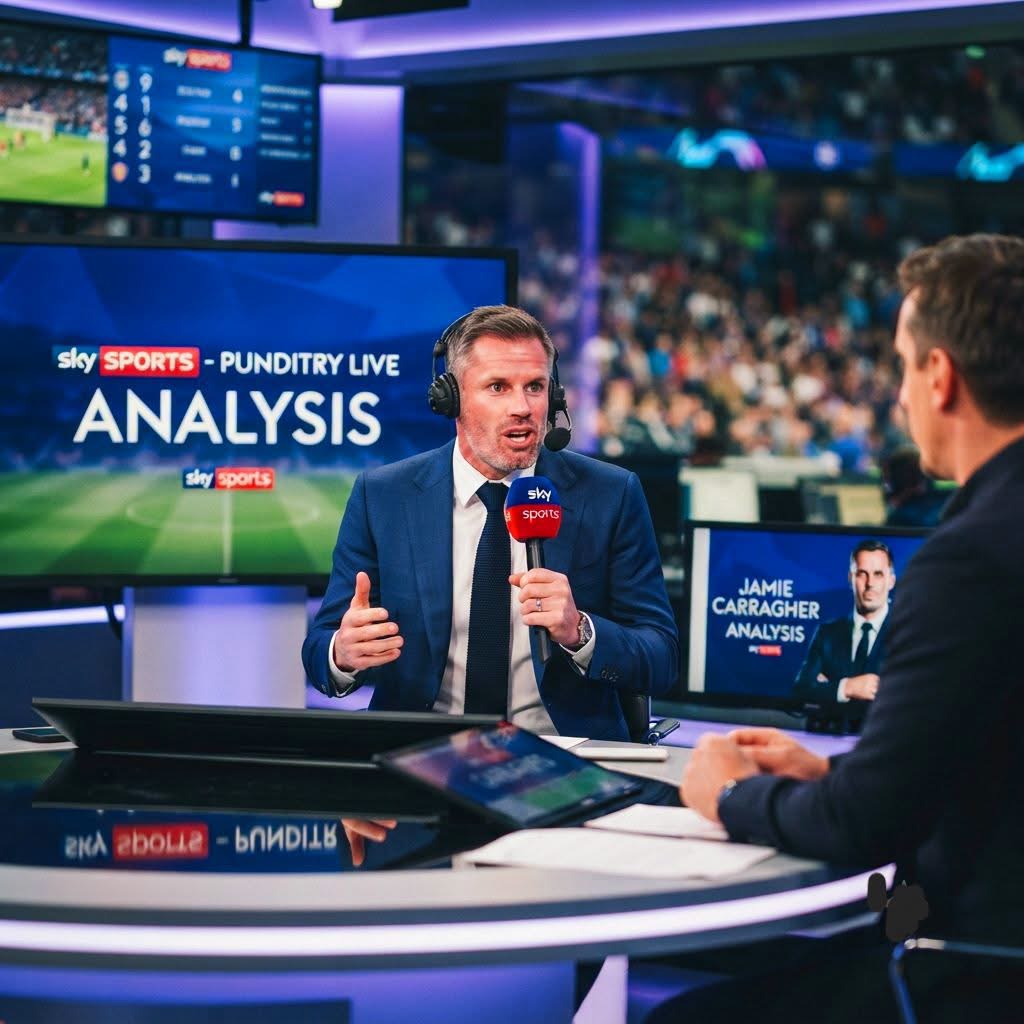
For 72 glorious minutes, England were the better side. They pressed with intensity, moved the ball with purpose, and silenced the pockets of sky-blue and white that had travelled across the Atlantic. Then Thomas Tuchel intervened – and in the space of a single tactical reshuffle, the narrative of England’s 2026 World Cup campaign unravelled in the most agonising fashion imaginable.
Lautaro Martínez’s 94th-minute winner will haunt English dreams for a generation. But for Jamie Carragher, the real damage was done long before the ball hit the back of the net. In a searing post-match analysis, the former Liverpool defender turned pundit delivered a damning indictment of Tuchel’s in-game decisions – and, by extension, the Football Association’s entire philosophy in hiring the German.
“Thomas Tuchel was brought in to be the manager who makes the difference in the latter stages of the World Cup,” Carragher wrote. “And against Argentina, he really was the difference. However, his substitutions and his change in system were the biggest factors behind this painful and disappointing defeat.”
The statistics are unforgiving. Before the 65th minute, England had registered 14 shots to Argentina’s six, controlled 58% of possession, and effectively neutralised Lionel Messi by funnelling him into crowded central corridors. Anthony Gordon had been a constant thorn down the left, his relentless running pinning Nahuel Molina deep in his own half. Reece James, deployed in a hybrid right-back/central midfield role, had been the linchpin of England’s set-piece defence – specifically tasked with disrupting Argentina’s notoriously intricate short-corner routines designed to free Messi on the edge of the box.
Then came the double change that Carragher labelled “bewildering”. Off went Gordon and James. On came defensive reinforcements – Kieran Trippier and Kalvin Phillips – as Tuchel shifted from a fluid 4-3-3 to a conservative 5-3-2, seemingly prioritising protection over control.
“After they left, nobody took on that responsibility,” Carragher lamented. “The early defensive substitutions removed the players responsible for stopping Argentina’s short corner routines involving Messi. After they left, every set piece from Argentina looked dangerous.”
The prophecy fulfilled itself within eight minutes. From a short corner on the right, Messi received the ball in that dangerous pocket of space – precisely the area James had been covering – and threaded a reverse pass to Enzo Fernández. The Chelsea midfielder’s low drive from 22 yards squirmed through a forest of legs and, crucially, beneath Jordan Pickford’s diving frame. It was a save the Everton keeper would expect to make nine times out of ten. On the tenth, with England’s defensive shape in disarray, it crept inside the post.
The equaliser changed everything. Wembley, which had been a cauldron of patriotic fervour, fell into a nervous hush. Argentina, who had looked laboured and uninspired for over an hour, suddenly smelled blood. Messi began dropping deeper, orchestrating with the unhurried menace of a man who has dismantled better sides than this.
Carragher painted a grim picture of what followed: “Once Argentina got back into the game, Tuchel found himself in a tactical dilemma. The pitch was filled with defenders, and we no longer had the tools to restructure the team and push forward. World-class players like Messi do not need many chances to punish you.”
The irony was suffocating. This was precisely the scenario the FA had envisioned when they appointed Tuchel after the 2024 European Championship – a serial winner, a Champions League mastermind, a man with the tactical audacity to outthink the very best. Instead, England found themselves trapped in a familiar purgatory: a lead squandered, a game slipping away, and a manager seemingly paralysed by the weight of the occasion.
Carragher’s most biting critique, however, was reserved not for Tuchel alone, but for the institutional arrogance that preceded him. “The devastating ending to the semi-final exposed the biggest flaw in the FA’s idea of searching for a world-class manager: the belief that the greatest coaches are immune from mistakes in the biggest moments. When we collapsed under Gareth Southgate in the same way, everyone demanded a manager with a bigger trophy record. Now Tuchel has arrived and repeated the same thing.”
It is a painful reckoning. Southgate, for all his perceived conservatism, led England to back-to-back European finals and a World Cup semi-final. His defeats – to Croatia, France, and Italy – came against sides widely regarded as technically superior. This defeat, Carragher argued, was categorically different.
“History should be kinder to Southgate now,” he insisted. “The teams he previously lost against were technically better than us, but what happened against Argentina was much worse because England were the better side for 72 minutes. Under Southgate, we were shouting at the TV: ‘Do something to stop us conceding goals, Gareth.’ This time, everyone was saying: ‘Thomas, your changes are the reason we now look like a team preparing to concede.'”
The contrast is stark. Southgate’s conservatism was often born of caution; Tuchel’s, on this night, appeared born of a miscalculation – a misreading of the momentum, a failure to recognise that England’s best form of defence was their relentless attack. By retreating, they invited pressure. By inviting pressure, they invited genius. And genius, as Messi demonstrated with that incisive pass for the equaliser, does not require an invitation – it simply arrives.
Carragher was careful not to dismiss Tuchel’s overall credentials. “This defeat does not change my opinion that Tuchel is a world-class manager,” he acknowledged. But the caveat was damning: “The painful truth is that, just like Southgate, he took a team that was not playing brilliantly in the tournament further than many expected before it began.”
Indeed, England’s campaign had been characterised by grinding performances rather than dazzling displays. They scraped past Nigeria in the round of 16, needed extra time to overcome the Netherlands in the quarter-finals, and looked, for long stretches against Argentina, like a side growing into the tournament. The semi-final, for 72 minutes, was their finest hour. And then, in a single tactical pivot, it became their most haunting failure.
“The problem is that the FA never imagined Tuchel would end up alongside Southgate as another manager who came so close but failed to find the magic formula to beat champions,” Carragher wrote.
There is a cruel symmetry here. Southgate was dismissed by many as a “nearly man” – a likeable coach who lacked the ruthless edge to cross the final threshold. Tuchel was hired precisely to provide that edge. Yet here they are, separated by two years and a world of expectation, occupying the same tragic space in English football folklore.
Carragher’s concluding paragraph carried the weight of a generation’s resignation: “In the end, everyone will remember the 2026 World Cup as another missed opportunity. We have to accept a painful reality: regardless of who manages England or how big their reputation is, we always seem to find a way to fail.”
For the FA, the post-mortem will be brutal. They invested in a proven winner, entrusted him with the nation’s most gifted generation in decades, and watched as a 39-year-old Messi and a 94th-minute Martinez dismantled their carefully laid plans. The question now is not whether Tuchel should stay – few doubt his pedigree – but whether English football’s institutional psyche can ever truly escape its own shadow.
As the Argentina players celebrated wildly in front of their delirious supporters, Messi held aloft the match ball, his face a portrait of serene triumph. In the opposite dugout, Tuchel stood motionless, hands in his pockets, staring at a pitch that had, in the space of 30 catastrophic minutes, swallowed his reputation as a tactical genius.
For England, the wait goes on. For Carragher, and millions like him, the frustration is no longer about a single defeat. It is about the haunting suspicion that, no matter who stands on the touchline, the story always ends the same way.
شارك هذا الخبر
اشترك في النشرة الإخبارية لـ AfroAsia Media
أبرز أخبار اليوم من أفريقيا وآسيا، مباشرةً إلى بريدك الإلكتروني.




التعليقات
عدد التعليقات: 0
جارٍ التحميل…