
نعمل الآن على ترجمة هذا المقال إلى العربية — ستظهر الترجمة هنا بعد لحظات. نعرض لك في الأثناء النص الأصلي باللغة الإنجليزية.
Nigeria’s N50,000 fine for bus preaching and hawking: A lesson Ghana cannot ignore
Nigeria’s Senate has passed a bill proposing a ₦50,000 fine for anyone caught preaching, hawking, or trading inside commercial buses. The bill amends the Federal Road Safety Corps Act, 2026, and now awaits presidential assent. Lawmakers argue the measure is intended to eliminate distractions that compromise driver and passenger safety. But here is the uncomfortable…
بقلم Ralph Waldo Emerson
نُشر في مدة القراءة: 3 د
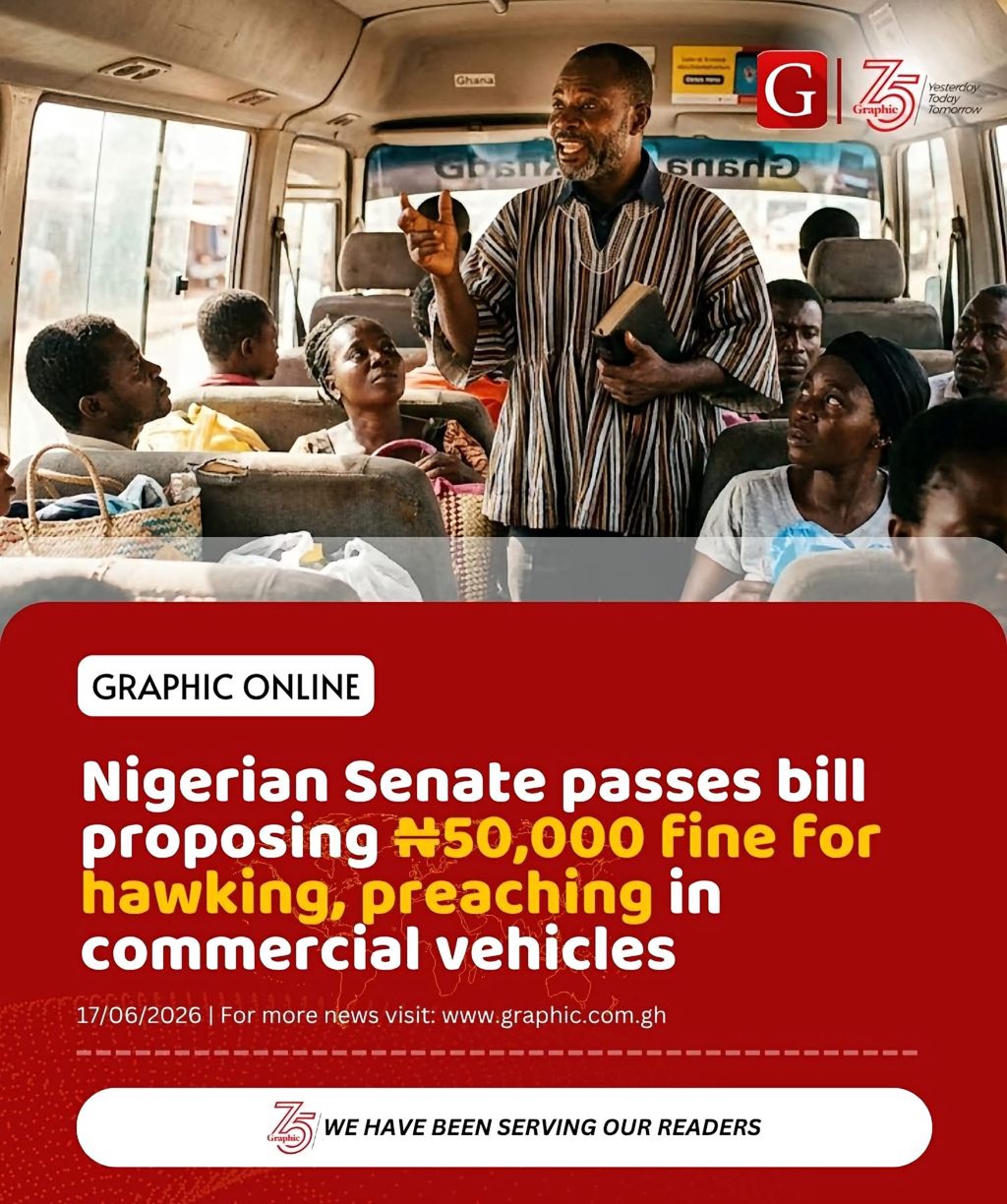
Nigeria’s Senate has passed a bill proposing a ₦50,000 fine for anyone caught preaching, hawking, or trading inside commercial buses. The bill amends the Federal Road Safety Corps Act, 2026, and now awaits presidential assent. Lawmakers argue the measure is intended to eliminate distractions that compromise driver and passenger safety.
But here is the uncomfortable truth for Ghana: we already have a similar law on the books – we just refuse to enforce it.
Ghana’s Forgotten Law
Under Ghana’s Road Traffic Regulations, 2012 (L.I. 2180), Regulation 116 explicitly states: “A person shall not cause or permit to cause nuisance, including preaching and hawking, on a public or commercial vehicle while the motor vehicle is in motion”. The constitution guarantees the right to practice religion under Article 21, but that right is subject to restrictions for public safety under Article 21(4).
Yet across Accra, Kumasi, and Takoradi, preachers board moving trotros daily, delivering impromptu sermons while vendors hawk everything from plantain chips to herbal medicines. Passengers who complain are often shouted down or accused of being “unbelievers”.
In April 2026, a Ghana Police officer from the Motor Traffic and Transport Directorate reaffirmed that preaching and hawking in public transport is illegal. But enforcement remains virtually non-existent. The result? Distracted drivers, agitated passengers, and at least one recorded violent clash when a passenger physically closed a preacher’s Bible mid-sermon.
Why Ghana Must Act – Now
- Road Safety Is Not Negotiable. Commercial drivers already navigate potholes, unruly okada riders, and heavy congestion. A preacher pacing the aisle or a hawker leaning out of a moving trotro is a disaster waiting to happen. Nigeria’s lawmakers recognised this. Ghana’s drivers have also warned of strikes over the government’s failure to enforce road traffic laws.
- A Clear Penalty Sends a Message. Nigeria’s proposed ₦50,000 fine (approximately GH₵1,100) creates a tangible deterrent. Ghana’s current law carries a penalty of up to 50 penalty units or three months’ imprisonment, but it is almost never applied. A specific, publicised fine – coupled with visible enforcement – would signal that passenger safety matters more than commercial or religious convenience.
- Passengers Deserve Peace. Commuters already endure overcrowded vehicles and exhausting daily commutes. Forcing them to also suffer unsolicited sermons or high-pressure sales is an infringement on their right to travel without harassment. As one police inspector put it: “There are many other places where you can preach”.
- Nigeria’s Move Is a Wake-Up Call. West Africa’s largest economy is taking decisive action to regulate commercial transport. Ghana, which prides itself on being a regional leader, cannot afford to lag behind – especially when the legal framework already exists.
The Path Forward
The Ministry of Transport and the National Road Safety Authority have recently moved to regulate okada and pragya operations, ban unsafe Toyota Voxy vehicles, and increase penalties for overloading to GH₵50,000. These are commendable steps.
But a law that sits unenforced is worse than no law at all. It breeds disrespect for the rule of law and puts lives at risk.
Ghana does not need a new bill. It needs the political will to enforce L.I. 2180, Regulation 116 – and the courage to impose meaningful penalties on those who violate it. Nigeria has shown the way. The question is whether Ghana will finally get on board.
شارك هذا الخبر
اشترك في النشرة الإخبارية لـ AfroAsia Media
أبرز أخبار اليوم من أفريقيا وآسيا، مباشرةً إلى بريدك الإلكتروني.




التعليقات
عدد التعليقات: 0
جارٍ التحميل…