
نعمل الآن على ترجمة هذا المقال إلى العربية — ستظهر الترجمة هنا بعد لحظات. نعرض لك في الأثناء النص الأصلي باللغة الإنجليزية.
GNCCI warns: 24-Hour Economy must deliver now to lock in Ghana’s fragile recovery
Ghana’s fragile economic rebound hangs in the balance unless the government fast-tracks flagship policies like the 24-Hour Economy and the Big Push programme, the Ghana National Chamber of Commerce and Industry (GNCCI) has warned. Speaking at the Chamber’s Mid-Year Budget Review Seminar in Accra on Wednesday, GNCCI President Stephane Miezan acknowledged that recent fiscal discipline—marked…
بقلم Ralph Waldo Emerson
نُشر في مدة القراءة: 3 د
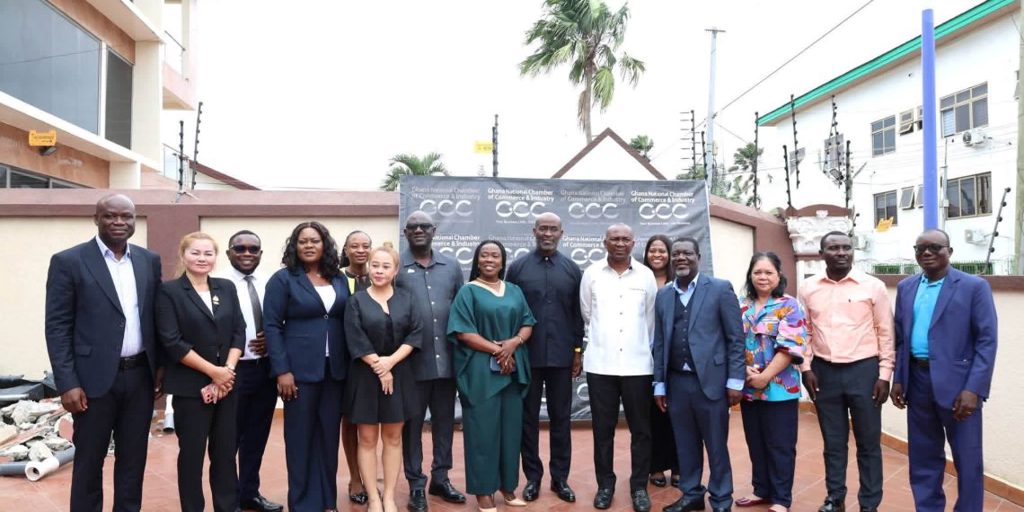
Ghana’s fragile economic rebound hangs in the balance unless the government fast-tracks flagship policies like the 24-Hour Economy and the Big Push programme, the Ghana National Chamber of Commerce and Industry (GNCCI) has warned.
Speaking at the Chamber’s Mid-Year Budget Review Seminar in Accra on Wednesday, GNCCI President Stephane Miezan acknowledged that recent fiscal discipline—marked by a sharp pivot from heavy borrowing to prudent spending—had restored investor confidence and steadied the cedi. However, he stressed that “macro-level stability is not the same as business-level growth.”
“The 24-Hour Economy is not a slogan; it is a logistics and infrastructure puzzle,” Miezan told over 300 delegates, including Finance Ministry officials, World Bank representatives, and captains of industry. “If power supply, security, and public transport are not synchronised within the next six months, this policy will become another white paper, and the recovery will stall.”
The seminar, part of GNCCI’s National Dialogue Series, dissected the 2026 Mid-Year Budget Review’s implications for the private sector. While the government’s commitment to a primary surplus and debt sustainability drew applause, Miezan flagged three critical bottlenecks:
· Financing gaps: The Big Push industrialisation plan requires an estimated $2.5 billion in blended finance, but only 30% of that has been secured from development partners.
· Policy inconsistency: Frequent changes in tax administration and import restrictions have left manufacturers unable to plan beyond quarterly cycles.
· Private-sector friction: The Accelerated Export Development Programme has registered only 40% of its targeted agro-processing firms due to cumbersome licensing requirements.
“We are not asking for handouts; we are asking for predictable execution,” Miezan said. “Businesses are making hiring and expansion decisions today based on what they see on the ground, not on budget speeches.”
He urged the government to establish a joint public-private implementation task force with quarterly performance benchmarks, warning that Ghana’s recovery—projected at 4.2% GDP growth for 2026—could be derailed by global commodity price shocks and domestic energy tariff hikes expected in Q4.
The GNCCI also called for an immediate audit of all 24-Hour Economy pilot zones to assess grid reliability and night-time security, noting that the chamber’s own survey of 1,200 SMEs showed 78% are unwilling to operate night shifts unless guaranteed uninterrupted power.
“The Budget Review paints a hopeful picture, but hope does not pay salaries,” Miezan concluded. “We have 12 months to turn policy into pavement, power, and production. If we miss that window, the recovery will remain a statistic, not a reality.”
The seminar closed with a call for the Ministry of Finance to publish a “Delivery Dashboard” by October 2026, tracking each flagship programme’s disbursement and milestones publicly—a move the GNCCI says will hold all stakeholders accountable.
Background context:
The 24-Hour Economy policy, a campaign promise of the current administration, aims to shift commercial activity to off-peak hours to boost GDP and employment. The Big Push initiative seeks to revive distressed industrial zones, while the Accelerated Export Programme targets a 15% annual increase in non-traditional exports. Ghana’s economy has struggled with high inflation (currently at 18.7%) and public debt exceeding 80% of GDP, though recent IMF-supported reforms have lowered the fiscal deficit from 8.1% to 4.5%.
شارك هذا الخبر
اشترك في النشرة الإخبارية لـ AfroAsia Media
أبرز أخبار اليوم من أفريقيا وآسيا، مباشرةً إلى بريدك الإلكتروني.




التعليقات
عدد التعليقات: 0
جارٍ التحميل…