
نعمل الآن على ترجمة هذا المقال إلى العربية — ستظهر الترجمة هنا بعد لحظات. نعرض لك في الأثناء النص الأصلي باللغة الإنجليزية.
Ghana processes less than 6% of cashew output as farmers face price plunge, New Study reveals
Ghana’s cashew sector is in crisis, with a new independent study revealing that the country processed only about 15,000 metric tonnes of raw cashew nuts in 2025—less than six percent of its estimated annual production of 262,000 tonnes. The findings have reignited urgent calls for government intervention to transform the industry from a raw-export business…
بقلم Ralph Waldo Emerson
نُشر في مدة القراءة: 4 د
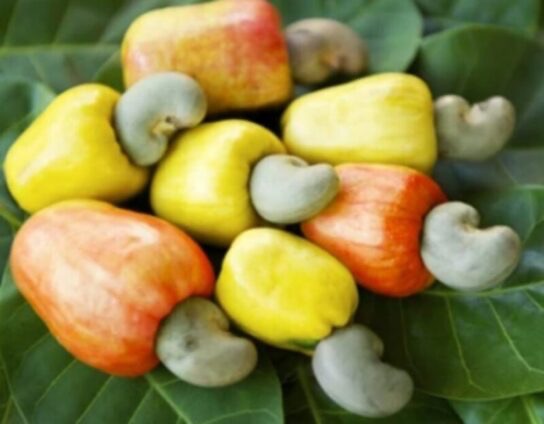
Ghana’s cashew sector is in crisis, with a new independent study revealing that the country processed only about 15,000 metric tonnes of raw cashew nuts in 2025—less than six percent of its estimated annual production of 262,000 tonnes. The findings have reignited urgent calls for government intervention to transform the industry from a raw-export business into a competitive agro-processing sector.
The study, Ghana Cashew Processing Sector and Roadmap for a Supportive Cashew Public Policy, was conducted by international agricultural economics consultancy Nitidae, with support from the Association of Cashew Processors of Ghana (ACPG), GIZ, and the European Union Delegation to Ghana.
Farm-Gate Prices Plunge in 2025
One of the study’s starkest warnings concerns price volatility. In 2025, farm-gate prices started at about GH¢16 per kilogramme in January, rose to roughly GH¢20 in February, then collapsed to just GH¢7 by May. This dramatic drop exposes farmers—who depend heavily on cashew sales—to the whims of international demand.
The 2025 decline mirrors a similar crash in 2023, when prices fell from GH¢11 per kilogramme in March to GH¢2.80 in May. The study warns that such sharp fluctuations discourage investment in farm expansion and maintenance, undermining long-term productivity.
The Raw Export Paradox
Despite producing 262,000 tonnes annually, Ghana exported approximately 444,000 tonnes of raw cashew nuts in 2025—more than it produces. The difference, according to Nitidae, is explained by an estimated 165,000 tonnes of raw nuts imported informally from Côte d’Ivoire, Mali, and Burkina Faso, then re-exported through Tema Port.
Ghana’s relatively liberal raw-export regime, combined with weak domestic processing incentives, has made the country a major transit hub for raw nuts while capturing minimal value. “Most of the added value is generated outside of Ghana,” the study noted.
Jobs and Revenue Lost
The consequences are severe. A modern 20,000-tonne processing factory could employ 120 full-time and 500 daily workers. With current production levels, Ghana could support over 10 such factories, creating thousands of jobs across farming, logistics, packaging, engineering, and finance. Instead, that economic activity occurs in Vietnam and India—the world’s dominant cashew processors.
ACPG President Antonio Manuel Caramelo Raposo put it bluntly: “Every tonne we export raw is a factory job, a tax cedi, and a unit of foreign exchange we are choosing to send to Vietnam and India instead of keeping in Ghana.”
High Costs Cripple Investment
The study identified prohibitive costs as a key barrier. Establishing a modern 20,000-tonne factory in Ghana costs approximately US5.3 million. Ghanaian processors also face electricity costs, expensive imported machinery, limited industrial support, and borrowing rates around 20 percent, compared to nine percent in Vietnam.
Regional Competitors Move Ahead
Ghana lags behind competitors. Côte d’Ivoire, Benin, Nigeria, and Togo have introduced export levies, subsidies, and industrial zones to boost local processing. Ghana, however, remains one of the few cashew-producing countries without a comprehensive policy framework for domestic processing.
The ACPG is urging the government to treat cashew as an urgent priority under the 24-Hour Economy and Accelerated Export Development agenda. President John Dramani Mahama and Senior Presidential Advisor Augustus Goosie Tanoh have both criticised raw-material exports, arguing they export jobs and industrial value.
Balanced Policy Recommendations
The study cautioned against a blanket ban on raw exports, which could reduce farm-gate prices and fuel informal cross-border trade. Instead, it recommends:
· A two-component export levy (fixed tax plus floating component linked to international prices).
· A Cashew Development Fund to support farmers and processors.
· Tax and VAT exemptions for processor inputs.
· Improved access to working capital through Collateral Management Agreements.
· Dedicated agro-industrial parks in Bono and Bono East regions.
Beyond Kernels: The By-Product Opportunity
Cashew shells, which account for 70 percent of the nut’s weight, can be processed into Cashew Nut Shell Liquid, biofuel, briquettes, and biochar. Vietnam and India have built lucrative by-product industries, while Ghana’s processors capture little of that value.
A Defining Moment for Industrialisation
The study’s findings raise a fundamental question: Can Ghana achieve its industrialisation ambitions while continuing to export raw agricultural commodities? For the cashew sector, the answer depends on whether policymakers act on the evidence—or allow another season of raw exports to ship jobs and revenue abroad.
As the ACPG warned, every passing season without supportive policy leaves farmers more vulnerable and Ghana further behind its regional competitors. The future of the industry hinges not on production capacity, but on the political will to process more of what the country grows.
شارك هذا الخبر
اشترك في النشرة الإخبارية لـ AfroAsia Media
أبرز أخبار اليوم من أفريقيا وآسيا، مباشرةً إلى بريدك الإلكتروني.




التعليقات
عدد التعليقات: 0
جارٍ التحميل…