
نعمل الآن على ترجمة هذا المقال إلى العربية — ستظهر الترجمة هنا بعد لحظات. نعرض لك في الأثناء النص الأصلي باللغة الإنجليزية.
Economic emancipation is Africa’s next battle — President Mahama
President John Dramani Mahama has declared that the next great struggle facing Ghana, Jamaica, and the broader African continent is not political liberation—which has already been won—but economic emancipation through sustainable development and shared prosperity. Speaking at the Special High-Level Reparations Dialogue at the University of the West Indies in Jamaica, President Mahama traced the…
بقلم Ralph Waldo Emerson
نُشر في مدة القراءة: 3 د
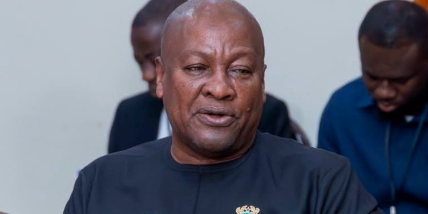
President John Dramani Mahama has declared that the next great struggle facing Ghana, Jamaica, and the broader African continent is not political liberation—which has already been won—but economic emancipation through sustainable development and shared prosperity.
Speaking at the Special High-Level Reparations Dialogue at the University of the West Indies in Jamaica, President Mahama traced the historical ties between Ghana and Jamaica, highlighting the profound influence of Jamaican Pan-Africanist Marcus Garvey on Ghana’s first president, Kwame Nkrumah. “I’m happy to have come to Jamaica. We all know the relationships that have existed between Ghana and Jamaica. Indeed, our first president, of blessed memory, had always written and spoken about Marcus Garvey and the influence he had on him,” he said.
From Liberation to Transformation
President Mahama acknowledged that the ideas and contributions of Pan-African leaders inspired independence movements across the continent and played a pivotal role in Africa’s liberation from colonial rule. However, he stressed that the historical fight for political freedom is now behind us. “Today, all that is history. But that was the fight for liberation,” he noted.
He argued that the relationship between Ghana and Jamaica—rooted in shared history, culture, and the legacy of the African diaspora—must now be redirected toward a new purpose: economic cooperation and mutual prosperity. “But today, we’re faced with a new fight. And that is why the relationships between us and visits like this are important,” he said.
A Call for Cooperation
President Mahama framed the current challenge in stark terms: “The battle that confronts us now is not the battle for liberation—we’re independent anyway—the battle that confronts us is how we can cooperate to increase our economic development and create prosperity for our people. And so the battle now is the battle for economic emancipation.”
He called for stronger collaboration between Ghana, Jamaica, and other African and Caribbean nations to drive industrialisation, trade, investment, and technological exchange—areas he identified as critical to breaking cycles of dependency on external markets and financing.
Broader Context
The Special High-Level Reparations Dialogue, hosted by the University of the West Indies, brought together policymakers, academics, and diaspora leaders to discuss reparative justice, historical accountability, and pathways to economic self-determination. President Mahama’s remarks align with a growing global movement among African and Caribbean nations to reimagine their economic futures beyond the legacy of colonial extraction.
Ghana’s Domestic Challenges
The President’s call comes at a time when Ghana is grappling with high public debt, currency depreciation, and the need to diversify its economy away from raw commodity exports. Recent data shows that Ghana processes less than six percent of its cashew output and remains heavily reliant on imported refined petroleum, underscoring the structural weaknesses Mahama seeks to address.
A Message of Hope and Urgency
While acknowledging the scale of the challenge, President Mahama expressed optimism that the shared values, historical bonds, and youthful populations of Africa and the Caribbean can be harnessed to build resilient, self-sufficient economies. He urged leaders and citizens alike to treat economic emancipation with the same urgency and determination that drove the independence movements of the mid-20th century.
For Ghana and Jamaica, the battle for economic freedom is not merely a domestic priority—it is a collective Pan-African project that demands unity, innovation, and sustained political will.
شارك هذا الخبر
اشترك في النشرة الإخبارية لـ AfroAsia Media
أبرز أخبار اليوم من أفريقيا وآسيا، مباشرةً إلى بريدك الإلكتروني.




التعليقات
عدد التعليقات: 0
جارٍ التحميل…