
نعمل الآن على ترجمة هذا المقال إلى العربية — ستظهر الترجمة هنا بعد لحظات. نعرض لك في الأثناء النص الأصلي باللغة الإنجليزية.
Bank of Ghana mourns Yaa-Naa Ankara II, hails late Dagbon King as a pillar of peace and national unity
The Bank of Ghana (BoG) has joined the nation in mourning the passing of the Overlord of Dagbon, Ndan Yaa-Naa Abukari II, describing his death as a profound loss not only to the Dagbon Kingdom but to the entire Ghanaian nation. In a formal press release issued on Monday, July 27, the central bank paid…
بقلم Ralph Waldo Emerson
نُشر في مدة القراءة: 5 د
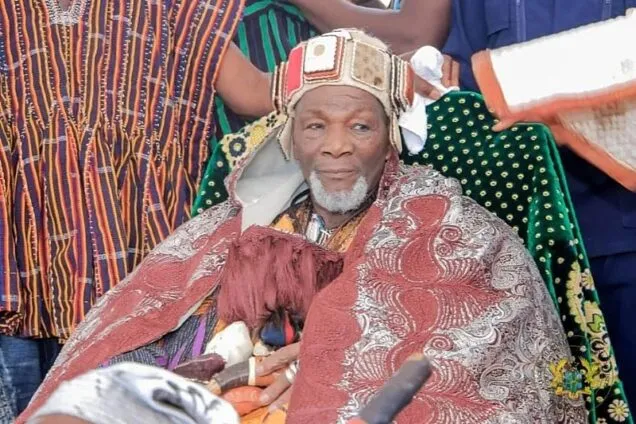
The Bank of Ghana (BoG) has joined the nation in mourning the passing of the Overlord of Dagbon, Ndan Yaa-Naa Abukari II, describing his death as a profound loss not only to the Dagbon Kingdom but to the entire Ghanaian nation. In a formal press release issued on Monday, July 27, the central bank paid a glowing tribute to the late monarch, lauding his extraordinary role in preserving cultural heritage, fostering reconciliation, and advancing national development throughout his reign.
“The Bank of Ghana is deeply saddened by the passing of His Royal Majesty, Ndan Yaa-Naa Abukari II, King of Dagbon,” the statement began, setting a tone of solemn reverence. The central bank characterised the late Yaa-Naa as an exceptional traditional ruler whose wisdom, leadership, and unwavering dedication to his people earned him widespread admiration and respect across all regions of the country.
A Legacy of Peace and Unity
The BoG’s tribute underscored the late King’s role as a custodian of Dagbon’s rich customs and traditions, but also emphasised his broader national significance. “His Majesty was a revered custodian of culture, peace and unity, and his leadership and wisdom contributed immensely to the stability and development of Ghana. His wise counsel and leadership will be greatly missed,” the statement read.
The tribute reflects the late King’s influence far beyond the traditional boundaries of the Dagbon Kingdom. He was widely recognised as a key architect of peace in Northern Ghana, having ascended the Yendi throne in 2019 after a protracted and bloody chieftaincy dispute that had divided the kingdom for 16 years. His reign is credited with restoring the sanctity of the Dagbon traditional council, bridging the deep rift between the Abudu and Andani royal gates, and re-establishing chieftaincy as a stabilising force in Ghana’s democratic fabric.
The Historical Context of Dagbon’s Reconciliation
Yaa-Naa Abukari II was enskinned on January 18, 2019, following a landmark peace agreement brokered by the government, traditional authorities, and the National Peace Council. The conflict, which had claimed lives and displaced thousands, stemmed from a succession dispute over the Yendi skin following the death of Yaa-Naa Yakubu Andani II in 2002. The peace process that brought Abukari II to the throne was hailed as a model for traditional dispute resolution in Africa, and the late King spent his reign consolidating that fragile peace.
He was the 41st Yaa-Naa of Dagbon, succeeding a lineage that stretches back centuries. Born Bukali in Mion, he was the son of Yaa-Naa Mahama II, who ruled Dagbon from 1938 until his death in 1948. His mother, Ayishetu, was a princess from Kulunkpegu, near Chaazaadaanyili in the Northern Region. His deep roots in both the royal and traditional structures of Dagbon gave him a unique legitimacy that was crucial to his peace-making mission.
Institutional Tribute and Condolences
On behalf of the Board of Directors, Management, and entire staff of the Bank of Ghana, the institution extended its deepest sympathies to the Royal Family, the traditional authorities, and the people of Dagbon. “We extend our heartfelt condolences to the Elders, the people of Dagbon, and the bereaved Royal Family. We pray that the Almighty grant the people of the Dagbon Kingdom strength and fortitude during this difficult period,” the statement concluded.
The BoG’s tribute is significant because the central bank, as a national institution, does not typically issue public statements on the passing of traditional rulers. This exception underscores the extraordinary national standing of Yaa-Naa Abukari II, whose influence transcended ethnicity and region, earning him the respect of successive governments, religious leaders, and civil society groups.
National Mourning and Public Reaction
News of the King’s death on July 13—which was formally announced after traditional rites were completed—has triggered an outpouring of grief across Ghana. President John Dramani Mahama declared a period of national mourning, with flags flying at half-mast in honour of the monarch. Several public institutions, including Parliament, the Judiciary, and the Ghana Armed Forces, have issued their own tributes, describing the late Yaa-Naa as a “bridge-builder” and “a father to all.”
In Tamale and Yendi, thousands of mourners have gathered at the Gbewaa Palace to pay their respects, with traditional drumming and funeral rites ongoing in accordance with Dagbon customs. The funeral is expected to attract high-level delegations from across the continent, including traditional rulers from other kingdoms, as well as foreign diplomats.
The End of an Era
Yaa-Naa Abukari II’s death marks the end of a transformative era for Dagbon. His seven-year reign, though relatively short, was defined by healing, development, and the revival of cultural festivals such as the Damba and Bugum (Fire) festivals, which had been suspended during the conflict. He also championed education and healthcare initiatives, urging his subjects to embrace modernity while preserving their traditions.
As the Dagbon Kingdom prepares for the next succession process—which will once again test the delicate peace he helped forge—the nation reflects on a leader who gave Ghana a blueprint for peace. The Bank of Ghana’s tribute serves as a reminder that his legacy is not confined to Yendi, but is woven into the broader story of Ghana’s journey toward unity and reconciliation.
For now, the financial and economic community joins the rest of the nation in silence, honouring a king who, though seated on a skin in the North, touched the heart of every Ghanaian. As the BoG statement put it: “His wise counsel and leadership will be greatly missed.”
شارك هذا الخبر
اشترك في النشرة الإخبارية لـ AfroAsia Media
أبرز أخبار اليوم من أفريقيا وآسيا، مباشرةً إلى بريدك الإلكتروني.




التعليقات
عدد التعليقات: 0
جارٍ التحميل…