
Moree Fishermen Question Effectiveness of Closed Season, Admit Own Role in Depleting Stocks
Fishermen in Moree, a coastal community in the Central Region, have cast doubt on the effectiveness of Ghana's closed fishing season, calling for direct engagement with the Ministry of Fisheries and…
Journalist
Published 3 min read
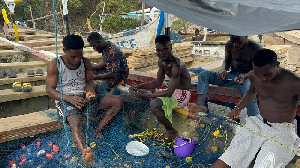
Fishermen in Moree, a coastal community in the Central Region, have cast doubt on the effectiveness of Ghana's closed fishing season, calling for direct engagement with the Ministry of Fisheries and Aquaculture to address the practical realities they face at sea.
In an exclusive interview with journalist Elizabeth Aidoo during a visit to the community, several fishermen argued that the closed season, as currently implemented, was not producing the desired results and appealed to Fisheries Minister Emelia Arthur to visit Moree and engage directly with those who work on the water .
One fisherman maintained that such engagement would allow them to explain the difficulties they encounter at sea and the realities of their work. However, in a candid admission, he also acknowledged that fishermen themselves bear part of the responsibility for the pressure on marine resources.
"We, the fishermen, are also part of the problem. We have contributed to destroying the natural fishing pattern," he said .
Frequent Harvesting Disrupts Breeding Cycles
The fisherman explained that some operators return to sea every one or two weeks to catch fish, sometimes harvesting them before they have grown sufficiently to reproduce. He attributed the practice partly to the need to meet consumer demand for fish.
He argued that allowing fish more time to breed and grow was essential for the sustainability of the fishing industry, and acknowledged that fishing communities could not place all the blame for declining stocks on government policies when their own activities contributed to the problem .
The fishermen also described the practical complexities of their trade, explaining that they use different types of nets depending on the species they intend to catch and the conditions at sea. When the sea becomes still, making it difficult to catch certain types, they may switch from redfish nets to others targeting different species .
A Policy Under Scrutiny
Ghana's closed fishing season is intended to reduce fishing pressure and give stocks an opportunity to recover. For 2026, industrial trawlers observed a two-month closure from July 1 to August 31, while semi-industrial vessels stopped fishing for one month in July. Artisanal canoe fishers, however, were exempted from the closure to protect the livelihoods of coastal communities that depend solely on fishing .
The exemption for canoe fishers—who contribute about 80 percent of the fish consumed locally and roughly 60 percent of the nation's animal protein intake—means that communities like Moree, which rely heavily on artisanal fishing, were not directly subject to the ban . Yet the fishermen's concerns point to a broader question: whether the closed season alone can achieve sustainable stocks when illegal practices and intensive harvesting continue unabated.
Previous research on fishing communities in Ghana's Western and Central regions has found similar scepticism. A study conducted in Dixcove, Akwidaa and other landing sites found that many fishers did not see the purpose of the closed season, arguing that the ban would only be effective if illegal fishing methods—particularly light fishing—were simultaneously curtailed. Some even suggested the closed season should be cancelled if light fishing continues before and after the ban .
Call for Consultation
The Moree fishermen's appeal for ministerial engagement echoes long-standing complaints about the gap between policy design and the lived experience of fishing communities. They argued that discussions with those who work at sea would help authorities understand their challenges and identify measures that support both livelihoods and marine protection.
For the fishermen of Moree, the message is clear: protecting the sea requires more than seasonal bans—it requires the involvement and cooperation of the people whose livelihoods depend on it .
Get the AfroAsia Media newsletter
The day's top stories from Africa and Asia, straight to your inbox.
Comments
0 comments
Loading…