
Ghana’s FDA Announces Sweeping New Fees for Food Importers and Manufacturers
Food importers and manufacturers in Ghana will face higher operational costs following the Food and Drugs Authority’s (FDA) announcement of a revised fee structure covering product verification…
Journalist
Published 3 min read
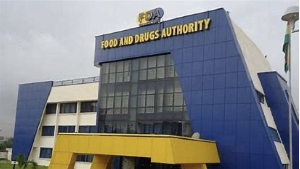
Food importers and manufacturers in Ghana will face higher operational costs following the Food and Drugs Authority’s (FDA) announcement of a revised fee structure covering product verification, registration, and re-registration for regulated items.
The new charges, published by the Ministry of Health and enacted under the Fees and Charges (Miscellaneous Provisions) Regulations, 2023 (L.I. 2481), apply to food products, medicines, medical devices, cosmetics, and other regulated goods .
Under the revised structure, importers of general food products will pay 0.80 percent of the Free on Board (FOB) value of their goods. Bulk food imports—including rice, wheat, sugar, and fish—will attract a lower rate of 0.25 percent .
The fee schedule extends beyond food. Importers of drugs will pay 1.80 percent of FOB value, while medical devices and veterinary products attract 1.30 percent. Cosmetics and household chemical substances will be charged 0.50 percent, with food supplements also at 1.30 percent. Individuals importing medication for personal use, covering up to 90 days, will pay a fixed fee of GH¢100 .
Registration fees for imported food products are tiered by volume. Companies registering between one and 30 products will pay GH¢250 per product, while those registering more than 1,000 products will pay GH¢100 per product. Locally manufactured food products will face annual registration fees based on business size, with micro-scale manufacturers paying GH¢100 per year and large-scale manufacturers paying GH¢500 annually .
In the pharmaceutical sector, imported allopathic medical products will attract an annual registration fee equivalent to US360. Locally manufactured allopathic medicines will attract an annual fee of GH¢1,000, with reduced rates for small-scale manufacturers .
Medical device fees will be determined by risk classification. Imported devices will attract annual fees ranging from the cedi equivalent of US200 for Class IV devices. Locally manufactured devices will pay between GH¢750 for Class I and GH¢1,200 for Class IV .
The FDA stated that the new fee structure sets out the charges businesses must pay to have their products verified and registered by the authority. The regulations represent an effort to align regulatory costs with the scope and risk profile of regulated products, though the immediate impact will be felt most acutely by importers dealing in high-volume, low-margin food commodities and by small-scale local manufacturers adjusting to the new annual registration obligations.
The announcement takes effect amid broader fiscal adjustments in Ghana’s regulatory landscape, as agencies move to cost-recovery models for services. For businesses in the food and pharmaceutical supply chains, compliance with the revised fee schedule will now be a direct input into pricing and import planning for the coming year.
Get the AfroAsia Media newsletter
The day's top stories from Africa and Asia, straight to your inbox.
Comments
0 comments
Loading…