
我们正在将本文翻译成中文,译文稍后将显示在此处。目前先显示英文原文。
World Cup last-32 breakdown exposes continental gulf — Africa’s ex-FIFA Council member calls for slot realignment
As the 2026 FIFA World Cup enters its knockout phase, the continental distribution of the 16 teams that have advanced to the round of 32 has reignited debate over the tournament’s expansion and the competitive balance between football’s geopolitical zones. UEFA, Europe’s governing body, leads the pack with seven representatives – a staggering 44% of…
发布于 阅读约 4 分钟
As the 2026 FIFA World Cup enters its knockout phase, the continental distribution of the 16 teams that have advanced to the round of 32 has reignited debate over the tournament’s expansion and the competitive balance between football’s geopolitical zones.
UEFA, Europe’s governing body, leads the pack with seven representatives – a staggering 44% of the last-32 field. CONMEBOL (South America) follow with four (25%), CONCACAF (North and Central America) have three (19%), and CAF (Africa) have just two (12%). Asia (AFC) and Oceania (OFC) have none.
The statistics, drawn from the final group-stage standings of the 48-team tournament co-hosted by the United States, Canada and Mexico, confirm what many observers have long observed: European and South American sides continue to dominate the business end of the world’s premier football event, while Africa and Asia struggle to convert increased participation into meaningful progress.
African representation shrinks despite expanded field
Africa’s two survivors are Cape Verde and the Democratic Republic of Congo – both debutants at this stage, having emerged from Groups F and H respectively. Their presence, however, masks a broader disappointment for the continent. Nigeria, Mali, Cameroon, Zambia and Madagascar – all considered heavyweights in African qualifying – failed to make the finals altogether, while Ghana, Senegal and Morocco exited in the group phase.
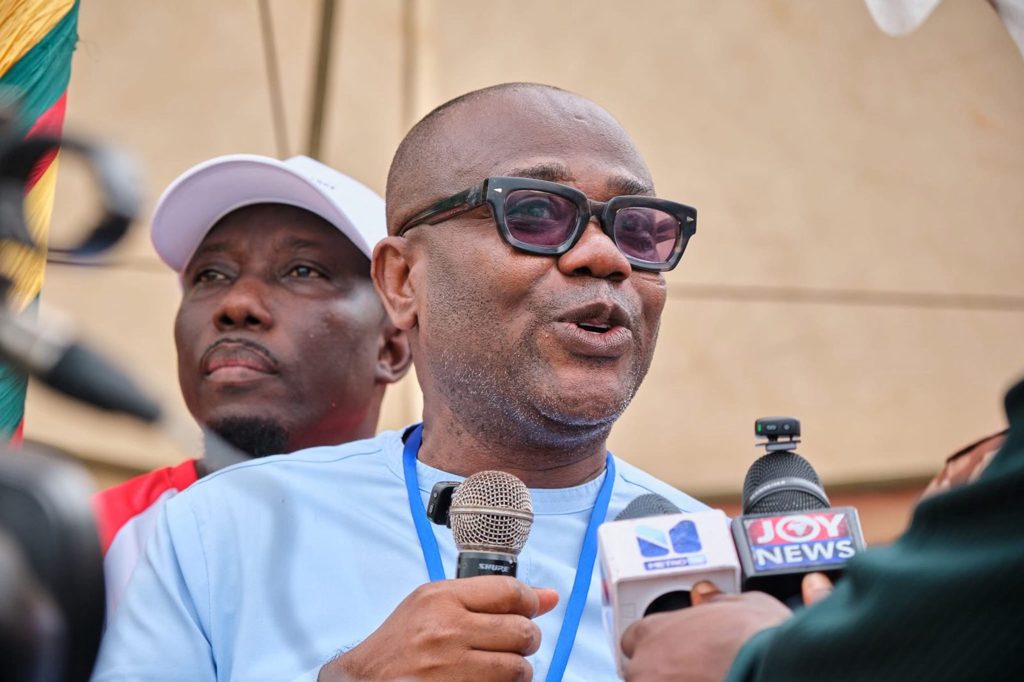
Speaking to reporters in Accra, former Ghana Football Association president and ex-FIFA Council member Kwesi Nyantekyi argued that the current slot allocation does not reflect on-field merit. “Cape Verde and Congo have demonstrated that Africa can make a strong case for more slots in future,” he said. “But we have seen Nigeria, Mali, Cameroon, Zambia and Madagascar – some of our strongest teams – miss out entirely. That tells you that the margins are fine, and that Africa’s depth is greater than the two or three teams we traditionally send to the knockout rounds.”
Nyantekyi, who served on FIFA’s strategic committee during the expansion talks, believes the 48-team model – while commercially attractive – risks diluting competitive quality if quotas are not adjusted based on performance trends. “The idea of a 48-team World Cup is a good conduit for reinvesting FIFA revenues back into development programmes of member associations,” he said. “But the selection of the 48 teams will make little or no impact on the field of play if the geopolitical spread does not take into account performances on the pitch.”
Europe and Americas dominate – Asia and Oceania blanked
UEFA’s seven qualifiers include heavyweights Spain, France, Germany, England, Portugal, Netherlands and Croatia. CONMEBOL’s four are Brazil, Argentina, Uruguay and Ecuador – all traditional powers. CONCACAF’s trio comprises the United States, Mexico and Canada, benefiting from home advantage but also showing genuine competitiveness.
In stark contrast, Asia’s six representatives – Japan, South Korea, Australia, Saudi Arabia, Iran and Qatar – all crashed out in the group stage. Oceania’s sole entrant, New Zealand, also failed to progress. Nyantekyi noted that while Asia and Oceania possess a few powerhouses – “Australia, Japan and South Korea” – beyond those, “not much has been seen of the other teams in those zones.”
He suggested that future expansions or reallocations should favour confederations that consistently produce competitive sides. “Europe, South America, North America and Africa should be considered for more slots,” he said. “The performance data is clear. We cannot keep rewarding underperformance with equal quotas while strong football nations are left watching at home.”
FIFA’s expansion under scrutiny
The 2026 World Cup is the first to feature 48 teams, up from 32, with a new group format of 16 groups of three. Critics had warned that the expanded field would water down quality and produce lopsided group matches. While the group stage did produce some shocks – Cape Verde eliminating Nigeria in qualifying, for instance – the last-32 composition suggests the established orders remain largely intact.
FIFA has defended the expansion as a means to grow the game globally, particularly in underrepresented regions. However, Nyantekyi’s remarks echo a growing sentiment among African football administrators that the current 9.5 slots allocated to CAF – up from five in previous editions – remain insufficient given the continent’s rising standards and competitive depth.
“We are not asking for charity,” Nyantekyi said. “We are asking for a merit-based system that reviews slots after each tournament based on performance. If Africa consistently delivers two or three teams in the last 16, then we deserve more. If Asia and Oceania cannot break through, then their shares should be reviewed.”
As the World Cup knockout rounds commence, the debate over global representation is unlikely to fade. For now, Europe and South America continue to set the benchmark – and the numbers, as Nyantekyi argues, speak for themselves.
订阅 AfroAsia Media 新闻简报
每日非洲与亚洲要闻,直接发送到您的邮箱。




评论
0 条评论
加载中…