
我们正在将本文翻译成中文,译文稍后将显示在此处。目前先显示英文原文。
Weak cedi undermines fuel price relief, even as government subsidy kicks in —IES
The Institute for Energy Security (IES) has warned that the ongoing depreciation of the Ghana cedi is significantly blunting the impact of government interventions meant to lower fuel prices, leaving consumers with smaller-than-expected reductions at the pump. Speaking on Joy FM’s Top Story on Monday, Derek Emmanuel Xatse, Senior Research and Policy Analyst at IES,…
发布于 阅读约 3 分钟
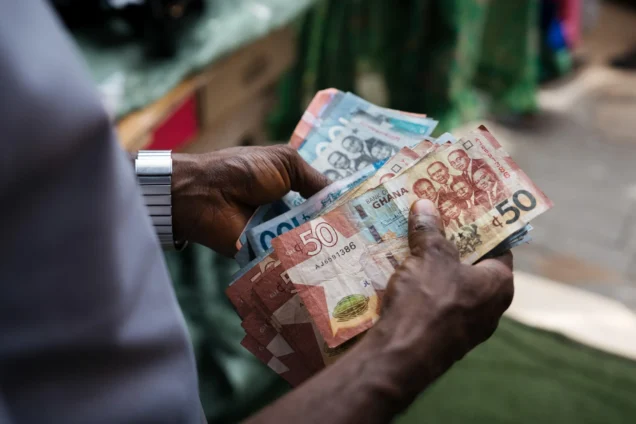
The Institute for Energy Security (IES) has warned that the ongoing depreciation of the Ghana cedi is significantly blunting the impact of government interventions meant to lower fuel prices, leaving consumers with smaller-than-expected reductions at the pump.
Speaking on Joy FM’s Top Story on Monday, Derek Emmanuel Xatse, Senior Research and Policy Analyst at IES, explained that while the government’s recent GH¢2 per litre subsidy on diesel has provided some relief, the currency’s weakness is eroding a substantial portion of those savings.
“The cedi for the past weeks has also been depreciating, which is not good for Ghanaians because rather than that, we would have been having more reduction at the various pumps,” Xatse said.
The Exchange Rate Factor
Ghana imports nearly all its refined petroleum products, meaning international oil prices and exchange rates are the twin drivers of domestic pump prices. Even when global crude prices soften or the government steps in with subsidies, a depreciating cedi increases the local-currency cost of imports, effectively offsetting any intended price cuts.
IES notes that over the past fortnight, the cedi has weakened by 0.47% against the US dollar in the interbank market and 0.21% in the retail segment, with the dollar trading at around GH¢12.13 in the retail market. While these moves are modest, they compound the high import bill for fuel suppliers.
Subsidy Provides Temporary Relief, Not a Cure
The GH¢2 per litre subsidy on diesel—introduced in late July—was designed to cushion consumers against global oil price volatility. However, Xatse stressed that subsidies are a short-term fix. “The long-term measure is that the government has to look for more money to be able to cushion consumers,” he said, pointing to the need for broader macroeconomic stabilisation.
He argued that sustained fuel affordability will require not just fiscal interventions, but a holistic approach that includes stabilising the cedi, reducing reliance on imported fuels, and improving local refining capacity.
A Broader Economic Challenge
The IES warning comes amid mixed economic signals. While the Bank of Ghana has injected over US371 million under its Extended Credit Facility, underlying demand pressures—especially from energy-related imports—continue to weigh on the currency.
Xatse noted that unless exchange rate stability is achieved alongside fiscal discipline, consumers will remain vulnerable to price shocks regardless of government subsidies.
Outlook for Consumers
For now, fuel prices at the pumps have seen modest declines, but IES cautions that any further depreciation could reverse these gains. The Institute urges policymakers to prioritise currency stability and long-term energy security as part of a durable solution—rather than relying solely on stopgap subsidies that are increasingly being undermined by the cedi’s weakness.
订阅 AfroAsia Media 新闻简报
每日非洲与亚洲要闻,直接发送到您的邮箱。




评论
0 条评论
加载中…