
我们正在将本文翻译成中文,译文稍后将显示在此处。目前先显示英文原文。
Trump imposes 15% tariff and price floors on polysilicon to counter China’s dominance in chip and solar supply chains
US President Donald Trump on Thursday signed a presidential proclamation imposing a 15% tariff on polysilicon derivatives and establishing minimum import prices for the critical material and related products, in a move aimed at protecting domestic manufacturers and reducing reliance on China. The action, taken under Section 232 of the Trade Expansion Act of 1962,…
发布于 阅读约 3 分钟
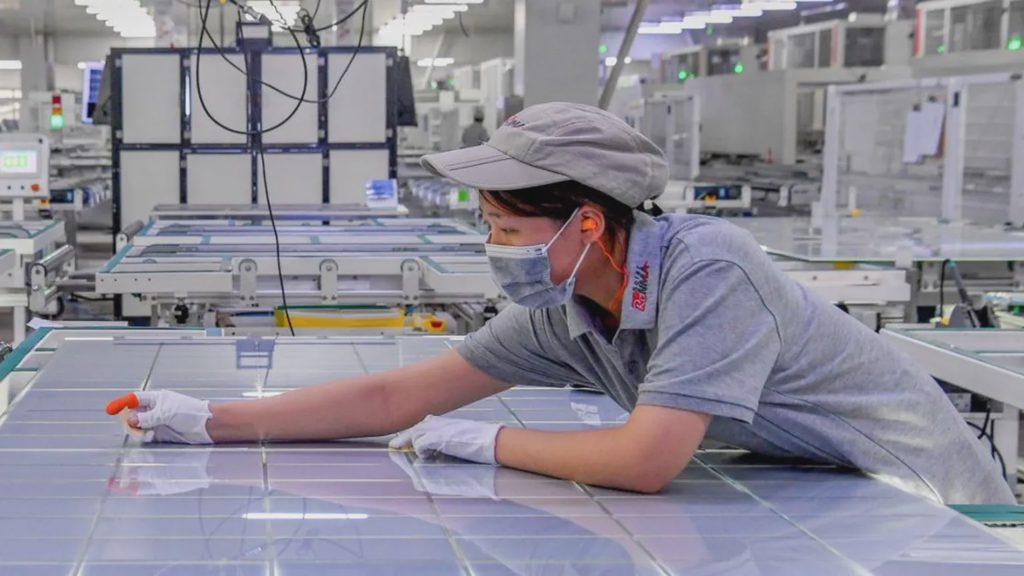
US President Donald Trump on Thursday signed a presidential proclamation imposing a 15% tariff on polysilicon derivatives and establishing minimum import prices for the critical material and related products, in a move aimed at protecting domestic manufacturers and reducing reliance on China.
The action, taken under Section 232 of the Trade Expansion Act of 1962, follows a national security investigation by the Commerce Department. Polysilicon—an ultra-pure form of silicon—is a foundational material for semiconductors used in electronics, artificial intelligence systems, and military equipment, as well as for solar panels.
The proclamation sets minimum import prices of $21 per kilogram for polysilicon, $100 per kilogram for polysilicon ingots and wafers, $0.22 per watt for solar cells, and $0.38 per watt for solar modules. It also applies an additional 15% ad valorem tariff on polysilicon ingots and downstream derivatives. The measures take effect on December 4, 2026. For products from Japan, South Korea, Taiwan, Switzerland, Liechtenstein, and European Union members, the combined Section 232 tariff and existing duties are structured so the total equals 15%. The Commerce Department is authorized to adjust the price floors over time and to create incentives for companies investing in new or expanded US production facilities.
Trump said the United States had for decades allowed foreign firms to weaken domestic producers, causing the country’s share of global polysilicon production capacity to fall from about 50% in 2005 to less than 2% in 2024. China now accounts for roughly 90–93.5% of global output. The material is essential for defense applications including radar, communications, and control systems for missiles and drones, as well as for everyday electronics and the solar industry.
The investigation, launched in July 2025 under Commerce Secretary Howard Lutnick, examined the effects of imports, foreign subsidies, and overcapacity. Global production has surged in recent years, with inventories reaching record levels, while Chinese producers have dominated through scale and lower costs. The main US producers—Hemlock Semiconductor in Michigan and Wacker Chemie’s facility in Tennessee—are expected to benefit.
The Chinese embassy in Washington described the measures as seriously disrupting bilateral trade and an abuse of state power targeting Chinese companies. It warned that protectionism would not make the United States more competitive and said Beijing would act to protect its firms.
The decision forms part of broader US efforts to secure supply chains in strategic technologies amid intensifying competition with China over semiconductors, artificial intelligence, and clean energy. It follows other recent restrictions on Chinese tech products and comes as the two countries continue tit-for-tat trade measures. Industry analysts note the hybrid system of price floors and tariffs is intended to create a commercially viable domestic market free from what the administration calls global distortions. The delayed implementation gives companies a transition period while authorities monitor for potential stockpiling.
Whether the policy successfully rebuilds US capacity or raises costs for downstream semiconductor and solar industries will become clearer after the measures take effect in December.
订阅 AfroAsia Media 新闻简报
每日非洲与亚洲要闻,直接发送到您的邮箱。




评论
0 条评论
加载中…