
我们正在将本文翻译成中文,译文稍后将显示在此处。目前先显示英文原文。
The King of walking football: How 39-year-old Messi is redefining genius at the World Cup
Never before in the history of the World Cup has an outfield player as old as Lionel Messi had an impact as spectacular as this. At 39, he has demonstrated across all five of Argentina’s matches that he remains capable of destroying defences on the greatest stage of all. So how, in a sport growing…
发布于 阅读约 4 分钟
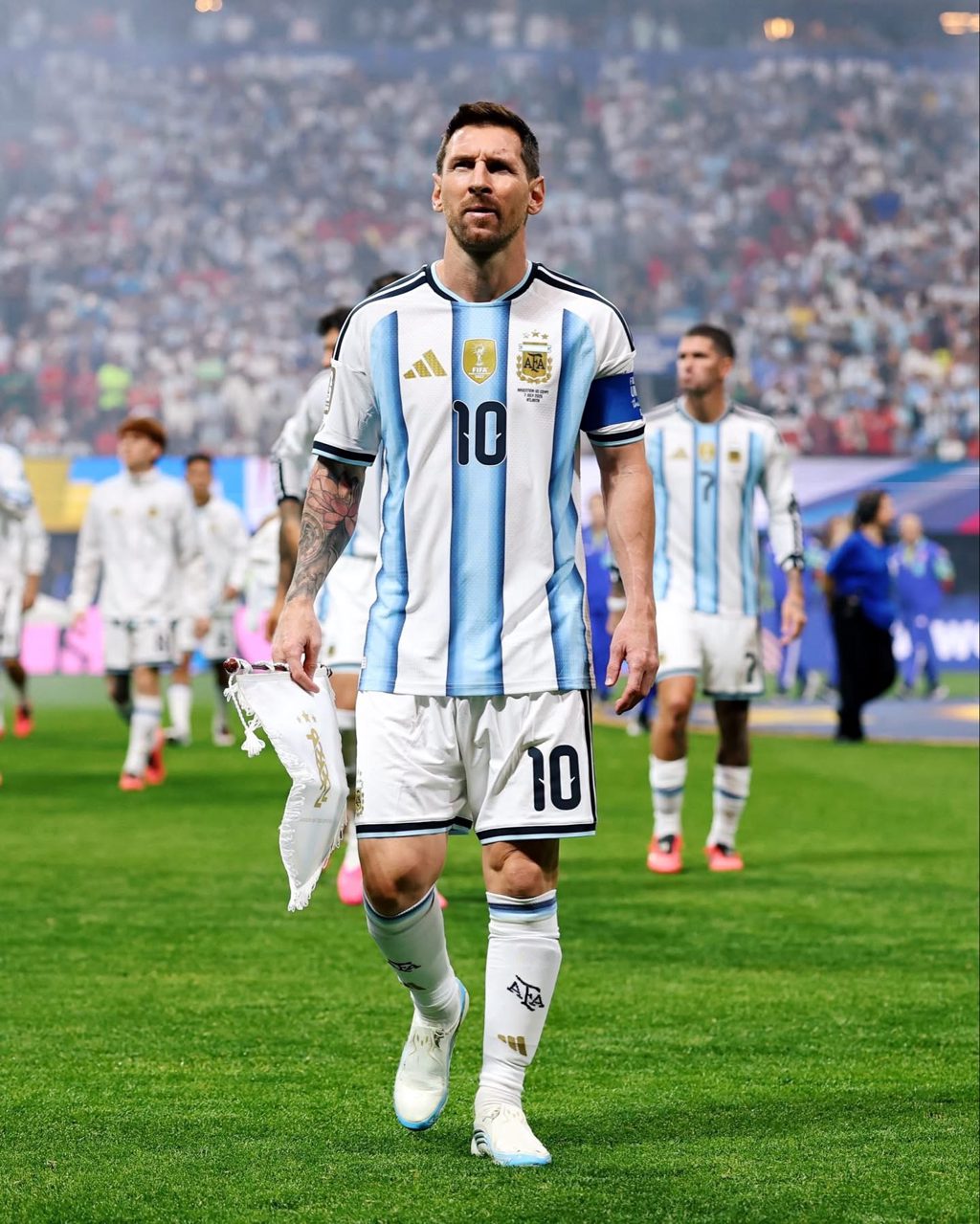
Never before in the history of the World Cup has an outfield player as old as Lionel Messi had an impact as spectacular as this. At 39, he has demonstrated across all five of Argentina’s matches that he remains capable of destroying defences on the greatest stage of all. So how, in a sport growing ever more physically demanding, is he doing it?
The answer lies not in what he does, but in what he doesn’t do — run.
The Numbers That Defy Logic
FIFA data reveals that Messi has covered a total of 35,868 metres in his five matches at this World Cup so far. Of that total, a staggering 22,958 metres — 64 per cent — has been spent at “zone one” pace, which is between 0 and 7 km/h (4.3 mph).
In plain terms: Messi is either standing still or walking for the vast majority of his time on the pitch.
During Argentina’s dramatic last-32 match against Cape Verde, The Telegraph conducted an experiment. Over a 15-minute spell in the second half, they started a timer every time Messi actually broke into a run. His total time spent running in that period was just 51 seconds. Over a full 90-minute match, that equates to around five minutes of running — a staggering figure for any outfield player, let alone one leading the tournament in goals.
Walking More, Scoring More
His per-game numbers are equally remarkable. Messi has averaged just 6.88 kilometres per match — and of that, 4.41 kilometres is spent walking, making him the clear leader in the tournament’s most unusual statistical category.
His sprint count is among the lowest in the competition, averaging just 23 sprints per match, covering only 1.48 kilometres at a jogging pace and just 631 metres at high speed throughout the tournament.
Yet despite contributing relatively little defensively, he leads the World Cup with eight goals — an astonishing average of 1.6 per game — along with a tournament-high 9 assists. His average player rating of 8.7 is the highest of any player at the tournament.
The Walking King vs. The Rest
In the group stage, Messi ranked first among all 618 outfield players for goals scored — and dead last for distance run per 90 minutes. He literally scores the most goals while putting in the least effort.
The disparity in high-speed runs tells the full story. After five matches, Messi had made just 298 high-speed runs. Other leading attackers? Harry Kane made 600, Vinícius Júnior 514, Ousmane Dembélé 477, Mikel Oyarzabal 461, and Kylian Mbappé 336. Only Erling Haaland, with 314, was even in Messi’s ballpark — and he didn’t play a single minute of Norway’s third game.
A Tactical Masterclass
What looks like casual strolling is, in fact, a lethal strategy. Walking allows Messi to scan the field, analyse where teammates and opponents are positioned, anticipate movements, and spot gaps others don’t notice. Defenders tend to ignore a player who looks “out of the play.” But when Messi hits the gas, he’s almost impossible to stop.
“I know they make an extra sacrifice, that they find reserves they don’t have for the moments when I run less,” Messi said after Argentina’s victory over Egypt. “I know they do it from the heart and naturally.”
His teammates cover the ground; Messi delivers the killer blow. The system only works because the other nine outfield players are willing to fill the void left by his minimal running, taking on extra defensive duties and high-intensity pressing.
When the Walking Stops
There have been moments when Messi has been forced to abandon his walking game. In the final 20 minutes of Argentina’s controversial last-16 victory over Egypt — with his team 2-0 down — he charged around like a man possessed. Moving out to the right wing, he briefly played like a teenager, receiving possession on the flank and dribbling at defenders. From the 76th minute onwards, he became the player with the most touches, shots, dribbles and chances created on the pitch. After leading the impossible comeback, he collapsed in tears, physically drained.
But that was the exception, not the rule. Ahead of the quarter-final against Switzerland, Messi will hope to return to his preferred method: conserving energy, picking his moments, and proving that in a game faster and more physical than ever, brains still beat brawn.
As one analyst put it: “This version of Messi — more cerebral, more calculating — is the reason Argentina remains a serious contender.” He doesn’t need to run all game. He just needs three seconds.
订阅 AfroAsia Media 新闻简报
每日非洲与亚洲要闻,直接发送到您的邮箱。




评论
0 条评论
加载中…