
我们正在将本文翻译成中文,译文稍后将显示在此处。目前先显示英文原文。
The fall of the Azzurri: Maldini’s warning on pride, hunger , and a nation’s lost identity
For decades, the blue shirt of Italy was more than just a jersey. It was a second skin—woven from tactical genius, defensive artistry, and a quiet, burning rabbia (rage) to win. To wear it was to accept a sacred debt to history. But according to Paolo Maldini, the man who once embodied that ideal more…
发布于 阅读约 3 分钟
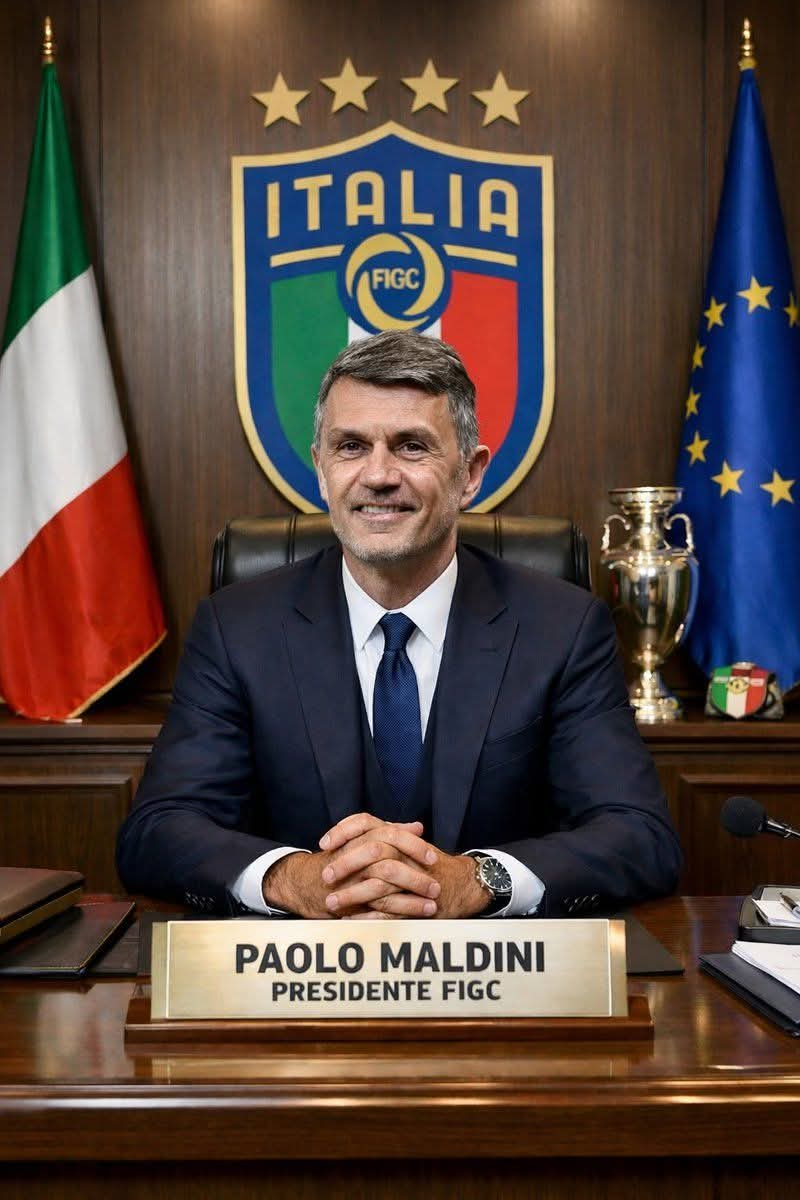
For decades, the blue shirt of Italy was more than just a jersey. It was a second skin—woven from tactical genius, defensive artistry, and a quiet, burning rabbia (rage) to win. To wear it was to accept a sacred debt to history. But according to Paolo Maldini, the man who once embodied that ideal more than anyone, that debt has been defaulted on.
In a rare and searing interview, the former AC Milan and Italy captain laid bare the state of the national team. His diagnosis is not merely disappointing; it is damning.
“Failing to qualify for the World Cup once is a warning,” Maldini said, his voice carrying the weight of 126 caps. “Twice is a crisis. But three times in a row? That is no longer bad luck or a bad draw. That is a total failure.”
Italy’s absence from the 2026 World Cup—following the ghosts of 2018 and 2022—has stopped being a statistical anomaly and has become an existential crisis. Maldini, who played in four World Cups and lifted the trophy in 2006, sees a rot far deeper than poor finishing or a missed penalty.
“I no longer see the same hunger,” he admitted. “When I watch this generation, I see players going through the motions. Talented, yes. But talent without obsession is just a hobby. There are no players truly ready to give everything for the national team.”
The accusation cuts to the bone. For a country that built its footballing religion on the concept of catenaccio and sacrifice, Maldini is suggesting the altar is empty. Where once there were Nesta, Cannavaro, Baresi, and Maldini himself—men who would bleed for a clean sheet—there are now vacant stares and post-match shrugs.
“Pride, responsibility, and identity seem to have been lost,” he continued. “These are not abstract concepts. Pride is tracking back in the 95th minute when your legs are gone. Responsibility is taking the ball when everyone else is hiding. Identity is knowing that a draw against a lesser nation is a humiliation.”
Maldini’s words are a mirror held up to a federation that has cycled through coaches and a player pool that seems increasingly disconnected from the fanaticism of the tifosi. He is not blaming a single scapegoat. He is indicting a culture.
The warning signs have been flashing for a decade. A league that prioritizes foreign imports over homegrown grit. Youth academies that teach system mechanics rather than individual will. A generation raised on Champions League glamour but unfamiliar with the ugly, necessary grind of a rainy qualifier in Skopje or Belfast.
“You can lose a match,” Maldini said. “You can lose a tournament. That is sport. But to lose the will to fight for your country three times in a row? That is a choice. And until that choice is reversed—until we find players who understand that the shirt is not a platform but a duty—the failure will continue.”
For a nation that has won four World Cups, the silence of a third straight summer without the tournament is deafening. Paolo Maldini has done what few legends dare: he has told the truth. And the truth is that the Azzurri are no longer suffering from a crisis. They are suffering from an absence of soul.
The question now is whether anyone in blue is listening. Or whether pride, like the World Cup itself, has already left the country.
订阅 AfroAsia Media 新闻简报
每日非洲与亚洲要闻,直接发送到您的邮箱。




评论
0 条评论
加载中…