
本文暂无中文版本,现显示英文原文。
Supreme Court sets April 21 to rule on Wesley Girls’ High School religious rights case
The Supreme Court has scheduled Tuesday, April 21, 2026, to hear arguments in a landmark case challenging the religious policies of Wesley Girls’ High School, a case that pits constitutional rights to religious freedom against the autonomy of faith-based institutions. The plaintiff, Shafic Osman, is seeking a declaration from the apex court that the school’s…
发布于 阅读约 2 分钟
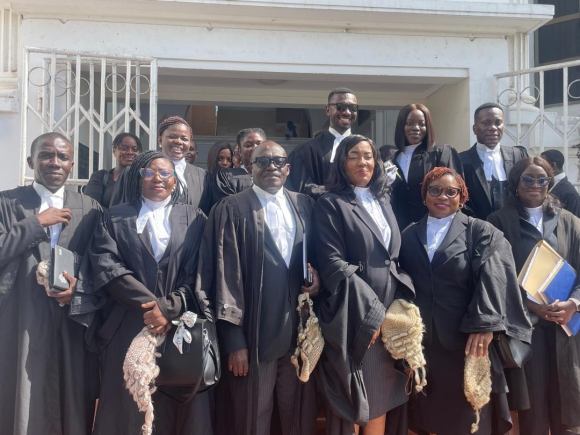
The Supreme Court has scheduled Tuesday, April 21, 2026, to hear arguments in a landmark case challenging the religious policies of Wesley Girls’ High School, a case that pits constitutional rights to religious freedom against the autonomy of faith-based institutions.
The plaintiff, Shafic Osman, is seeking a declaration from the apex court that the school’s policies, which he alleges compel Muslim students to attend Christian services and restrict their religious practices, are inconsistent with the 1992 Constitution.
The case has drawn significant interest, with the court previously granting the school’s Board of Directors 14 days to respond to the allegations. However, the school has raised a preliminary objection, arguing that its Board lacks the legal capacity to be sued in this matter. It contends that the appropriate respondent should be the Trustees of the Methodist Church, which owns the school’s land and properties.
Catholic Church Weighs In
In a related development, the Catholic Church has filed written submissions as a friend of the court, arguing that the Supreme Court lacks jurisdiction to hear the case. The Church contends that the proper forum for enforcing the rights of the students is the High Court.
The Church further argued that faith-based schools are not state-owned but are established and operated with church resources. On that basis, it suggested that a person may be deemed to have waived certain religious rights upon voluntarily choosing to attend a faith-based institution.
Attorney-General’s Position
The Deputy Attorney-General, Dr. Justice Srem-Sai, has also presented arguments, asserting that the school is owned by the Methodist Church and not the state. Consequently, he argued, the school retains the right to practice its religion in line with Methodist doctrine.
Dr. Srem-Sai added that Wesley Girls’ High School remains entitled to government funding despite its religious character, stating that the state cannot strip the school of its religious rights solely because it receives public funds.
The upcoming hearing is expected to be a pivotal test of the balance between an individual’s constitutional right to religious freedom and the operational autonomy of Ghana’s long-established faith-based educational institutions.
订阅 AfroAsia Media 新闻简报
每日非洲与亚洲要闻,直接发送到您的邮箱。




评论
0 条评论
加载中…