
我们正在将本文翻译成中文,译文稍后将显示在此处。目前先显示英文原文。
Ronaldo turns press conference tense, then poetic: Veteran striker reflects on age, adversity, and the weight of memory at 41
In a moment that crackled with the electricity of a penalty kick, Cristiano Ronaldo transformed a routine pre-match press conference into a masterclass in psychological warfare—before delivering a poignant meditation on the twilight of a legendary career. The scene was set in the cavernous media center at the Al Janoub Stadium. Ronaldo, seated behind a…
发布于 阅读约 4 分钟
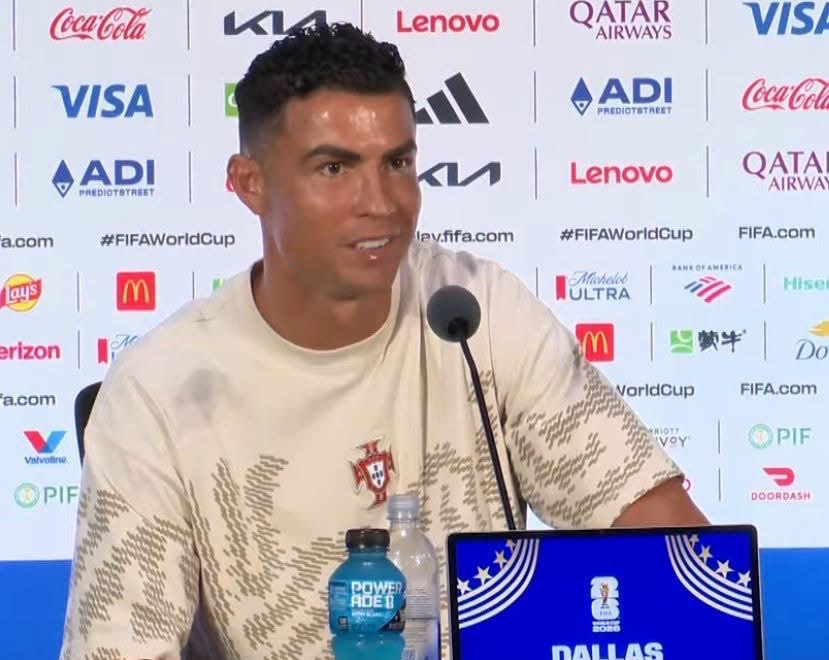
In a moment that crackled with the electricity of a penalty kick, Cristiano Ronaldo transformed a routine pre-match press conference into a masterclass in psychological warfare—before delivering a poignant meditation on the twilight of a legendary career.
The scene was set in the cavernous media center at the Al Janoub Stadium. Ronaldo, seated behind a table littered with microphones, appeared relaxed, but his eyes were scanning the room with the predatory focus he usually reserves for a defender’s positioning. As he leaned into the microphone, he deviated from the script of diplomatic platitudes, his gaze locking onto a specific figure in the frontrow.
“That guy up there in the front? That guy who doesn’t like me,” Ronaldo stated, his tone sharp enough to cut through the ambient hum of cameras. A ripple of murmurs went through the assembled press corps. “Let’s see if he’s going to ask me a good question. Yes, you, there. I know he doesn’t like me.”
The room held its breath. The targeted journalist, a veteran correspondent from a European broadsheet, visibly stiffened. For a moment, it seemed the presser would descend into a sparring match. Instead, the journalist, rising to the occasion, met the challenge with a question that diffused the tension while probing the very heart of Ronaldo’s current ordeal.
“Cristiano, how are you? I’m a fan of yours, and it’s an honor to speak with you,” the journalist began, his voice steady. “I’d like to know, what’s the hardest thing about playing in the World Cup at the age of 41?”
Ronaldo’s demeanor shifted. The knife-edge of his glare softened into a wry, knowing smile. He had been called out, and he respected the play. He leaned forward, his reply a blend of brutal honesty and philosophical reflection.
“What’s the hardest thing?” he repeated, letting the question hang. “It’s talking to you all… to some of you. Especially those who don’t like me. And you are one of them, I know that.” He tapped a finger to his temple. “I remember people’s faces well. I just need to see a face once, and I’ll never forget it. I see the energy, the good and the bad. It is a fuel.”
Then, the tenor of his voice changed, lowering from a challenge to a confession. “But playing at 41… I think it is a good experience. A difficult one, but a good one. Because to reach this level, to stand here one more time, you have to make sacrifices and give up a lot of things. It is not just about training; it is about surrendering a normal life.”
He paused, his gaze drifting momentarily towards the ceiling. “That is what I have done throughout my career. The key is adapting to the changes. My body is not the same. My explosiveness is not the same. But my mind… my mind is sharper than ever. I am not the same player I used to be. I am a different player. I am a finisher. I am a presence. I am here to guide, to push, to score the goals that matter.”
Ronaldo’s admission was a rare glimpse behind the armor. For two decades, he has defined himself by sheer, overwhelming athleticism—a physical marvel who defied physics and age. Now, at 41, he is forced to rely on a different toolkit: the killer instinct honed over 1,200 professional matches, the positional intelligence that allows him to find space where none seems to exist, and the gravitational pull of his name that still draws defenders out of position.
“The hardest thing is not the physical pain,” he concluded, his eyes now fixed back on his questioner. “The hardest thing is accepting that your body cannot do what your mind remembers it could. But you learn. You learn to win differently.”
The exchange concluded with a nod from the journalist and a final, enigmatic smile from the captain. Ronaldo had arrived to intimidate and left as a philosopher. He had accused a man of disliking him, but in the same breath, he used the question to reveal the emotional and physical calculus required to continue his World Cup journey.
As he rose to leave, the message was clear: The father time he has been fighting for so long is finally gaining ground, but in the mind of Cristiano Ronaldo, the battle is far from over. He may not be the player he used to be, but as he demonstrated in that press room, he is still the most compelling protagonist in the tournament’s story.
END OF STORY
订阅 AfroAsia Media 新闻简报
每日非洲与亚洲要闻,直接发送到您的邮箱。




评论
0 条评论
加载中…