
我们正在将本文翻译成中文,译文稍后将显示在此处。目前先显示英文原文。
’Our press wasn’t good enough’ – Messi delivers brutally honest tactical assessment despite Argentina win
Lionel Messi may have celebrated another victory with Argentina on Saturday night, but the captain refused to paper over the cracks, delivering a refreshingly candid and forensic critique of his team’s tactical deficiencies in the hard-fought 2-1 win over Cape Verde. While the scoreline ultimately favored the world champions, Messi made it clear that the…
发布于 阅读约 4 分钟
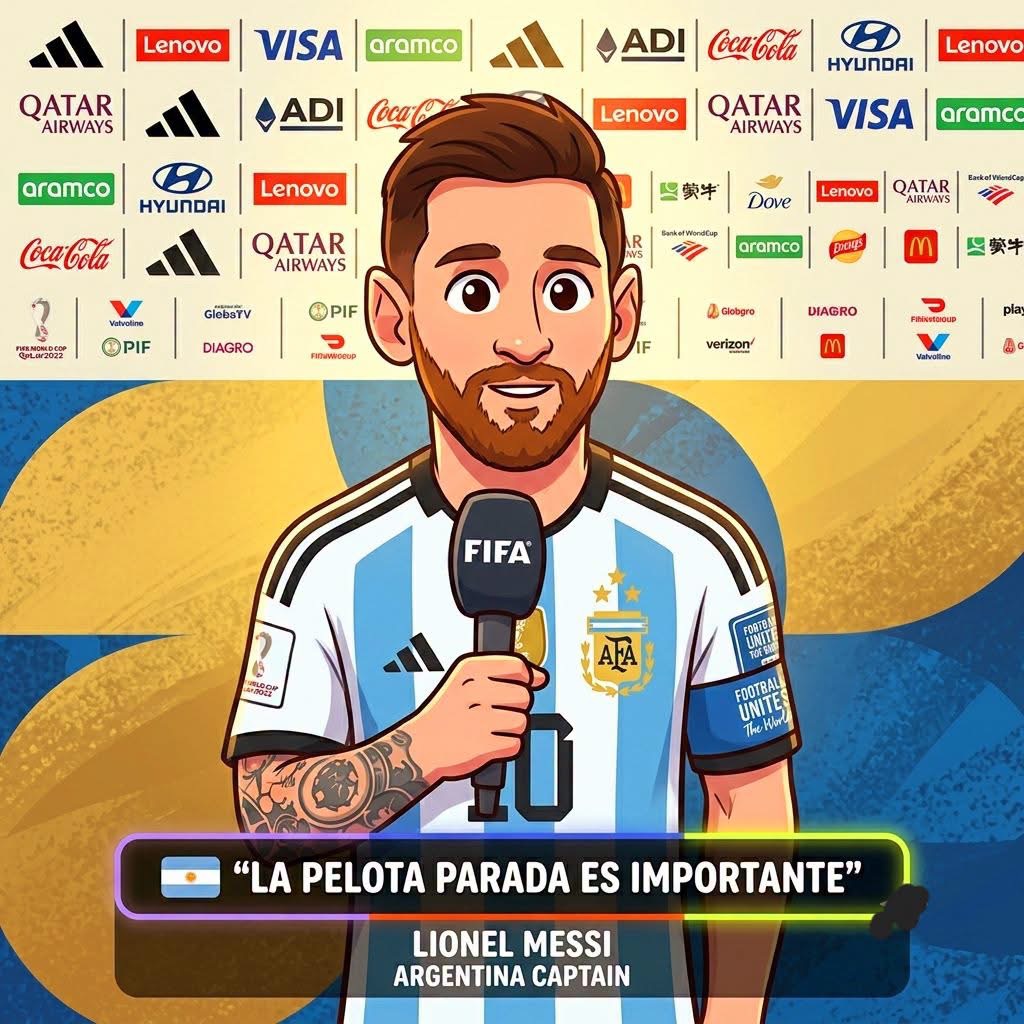
Lionel Messi may have celebrated another victory with Argentina on Saturday night, but the captain refused to paper over the cracks, delivering a refreshingly candid and forensic critique of his team’s tactical deficiencies in the hard-fought 2-1 win over Cape Verde.
While the scoreline ultimately favored the world champions, Messi made it clear that the performance fell well short of the standards the squad has set for themselves. In a post-match interview that felt more like a coaching seminar, the eight-time Ballon d’Or winner dissected Argentina’s pressing problems with remarkable clarity – and did not shy away from pointing the finger at the collective.
‘We Lacked Coordination’
Messi revealed that Argentina’s high-pressing strategy, which has been a cornerstone of their success under Lionel Scaloni, malfunctioned throughout large stretches of the contest. Cape Verde’s midfielders, he explained, repeatedly found space to receive the ball in dangerous areas, allowing the underdogs to retain possession and dictate the tempo for concerning periods.
“As I said at the beginning, I think we didn’t manage to press them properly, and there were sometimes large gaps between our lines,” Messi admitted, his tone measured but frank. “When we tried to press the defender starting from the holding midfielder, it was difficult for the center-backs to step up and track the players dropping deep to receive the ball, so we lacked coordination.”
The 37-year-old highlighted a recurring structural issue: Argentina’s front line and midfield were often operating at different intensities, creating disjointed pressure that Cape Verde exploited with intelligent movement. The African side’s forwards repeatedly dropped into midfield pockets, dragging Argentina’s center-backs – Cristian Romero and Lisandro Martínez – out of position and opening up spaces behind them.
Outnumbered and Outmaneuvered
Messi’s analysis grew even more pointed as he detailed how Cape Verde’s tactical discipline neutralized Argentina’s usual dominance in possession. The island nation, he noted, consistently created numerical superiority in midfield, turning Argentina’s pressing traps into a chasing exercise.
“They always had a numerical advantage because we couldn’t match them in numbers,” Messi explained. “That’s why they kept possession and made us chase the ball, because our press wasn’t effective enough.”
The statistics bore out his assessment: Cape Verde enjoyed 47% possession – a remarkably high figure against a team of Argentina’s caliber – and completed over 380 passes, many of them in the middle third. For a side that prides itself on suffocating opponents high up the pitch, the numbers were a stark warning.
Scaloni’s ‘Honest Captain’
Messi’s willingness to publicly dissect his team’s flaws was not lost on those watching. While some captains might deflect criticism or offer platitudes, the Argentine legend chose accountability – a trait that has defined his leadership throughout this golden era.
“When the most important player in the world speaks like that, we all have to listen,” Scaloni later commented. “Leo is not just our captain; he’s our conscience on the pitch. If he sees something, he says it – and we’re better for it.”
For the players, Messi’s words carried no sting of blame but rather a call to action. Sources within the camp revealed that the captain had already initiated a closed-door video session after the match, reviewing the pressing sequences with the coaching staff to ensure the issues were addressed before their next fixture.
A Work in Progress
Despite the criticism, Messi was careful to contextualize the performance within the broader tournament picture. He acknowledged that Cape Verde’s quality – often underestimated – forced Argentina into uncomfortable situations, and that adaptability would be crucial as the knockout stages approach.
“We knew this wouldn’t be easy, and we were proven right,” Messi said. “But the important thing is that we found a way to win. We can correct these mistakes. We’ve done it before. The team knows what it has to do.”
With tougher tests on the horizon, Argentina’s ability to tighten their pressing structure will likely determine how far they go. For now, Messi’s honesty has set the tone: this is a team that will not accept mediocrity, even in victory. And for a squad chasing back-to-back World Cup titles, that self-critical edge may prove their most valuable weapon.
订阅 AfroAsia Media 新闻简报
每日非洲与亚洲要闻,直接发送到您的邮箱。




评论
0 条评论
加载中…