
我们正在将本文翻译成中文,译文稍后将显示在此处。目前先显示英文原文。
Mahama secures $300m World Bank financing to end double-track system by 2027
President John Dramani Mahama has announced that Ghana has secured a $300 million financing package from the World Bank to permanently end the double-track system in Senior High Schools by the end of 2027. The President disclosed the financing after a high-level meeting with Makhtar Diop, Managing Director of the International Finance Corporation (IFC), at…
发布于 阅读约 4 分钟
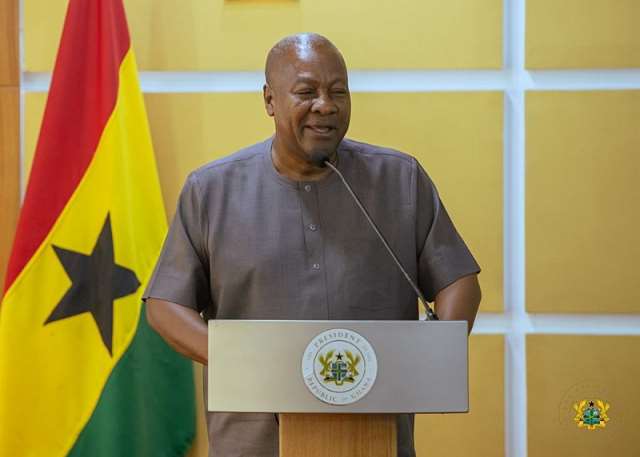
President John Dramani Mahama has announced that Ghana has secured a $300 million financing package from the World Bank to permanently end the double-track system in Senior High Schools by the end of 2027.
The President disclosed the financing after a high-level meeting with Makhtar Diop, Managing Director of the International Finance Corporation (IFC), at the Presidency in Accra on Wednesday, September 16, 2026. The meeting focused on strengthening Ghana’s economy through strategic partnerships and private-sector investment.
“Through our collaboration with the World Bank, we have secured a $300 million financing package to permanently end the double-track system in Senior High Schools by the end of 2027,” Mahama stated in a social media post on Thursday, September 17.
Background: The Double-Track System
The double-track system was introduced in September 2018 under the administration of former President Nana Akufo-Addo, following the launch of the Free Senior High School (Free SHS) policy in 2017. The policy led to a surge in enrolment of more than 30 per cent in public senior high schools, exposing a critical shortage of classrooms, dormitories and other facilities.
To avoid turning away qualified students, the government adopted the double-track system as a stop-gap measure. Under the arrangement, students were divided into two cohorts — initially named the Green Track and the Gold Track — with one group on campus receiving academic instruction while the other was on a scheduled break. The system commenced on September 11, 2018, for the 2018/2019 academic year, initially covering 400 out of 696 public SHSs.
While the system successfully expanded access to education, particularly for students from underprivileged backgrounds, it was criticised for reducing contact hours between teachers and learners and placing strain on infrastructure.
The STARR-J Project
The $300 million World Bank facility will fund the Transformative Secondary Education for Access, Results and Relevance for Jobs (STARR-J) project, which was approved by the World Bank in June 2026. The project aims to strengthen Ghana’s secondary education system through targeted investments in educational infrastructure, improved learning conditions and enhanced system efficiency.
Under the initiative, 50 senior high schools will be upgraded nationwide — 30 Category C schools will be elevated to Category B, and 20 Category B schools to Category A. Additionally, 16 brand-new secondary schools are being constructed to ease congestion in existing institutions.
“This strategic investment is not simply about expanding infrastructure. It is fundamentally aimed at promoting equity, improving quality, and widening opportunities for every Ghanaian child,” Mahama said.
The project will also operationalise the Community Day School concept, with new educational blocks constructed in urban and peri-urban communities to serve students who can commute from home. For rural areas with large catchment populations, selected schools will be converted into boarding institutions.
Economic Transformation Agenda
Beyond education, the meeting with the IFC Managing Director covered opportunities to expand commercial agriculture, with particular attention to cocoa, oil palm and poultry production. President Mahama reiterated his government’s policy of processing at least 50 per cent of Ghana’s cocoa, agricultural produce and mineral resources locally to create sustainable jobs for young people.
“Our discussions focused on deepening our strategic partnership to transform Ghana’s economy, with a strong emphasis on boosting commercial agriculture production in cocoa, oil palm, and poultry,” Mahama said.
The discussions also addressed expanding Ghana’s transport infrastructure, including railways, aviation and roads, under the government’s Big Push Infrastructure Development programme, alongside efforts to improve digital connectivity.
Economic Recovery Indicators
President Mahama highlighted what he described as a positive economic turnaround driven by prudent economic management and fiscal discipline. He noted that inflation has declined sharply, national indebtedness has reduced, and investor confidence has been restored.
The IFC Managing Director commended President Mahama for his commitment to economic reforms, stating that the reforms have positioned Ghana for sustained growth and renewed investor confidence. Diop pledged the IFC’s full readiness to support Ghana’s commercial agriculture sector and broader efforts toward building a resilient and sustainable economy.
Commitment to 2027 Deadline
President Mahama has reiterated his administration’s commitment to ensuring that by the end of 2027, no school in Ghana will still be operating the double-track system. He assured that all students would attend school and vacate at the same time, which he said would increase contact hours between teachers and learners and improve educational outcomes.
“In 2027, no Senior High School will be doing double track. We’re reverting to the old system. Everybody will go to school at the same time to increase contact hours with the teachers,” Mahama said during his Resetting Ghana tour in May 2026.
The President also announced that the STARR-J project would include continuous professional development for all secondary school teachers, equipping them with modern teaching skills, digital competencies and training in artificial intelligence integration.
The meeting was attended by the Chief of Staff and the Ministers for Finance, Energy and Trade. Diop’s visit forms part of the IFC’s ongoing engagement with Ghana to support the country’s economic transformation and private-sector development.
订阅 AfroAsia Media 新闻简报
每日非洲与亚洲要闻,直接发送到您的邮箱。




评论
0 条评论
加载中…