
我们正在将本文翻译成中文,译文稍后将显示在此处。目前先显示英文原文。
Ghana ready to work with investors committed to mineral value addition- Kojo Bonsu
Ghana’s Ambassador to China, Kojo Bonsu, has reiterated the government’s commitment to working with investors who align with President John Dramani Mahama’s policy direction on adding value to the country’s mineral resources, declaring that Ghana will no longer be content to export raw ore while importing finished products at higher prices. Addressing the investor community…
发布于 阅读约 7 分钟
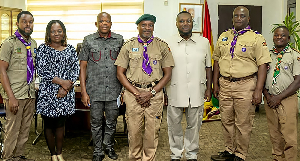
Ghana’s Ambassador to China, Kojo Bonsu, has reiterated the government’s commitment to working with investors who align with President John Dramani Mahama’s policy direction on adding value to the country’s mineral resources, declaring that Ghana will no longer be content to export raw ore while importing finished products at higher prices.
Addressing the investor community at the 2026 China Mining Conference in Tianjin on Friday, September 11, Ambassador Bonsu said the government’s policy was now firmly oriented towards local beneficiation, including refining bauxite to alumina and developing detailed processing capacity .
“Ghana has made a clear and deliberate choice that we will no longer be content to export raw ore and import finished products at higher prices. It is not good,” he remarked .
Building Frameworks for Value Addition
The Ambassador explained that the government was putting in place the necessary structures to promote value addition across the minerals sector.
“We are building frameworks, infrastructure, and the incentives to give more value, more skills and more jobs,” he said .
He noted that the Mahama administration was not only reshaping the mining industry but also seeking to change the broader approach to the exploitation and development of Ghana’s mineral resources.
For him, the administration was “a government that doesn’t see mining as an extractive afterthought but as a central pillar of our utilisation agenda under our unified national development priorities” .
China as Key Bilateral Partner
Ambassador Bonsu, who has been credited with playing a role in the rebranding of Ghana Oil Company Limited (GOIL), the construction of Kejetia Market in Kumasi, and other infrastructure projects, described China as a key bilateral partner.
“China has been and remains Ghana’s significant partner on infrastructure, trade, and increasingly in the mining and minerals value chain,” he said .
He told the Chinese investment community, “We are therefore here to present opportunities. Listen, negotiate, and build partnerships that are genuinely mutual and grounded in fair terms” .
He called for technology transfer, local content development, and shared prosperity as Ghana and China continue to pursue stronger economic partnerships. He also appealed for a transparent and improving regulatory environment, a skilled and youthful workforce, and a government that sees mining as a catalyst for development .
Minister Highlights Mining Sector Challenges
Ghana’s Minister for Lands and Natural Resources, Emmanuel Armah-Kofi Buah, who was the guest speaker at the Ghana Forum, also addressed some of the challenges facing the mining sector.
He said the challenges included gaps in geological information, which were affecting efforts to identify and develop mineral resources .
The Minister also highlighted regulatory reforms and the establishment of the National Anti-Illegal Mining Operations Secretariat (NAIMOS) as part of measures to deal with illegal mining activities in Ghana. He said the government was also promoting cooperative mining and introducing medium-scale mining as part of efforts to support value addition to Ghana’s mineral resources .
Background: Ghana’s Push for Mineral Value Addition
Ghana has intensified its call for deeper mining cooperation with China, urging Chinese investors to move beyond the traditional export of raw minerals and partner the country in processing, technology transfer, skills development, and industrialisation .
The Minister for Lands and Natural Resources made a similar call at the Ministerial Forum on International Mining Cooperation and the opening of the 28th China Mining Conference and Exhibition 2026, held under the theme “Win-Win Cooperation, Green and Intelligent” .
Representing President Mahama, Buah said Ghana was ready to build a new generation of mining partnerships that would deliver greater value to the country, investors, mining communities, and the wider global economy.
“The next chapter of mining must be measured not simply by what we take from the ground, but by what we leave above it: industries, skills, technology, restored land, stronger communities and a more prosperous nation,” he said .
The Minister noted that for decades, resource-rich countries including Ghana had supplied raw materials while most processing, technology, and value creation took place elsewhere. He said Ghana was determined to change that model under President Mahama’s leadership .
“For the young Ghanaian looking for work, value addition is not an economic theory. It is a job. It is a skill. It is a career. It is the possibility of building a life at home,” Buah stated .
Major Chinese Investments in Ghana’s Mining Sector
The Minister highlighted the presence of major Chinese companies, including Chifeng Gold Group, Shandong Gold, and Zijin Mining, in Ghana’s mining sector, describing their investments as evidence of what the two countries could achieve through cooperation.
However, he said Ghana wanted future partnerships to go beyond extraction.
“We want the next generation of partnerships to go further into processing, technology, skills development, infrastructure and local supply chains,” he said .
According to him, China’s experience in connecting natural resources to processing, manufacturing, infrastructure, and technology presented significant opportunities for Ghana.
“The question is no longer only, ‘Who will buy our resources?’ The more consequential question is: ‘What can we build together from them?’” he asked .
Environmental Sustainability Central to Mining Agenda
The Minister also placed environmental sustainability at the centre of Ghana’s mining agenda, particularly in the fight against illegal and irresponsible mining.
He cited the establishment of the National Anti-Illegal Mining Operations Secretariat (NAIMOS) as part of the government’s efforts to strengthen the fight against illegal mining, while the Responsible Cooperative Mining and Skills Development Programme (rCOMSDEP) is being advanced as part of efforts to formalise small-scale mining .
He stressed that environmental protection must remain central to mining development.
“A river is not simply an environmental statistic. It is drinking water. It is farming. It is the livelihood of a community. It is an inheritance held in trust for a child not yet born,” he said .
The Minister called for greater cooperation between Ghana and China in environmental management, mine reclamation, tailings management, and land restoration, drawing on China’s technological experience .
Ghana Pushes Intelligent Mining and Geological Data
Buah identified intelligent mining and modern geological information as another major area for Ghana-China cooperation.
He said Ghana was modernising its national geological database, improving geological survey and mapping capabilities, and strengthening digital traceability across the gold supply chain.
“A country must understand the resources it owns if it is to manage them well, attract the right investment and negotiate from a position of knowledge,” he said .
He added that improved geological data would reduce exploration risks for investors, strengthen government decision-making, and help Ghana better understand the scale and quality of its mineral resources.
The Minister said China’s expertise in automation, geological science, mineral processing, data systems, engineering, and infrastructure made it a natural partner for Ghana in developing intelligent mining. He emphasised that technology cooperation must include deliberate efforts to develop Ghanaian human capital .
Aluminium Industry Development in Focus
The push for value addition aligns with ongoing efforts to develop Ghana’s integrated aluminium industry. In January 2026, the Ghana Integrated Aluminium Development Corporation (GIADEC) signed a $60 million interim financing agreement with partners including Metalloid Resources Investment to accelerate the development of the Nyinahin bauxite project in the Ashanti Region .
The funding will directly support the launch of mining activities at Hills 1-3 of the Nyinahin concession, with phased expansion of production. The project aims to convert Ghana’s estimated 920 million tonnes of bauxite resources into industrial output .
The project is expected to create over 1,500 direct and indirect jobs upon production, enhance local value addition, and strengthen the export-oriented industrial base. GIADEC’s Chief Executive described the agreement as a turning point for Ghana’s industrial development, while the investor stated that it reflected market confidence in Ghana’s long-term aluminium sector plan .
The Path Forward
As Ghana seeks to transform its mining sector from raw material export to value-added processing, the government’s message to international investors is clear: partnerships must deliver more than extraction. With China identified as a key partner in this endeavour, the focus now shifts to translating the frameworks, incentives, and regulatory reforms into tangible industrial capacity that creates jobs, develops skills, and ensures that Ghana’s mineral wealth benefits its people long after the ore leaves the ground.
订阅 AfroAsia Media 新闻简报
每日非洲与亚洲要闻,直接发送到您的邮箱。




评论
0 条评论
加载中…