
我们正在将本文翻译成中文,译文稍后将显示在此处。目前先显示英文原文。
Ghana accelerates school infrastructure drive to end double-track system by 2027
President John Mahama has announced that the government is constructing 16 new senior high schools and expanding existing facilities to reduce congestion and bring an end to the double-track system by 2027. The President made the announcement on September 11 during an inspection of ongoing Ghana Education Trust Fund (GETFund) projects at Han Senior High…
发布于 阅读约 4 分钟
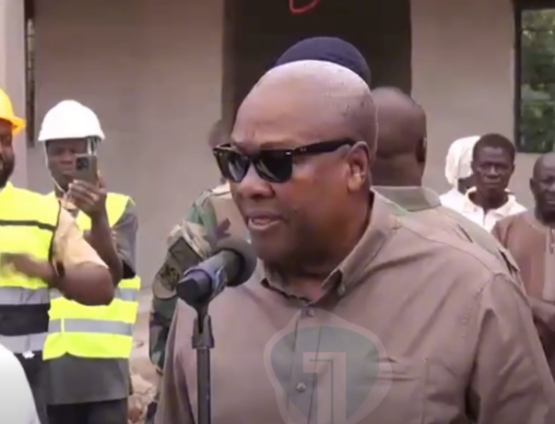
President John Mahama has announced that the government is constructing 16 new senior high schools and expanding existing facilities to reduce congestion and bring an end to the double-track system by 2027.
The President made the announcement on September 11 during an inspection of ongoing Ghana Education Trust Fund (GETFund) projects at Han Senior High School (HAN SHS).
He said the initiative was being supported by a newly approved $300 million World Bank facility, which would help expand infrastructure in schools that continue to operate under the double-track arrangement.
“We just approved another World Bank facility of 300 million. That is to end the double-track system,” President Mahama said.
He explained that existing schools operating on the system would have their facilities expanded to accommodate students at the same time.
“For the schools that are still running double-track, we’re going to expand the facility so that all the children can go to school at the same time,” he said.
In addition to the expansion of existing institutions, the programme will provide 16 new secondary schools to address capacity constraints.
“Under that project too, we’re building 16 brand-new secondary schools so that we can ease the congestion in the existing schools,” President Mahama said.
President Mahama said the government was aiming to complete the necessary infrastructure works by the end of 2027, with the goal of ensuring that no Ghanaian child remains on the double-track system.
“And so these projects will go on, and we hope that by the end of 2027, no Ghanaian child should be on a double-track system,” he said.
Under the proposed arrangement, students would attend classes together and follow the same academic calendar.
“Everybody goes to school at the same time, studies, and closes at the same time,” the president added.
Beyond addressing overcrowding, President Mahama said ending the system would provide teachers with more regular contact time with students.
“We believe that that will increase the contact hours between the teachers and the students, and it will help to improve their performance when eventually they write their WASSCE exam,” he said.
He expressed optimism that the infrastructure investment would therefore contribute not only to improved access and school conditions but also to better academic outcomes.
Background: The Double-Track System and Its Controversies
The double-track system was introduced in 2018 following the rollout of the Free Senior High School policy, which significantly increased enrolment. The system divides students into two groups—often referred to as the “Green Track” and the “Gold Track”—who attend school on alternating schedules to maximise the use of limited infrastructure.
However, the system has faced widespread criticism. Multiple academic studies have pointed to reduced face-to-face contact hours between teachers and students, rushed teaching schedules, and negative effects on academic performance in core subjects. A study by the University of Ghana found that students on the double-track system generally performed worse in core subjects than their counterparts in non-double-track schools.
Former Education Minister Dr. Matthew Opoku Prempeh had defended the system, arguing it was primarily a response to demand pressures at popular schools rather than a simple infrastructure deficit, and that it allowed more students to access quality education. The current government, however, believes that with sufficient infrastructure investment, the transitional arrangement can now be phased out.
World Bank Facility to Support Expansion
The $300 million World Bank credit facility was approved by Ghana’s Parliament in July 2026. Sourced from the International Development Association (IDA), the funds are earmarked for the “Secondary Education Transformation for Access, Quality and Relevance Project.”
According to Deputy Education Minister Clement Apaak, the loan will finance the expansion of classrooms, dormitories, and other critical facilities to accommodate the growing student population under the Free SHS policy. The project also includes the renovation of approximately 150 existing schools and the upgrading of Category C schools to Category B, and Category B schools to Category A, to improve overall resource allocation.
Shift from Day to Boarding Schools in Rural Areas
Beyond addressing the double-track system, President Mahama announced a structural adjustment in the placement of secondary schools. He said the government would adjust the designation of “community day schools”: retaining the day model in densely populated urban areas to facilitate commuting, while converting eligible day schools in sparsely populated rural areas into boarding schools with accompanying male and female dormitories.
Han Senior High School is one of the pilot institutions for this transformation. Originally a community day school, it is currently undergoing dormitory construction and will formally transition to a boarding school to serve students from a wider catchment area.
President Mahama described the GETFund projects as funded by “taxpayers’ money” and promised to return personally to commission the completed facilities. With the 2027 deadline approaching, Ghana’s secondary education system is embarking on a critical infrastructure sprint—moving from simply providing access to school, to providing quality education.
订阅 AfroAsia Media 新闻简报
每日非洲与亚洲要闻,直接发送到您的邮箱。




评论
0 条评论
加载中…