
我们正在将本文翻译成中文,译文稍后将显示在此处。目前先显示英文原文。
Free SHS not funded by $300m World Bank loan — Education Minister clarifies, vows to end double-track within 24 months
Education Minister Haruna Iddrisu has firmly dismissed opposition claims that the government’s $300 million World Bank loan is earmarked for the Free Senior High School (Free SHS) programme, insisting instead that the facility is exclusively targeted at retiring the controversial double-track system and expanding secondary education infrastructure. Speaking on Channel One TV’s The Point of…
发布于 阅读约 5 分钟
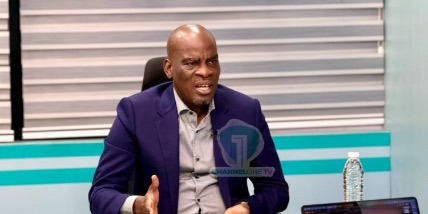
Education Minister Haruna Iddrisu has firmly dismissed opposition claims that the government’s $300 million World Bank loan is earmarked for the Free Senior High School (Free SHS) programme, insisting instead that the facility is exclusively targeted at retiring the controversial double-track system and expanding secondary education infrastructure. Speaking on Channel One TV’s The Point of View on Monday, Iddrisu sought to reset the narrative amid mounting political pressure over Ghana’s post-IMF borrowing strategy.
A Heated Political Exchange
The minister’s clarification comes days after the Minority in Parliament accused the Mahama administration of seeking external financing to prop up Free SHS, arguing that the loan request exposed the government’s inability to sustain the flagship policy just months after Ghana’s exit from the International Monetary Fund (IMF) programme. Critics have pointed to the loan as a sign of fiscal fragility, questioning why the government would resort to fresh debt so soon after completing a painful bailout.
However, Iddrisu pushed back forcefully, stating: “We’re borrowing to expand secondary education infrastructure. Don’t forget there was secondary education before Free SHS. We have finished our review; it has come to stay.” He emphasised that the loan is not a lifeline for day-to-day operations but a capital investment to fix structural bottlenecks that have plagued the sector for years.
The Three-Pronged Strategy
Iddrisu outlined a comprehensive reform agenda, with the World Bank facility serving as the cornerstone for three key objectives:
- Eradicating the double-track system – The minister acknowledged that the shift system, introduced during the previous administration to absorb the surge in enrolments under Free SHS, has severely compromised teaching and learning time. “The World Bank loan is to help us end the double-track system, which didn’t allow for qualitative enhancement in terms of time hours between teachers and students,” he said. He pledged that within the next 24 months, the system would be completely phased out, citing Prempeh College and St. Peter’s Senior High School as early success stories where infrastructure upgrades are already enabling a return to single-track operations.
- Upgrading school infrastructure – The loan will finance the construction of new classrooms, dormitories, and science laboratories in existing schools, as well as the establishment of new institutions in underserved districts. This, Iddrisu said, will not only ease congestion but also expand access for the thousands of qualified candidates who are currently turned away each year due to space constraints.
- Improving quality of education – Beyond bricks and mortar, the minister stressed a renewed focus on teacher professionalism, curriculum revision, and a major push in Science, Technology, Engineering, and Mathematics (STEM) education, alongside information technology. He argued that Ghana’s future competitiveness depends not on enrolment numbers alone but on the calibre of graduates produced.
Domestic Funding for Feeding and Operations
Importantly, Iddrisu clarified that the loan is strictly for capital projects, not recurrent expenditure. To address the perennial challenge of student feeding, he revealed that the government has allocated approximately GH¢3.4 billion from the Ghana Education Trust Fund (GETFund) for the 2026 fiscal year alone—a substantial increase that he said would ensure nutritious meals are provided without resorting to external borrowing. This allocation, he noted, is separate from the World Bank facility and underscores the government’s commitment to sustaining Free SHS through domestic resources.
The Broader Context: Free SHS Under Scrutiny
Since its inception in 2017, the Free SHS policy has been both a political triumph and a logistical headache. Enrolment skyrocketed from roughly 420,000 to over 800,000, straining infrastructure, teacher numbers, and the national budget. The double-track system—where students attend school in alternating shifts—was introduced as a stopgap, but has been widely criticised for reducing contact hours, confusing timetables, and compromising academic outcomes.
The current government, under President John Mahama, has repeatedly pledged to “review and refine” the policy rather than abolish it. Iddrisu’s comments reinforce that stance, positioning the World Bank loan as a strategic investment to make the policy sustainable rather than a bailout for a failing programme.
Opposition Unconvinced
Despite the minister’s assurances, the Minority remains sceptical. In a separate statement, opposition spokespersons questioned why the government could not finance these infrastructure projects from the national budget, especially given the recent IMF exit and the country’s improving fiscal indicators. They also demanded transparency on the loan terms, including interest rates and repayment schedules, warning that any new debt could undermine the gains made under the IMF programme.
Government’s Defence
Iddrisu, however, defended the borrowing as prudent and targeted. He noted that the World Bank’s concessional terms—low interest and long repayment periods—made it an ideal vehicle for long-term capital investments that would yield returns through improved human capital. He also stressed that the loan is not new debt for consumption but an investment in the future workforce.
What’s Next?
The Ministry of Education is expected to submit a detailed project implementation plan to the World Bank in the coming weeks, with disbursements likely to begin by the fourth quarter of 2026. Meanwhile, the ongoing review of the Free SHS policy—including a comprehensive assessment of its financing model, curriculum relevance, and quality assurance—is expected to be completed by year-end.
As the political debate rages on, one thing is clear: the $300 million loan has become a litmus test for the government’s fiscal discipline and its ability to deliver on its education promises. For Iddrisu and the Mahama administration, the next 24 months will determine whether the double-track system is finally consigned to history—or whether the loan becomes another chapter in Ghana’s long struggle with education reform.
订阅 AfroAsia Media 新闻简报
每日非洲与亚洲要闻,直接发送到您的邮箱。




评论
0 条评论
加载中…