
我们正在将本文翻译成中文,译文稍后将显示在此处。目前先显示英文原文。
Francis lays bare Spain’s secret: ‘France brought athletes – Spain brought the ball and refused to share it’
As Spain marched into the World Cup final with yet another masterclass in controlled domination, former midfield maestro Cesc Fabregas offered the definitive verdict on La Roja’s tactical supremacy. Speaking to reporters after the semifinal victory over France, the 2010 World Cup winner distilled Spain’s philosophy into its purest essence. “I’ll keep saying it: one…
发布于 阅读约 4 分钟
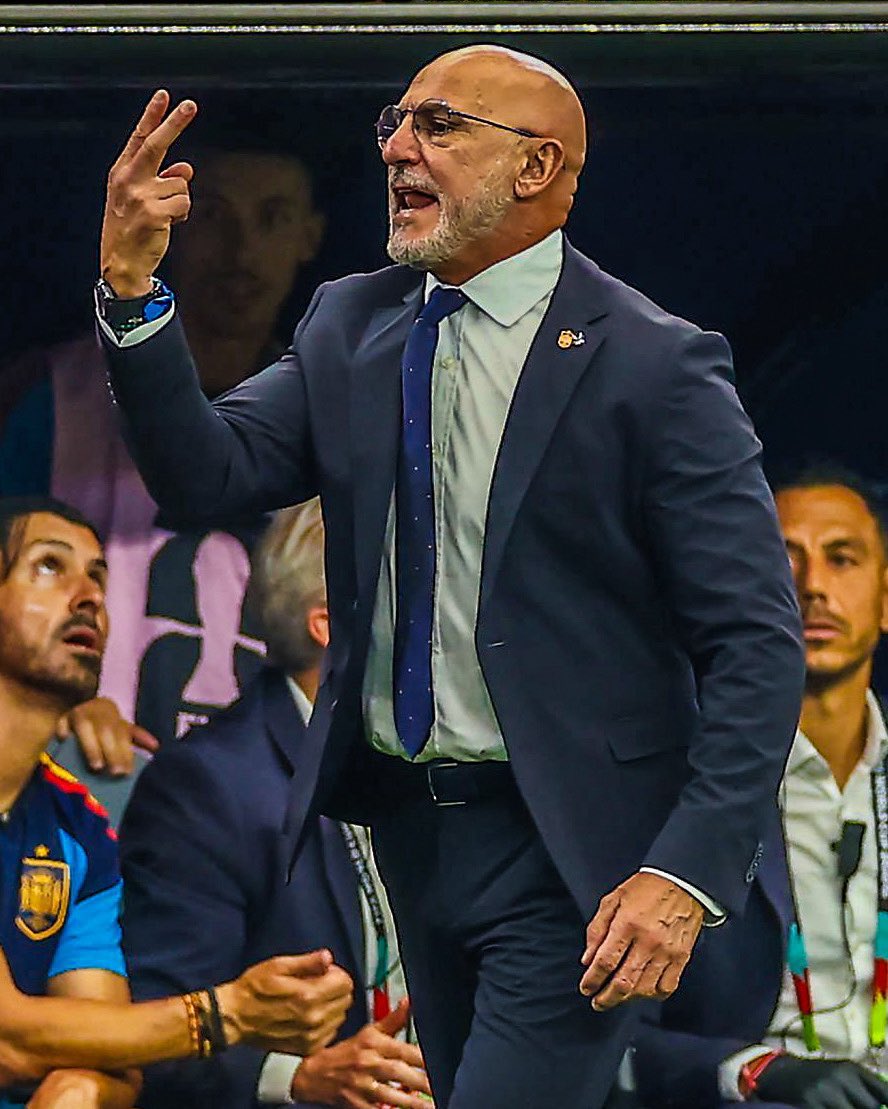
As Spain marched into the World Cup final with yet another masterclass in controlled domination, former midfield maestro Cesc Fabregas offered the definitive verdict on La Roja’s tactical supremacy. Speaking to reporters after the semifinal victory over France, the 2010 World Cup winner distilled Spain’s philosophy into its purest essence.
“I’ll keep saying it: one of the best ways to defend is to keep the ball,” Fabregas declared. “Your opponent can’t create many chances if they spend most of the game trying to get possession back. That’s exactly what Spain did tonight.”
The numbers backed his claim. Spain completed over 700 passes with an 89% accuracy rate, while France—possessing some of the most devastating transition players on the planet—managed just 38% possession and a meager three shots on target. It was not merely a victory; it was an extended lesson in suffocation through circulation.
The Porro Goal: A Perfect Textbook Example
For Fabregas, the defining moment came via Pedro Porro’s crucial second goal, a strike that encapsulated everything Spain represent at their fluent best.
“Look at Porro’s goal,” Fabregas said, breaking down the sequence with the precision of a man who spent two decades executing exactly such moves. “He passes to Olmo, keeps moving, gets the return and finishes before France can react. No unnecessary touches, no waiting for someone to dribble through three players. Just pass, move and pass again.”
The goal, timed perfectly in the 68th minute, unfolded in the span of four seconds. Porro received the ball on the right flank, fed a crisp one-touch pass into Dani Olmo’s feet, continued his run into the box, received the return pass, and swept a first-time finish past the French goalkeeper. By the time the French defenders had turned their heads, the ball was already in the net.
“What makes it so beautiful is the simplicity,” Fabregas added. “In modern football, everyone wants the spectacular dribble or the 40-yard screamer. But Spain taught the world generations ago that football is about geometry. The ball moves faster than any player can run. That goal was a pure expression of that truth—three touches, two passes, one finish, and a defense left flat-footed.”
A Clash of Philosophies
The contrast between the two sides, Fabregas observed, was stark and ultimately decisive.
“France brought the athletes. Spain brought the ball… and refused to share it,” he said with a knowing smile.
It was a pointed observation. France’s lineup boasted extraordinary physical specimens—Mbappé’s blinding acceleration, Koundé’s raw power, Tchouaméni’s imposing frame. Yet for all their athletic prowess, they spent the evening chasing shadows. The Spanish players, less physically imposing on paper, rendered their opponents’ advantages irrelevant by simply never giving them the opportunity to use them.
“That is the great irony,” Fabregas continued. “Everyone talks about Spain’s possession as a way of attacking. And yes, we create chances from it. But the true genius is the defensive security it provides. If the opponent has the ball for 30% of the game, they only have 30% of the game to hurt you. That is not coincidence—that is design.”
The Legacy of a Footballing School
Fabregas, who won the 2010 World Cup and Euro 2008 and 2012 with Spain, spoke not just as an analyst but as an architect of the very philosophy that now guides this current generation. He praised Luis de la Fuente’s side for staying true to the identity while injecting fresh energy through the likes of Lamine Yamal and Nico Williams.
“These young players have grown up with this. They don’t know any other way,” Fabregas said. “Yamal doesn’t just dribble for the sake of it—he dribbles to create space for the pass. Nico doesn’t just run—he runs to open up passing lanes. That’s the difference. Individual brilliance is never the end goal; it’s always a tool for the collective.”
He also noted the psychological impact of Spain’s approach. “Imagine being a French defender. You chase, you press, you run for five minutes, and then you finally win the ball back—only to lose it again ten seconds later because Spain’s first touch and second pass are already gone. That drains the spirit. By the 70th minute, they weren’t just beaten on the scoreboard; they were beaten mentally.”
A Final Berth Built on Certainty
With this victory, Spain have now eliminated France from three consecutive major tournament semifinals—and in each instance, the possession statistics have told the same story. Fabregas, however, warned against assuming the final will be a foregone conclusion.
“Possession is a tool, not a trophy,” he cautioned. “You still have to score, and you still have to defend set-pieces. But when a team plays like this—with this clarity, this unity, this belief—they give themselves the best possible chance every single time.”
As Spain prepare for the final, they carry not just momentum but an unshakeable conviction in their identity. As Fabregas concluded with a shrug and a smile: “We don’t chase the game. We make the game chase us. That is Spain. That will always be Spain.”
订阅 AfroAsia Media 新闻简报
每日非洲与亚洲要闻,直接发送到您的邮箱。




评论
0 条评论
加载中…