
我们正在将本文翻译成中文,译文稍后将显示在此处。目前先显示英文原文。
Former Minister slams Ghana’s development programmes as unsustainable, calls for long-term national plan
Former Environment, Science and Technology Minister Prof. Kwabena Frimpong-Boateng has launched a scathing critique of Ghana’s development planning, calling for a long-term national blueprint that successive governments would be bound to implement. Speaking on Channel One TV’s The Point of View with Bernard Avle on Wednesday, September 16, Prof. Frimpong-Boateng singled out the One-District-One-Factory (1D1F),…
发布于 阅读约 5 分钟
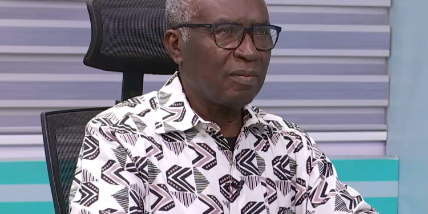
Former Environment, Science and Technology Minister Prof. Kwabena Frimpong-Boateng has launched a scathing critique of Ghana’s development planning, calling for a long-term national blueprint that successive governments would be bound to implement.
Speaking on Channel One TV’s The Point of View with Bernard Avle on Wednesday, September 16, Prof. Frimpong-Boateng singled out the One-District-One-Factory (1D1F), One-Village-One-Dam (1V1D), Nkoko Nkitinkiti poultry programme and the Big Push infrastructure initiative as examples of what he described as unsustainable interventions.
“I don’t see any clear picture being laid out by the politicians,” he said.
“We Are Driving Around a Roundabout”
Citing Kwame Nkrumah’s abandoned Seven-Year Development Plan as a cautionary tale, Prof. Frimpong-Boateng argued that Ghana has failed for decades to commit to a coherent development trajectory.
“For example, we abandoned Kwame Nkrumah’s Seven-Year Development Plan. We abandoned it and now replace it with One-District-One-Factory, One-Village-One-Dam, Nkoko Nkitinkiti, and Big Push and all that. These are not sustainable things,” he said.
He warned that even a successor government from the same political party could reject projects initiated by its predecessor.
“There must be a solid plan that we can all follow, long-term, something that the government, even your own party, will maintain. But some of them, even the next government from the same party, will be rejected,” he said.
“We are at a roundabout. We are dancing around, driving around a roundabout for years. We’ve gone past the crossroads. We’ve come to a point where we have to decide whether to go to the left or to the right, or maybe forward.”
Background: The Programmes Under Fire
Prof. Frimpong-Boateng’s criticism comes amid mounting evidence of implementation challenges across the very initiatives he named.
One-District-One-Factory (1D1F) was the flagship industrialisation policy of former President Akufo-Addo’s administration. According to Minority Leader Alexander Afenyo-Markin, the programme created approximately 170,000 direct and indirect jobs across 142 districts, with 321 projects at various stages of implementation. However, a Ghana News Agency report in May 2026 revealed that a cassava starch processing factory under the programme in the Asin South District of the Central Region had been completely overrun by weeds. The facility, jointly funded by the African Development Bank, the International Fund for Agricultural Development and the Ghanaian government, stalled after construction began around 2019 due to funding shortfalls and procurement delays. Today, its equipment is rusting and its concrete is cracking — a situation local youth described as “a dream rotting away just like the facility.”
One-Village-One-Dam (1V1D) was launched in 2017 to alleviate water scarcity in northern Ghana. Academic research indicates the programme marginalised local knowledge in favour of external engineering “expertise,” resulting in dams that largely failed to meet policy and community expectations. Other studies suggest participation in the programme significantly reduced the adoption of high-risk coping strategies — such as privately built water infrastructure and seasonal livestock migration — among farmer-herders.
Nkoko Nkitinkiti, a poultry revival programme launched by President Mahama in November 2025, aims to distribute three million birds nationwide to reduce dependence on imported frozen chicken. Ghana spent over $350 million on poultry imports in 2023 alone. But the programme has drawn sharp criticism. Kingsley Ofosu Ntiamoah, former Executive Director of the Ghana Museums and Monuments Board, accused the government of “wasting taxpayers’ money” and called the additional $270 million investment a “scam,” alleging that some beneficiaries slaughtered and ate the birds rather than establishing sustainable farms.
The Big Push infrastructure programme has seen President Mahama confirm over GHS 13 billion allocated for its first phase during an inspection tour of the Volta Region in July 2026, with a further GHS 30.8 billion committed for the year — bringing total investment above GHS 40 billion, with roughly 2,500 kilometres of roads under construction nationwide. During parliamentary debate, however, the Minority noted that 44 per cent of Big Push contracts were awarded through single-source procurement, raising transparency concerns. The government has announced plans to extend the programme to second and third phases.
Who Is Prof. Frimpong-Boateng?
Prof. Frimpong-Boateng is no ordinary critic. A renowned cardiothoracic surgeon, he graduated from the University of Ghana Medical School in 1975 and later trained at Hannover Medical School in Germany. In 1985, he became the first black person to perform a heart transplant. Returning to Ghana in 1989, he established the National Cardiothoracic Centre, served as Chief Executive of Korle Bu Teaching Hospital, chaired the Ghana Red Cross Society, and served as Minister of Environment, Science and Technology from 2017 to 2021.
Policy Context
Ghana’s National Development Planning Commission submitted a Medium-Term National Development Policy Framework for 2026–2029 to the Finance Ministry in January 2026, themed “Resetting Ghana’s Agenda: Creating Jobs, Ensuring Accountability, and Promoting Shared Prosperity.” The framework is anchored in Article 36 of the Constitution and covers economic development, social development, environment and infrastructure, governance, and international relations.
Separately, Finance Minister Cassiel Ato Forson has begun consultations with the Trade Ministry on a “new economy” transformation plan. President Mahama has announced the plan will involve $10 billion in investments across key sectors, with full details expected in the November 2026 budget.
Prof. Frimpong-Boateng’s intervention lands at a pivotal moment in Ghana’s development policy debate. His central argument — that the country needs a long-term plan capable of surviving changes in government and political party — touches on a fundamental problem Ghana has never resolved since the Nkrumah era. The Seven-Year Development Plan of 1964 itself did not survive the 1966 military coup, and some economic historians have assessed its operational impact as “close to zero.”
订阅 AfroAsia Media 新闻简报
每日非洲与亚洲要闻,直接发送到您的邮箱。




评论
0 条评论
加载中…