
本文暂无中文版本,现显示英文原文。
Former Goldman Sachs banker convicted in $1 million Ghana bribery scheme — Jury finds Asante Kwaku Berlin guilty of FCPA and money laundering
A federal jury in Brooklyn delivered a decisive guilty verdict on Thursday against Asante Kwaku Berko, a dual citizen of the United States and Ghana, on all charges of conspiring to violate the Foreign Corrupt Practices Act (FCPA), substantive FCPA violations, and money laundering conspiracy. The conviction, which followed a nine-day trial before U.S. District…
发布于 阅读约 8 分钟
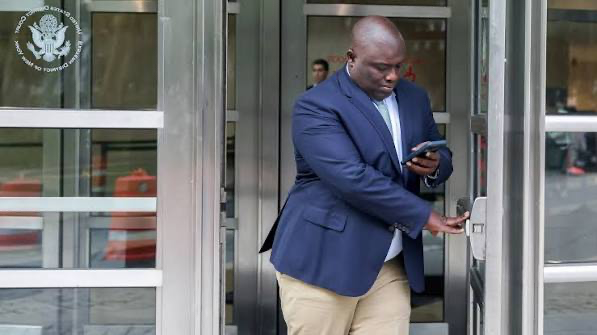
A federal jury in Brooklyn delivered a decisive guilty verdict on Thursday against Asante Kwaku Berko, a dual citizen of the United States and Ghana, on all charges of conspiring to violate the Foreign Corrupt Practices Act (FCPA), substantive FCPA violations, and money laundering conspiracy. The conviction, which followed a nine-day trial before U.S. District Judge Diane Gujarati, caps a five-year investigation that peeled back the layers of a sophisticated bribery scheme aimed at tilting a Ghanaian power-plant contract in favor of a Turkish energy company. Berko, who was remanded into custody immediately after the verdict, faces up to 30 years in prison at sentencing, with no date yet set.
The Scheme in Detail: From Power Crisis to Payoffs
The case dates to December 2014, when Ghana was engulfed in a crippling power crisis known locally as the dumsor – rolling blackouts that lasted up to 12 hours a day, shuttering factories and straining households. To address the emergency, the government of then-President John Dramani Mahama launched a fast-track procurement process for a new thermal power plant. Berko, then an executive director in the investment banking division of Goldman Sachs, was assigned to advise and manage the deal between the Republic of Ghana and Aksa Enerji Uretim A.S., a Turkish energy conglomerate and a longtime Goldman client.
Prosecutors proved at trial that Berko and his co-conspirators—identified in court documents as senior executives at Aksa and intermediaries—agreed to pay more than $1 million in bribes to multiple Ghanaian government officials. The goal was to ensure Aksa won the competitive bid, which was estimated to generate hundreds of millions of dollars in construction and operating profits over the plant’s lifespan.
The bribery network targeted officials at several levels of the Ghanaian government. In April 2015, internal emails and encrypted messages revealed that the conspirators discussed a $1 million payment to the Minister of Power, who held the authority to grant critical environmental and regulatory approvals, and a separate $250,000 payment to the minister’s senior adviser. In addition, five unnamed Ghanaian officials were flown to Turkey on an all-expenses-paid trip to inspect power-generation equipment—a trip that prosecutors characterized as a “corrupt junket” designed to secure their goodwill and future cooperation.
Coded Language and the “Holy Rain”
After the Ghanaian Parliament ratified the Aksa agreement in July 2015, the pace of bribery intensified. In August 2015, the conspirators exchanged a series of emails discussing specific disbursements. One message noted that a recipient was waiting for the “holy rain”—a coded reference to a bribe payment—and “would appreciate it sooner rather than later.” Another email detailed a $250,000 tranche split among various officials, including $46,000 paid personally by Berko to members of Parliament who had voted to approve the deal. The payments were structured to avoid detection: some were routed through shell companies incorporated in tax havens, others were disguised as consulting fees using sham invoices, and still others were withdrawn in cash from nominee bank accounts in the United States and Europe.
Berko took extraordinary steps to conceal the scheme from Goldman Sachs’ compliance department, which had been tasked with vetting the transaction for anti-corruption risks. He used his personal Gmail account—rather than his Goldman email—to discuss the deal and directed his co-conspirators to do the same. He also deliberately misrepresented the nature of the project to Goldman’s internal reviewers, claiming that all due diligence had been conducted and that no red flags existed. Despite his efforts, Goldman’s compliance team eventually flagged anomalies and withdrew from the deal in late 2015, citing “corruption concerns” that ultimately alerted regulators.
Global Dragnet and Extradition
Berko’s downfall began when the FBI’s New York Field Office, in collaboration with the U.S. Attorney’s Office for the Eastern District of New York, initiated an investigation in 2016. The probe drew on financial intelligence from the Treasury Department’s Financial Crimes Enforcement Network (FinCEN) and cooperation from the U.K.’s National Crime Agency. In 2021, Berko—who had relocated to London—was arrested by British authorities at the request of the U.S. Marshals Service and INTERPOL. Following a protracted extradition battle, he was transported to New York in 2023 to face trial.
“Today’s verdict highlights the importance of domestic and international partnerships, and the magnitude of success that working together creates,” said FBI Assistant Director in Charge James C. Barnacle Jr., who thanked the U.K. National Centre Bureau for INTERPOL, the U.S. Embassy in London, and the Justice Department’s Office of International Affairs for their “substantial assistance.”
Reactions from U.S. Prosecutors
United States Attorney for the Eastern District of New York, Joseph Nocella Jr., called the conviction “another significant victory in this Office’s longstanding commitment to rooting out corruption.” He added: “The defendant abused his access to high-level foreign government officials and his platform as an investment banker at a prestigious American firm to line his own pockets with millions of dollars.”
Assistant Attorney General A. Tysen Duva of the DOJ’s Criminal Division framed the case in broader geopolitical terms. “We live in a global economy that American companies must be able to compete in fairly. This defendant corrupted that fair competition. He abused his position at a world-renowned American investment bank by helping bribe Ghanaian officials, so he and his co-conspirators, including senior executives at a Turkish company, could make money. Today’s conviction makes clear that criminals who undermine our country’s interests by corrupting foreign governments and cutting off fair competition will face the full force of the Department of Justice.”
The Missing Co-Conspirators and the Aksa Connection
While Berko is the first to stand trial, the indictment named several unindicted co-conspirators, including senior executives at Aksa Enerji. However, the Turkish company has not been charged, and prosecutors have not disclosed whether further indictments are pending. Aksa, which is a subsidiary of the larger Kazancı Holding, has publicly denied any wrongdoing, claiming it relied on Berko’s representations as a Goldman banker. Legal experts note that the conviction may embolden the DOJ to pursue extradition of the Turkish executives if evidence supports it, though U.S.-Turkey relations have historically complicated such efforts.
Implications for Ghana’s Energy Governance
The verdict has reverberated in Accra, where anti-corruption activists and civil society groups have seized on the case to demand accountability. “This is not just about one banker,” said Bright Appiah, executive director of the Ghana Integrity Initiative, the local chapter of Transparency International. “It is about the culture of impunity that allowed a foreign company and a Wall Street intermediary to think they could buy our officials as easily as buying a used car. We need a forensic audit of every energy contract signed between 2014 and 2016.”
The power plant project never materialized after Goldman’s withdrawal, but the bribery scheme cost Ghana’s treasury millions in legal fees, procurement delays, and lost opportunity. The country ultimately turned to other private developers, including the Sankofa Gas Project and the Kpone Thermal Power Plant, but those deals also faced scrutiny. In 2020, a parliamentary committee report flagged irregularities in several emergency power contracts, but no formal prosecutions followed in Ghana.
The Ministry of Energy has not issued an official statement on Berko’s conviction, but a senior official who spoke on condition of anonymity expressed dismay: “We trusted our partners and our international advisers. If this is what happens when we turn to Wall Street for help, we need to rethink our approach to foreign investment.”
Goldman Sachs’ Role and Compliance Failures
The trial also cast a spotlight on Goldman Sachs’ internal controls. While the bank was not charged and its compliance team eventually flagged the deal, the case raises questions about how a senior executive could operate a clandestine bribery network for nearly a year without detection. During the trial, a Goldman compliance officer testified that Berko had circumvented standard protocols by using personal email and misrepresenting the deal’s complexity. The bank has since overhauled its FCPA training and enhanced its due diligence on emerging-market projects, but critics argue that the episode shows the limits of self-policing in high-stakes investment banking.
The Prosecution Team and Next Steps
The government’s case was handled by Assistant U.S. Attorneys Jessica Weigel, Nick M. Axelrod, and Tara McGrath from the Eastern District of New York, alongside Assistant Chief Katherine Raut and Senior Trial Attorney Katherine Nielsen from the Criminal Division’s Fraud Section. Paralegal specialists Melina Piatti-Chayan, Isha Jayadev, and Teresa Dolan provided critical support throughout the nine-day proceedings.
Berko’s defense attorney, who did not comment immediately after the verdict, is expected to file post-trial motions for a new trial or to challenge the sufficiency of the evidence. Legal observers believe the defense will focus on the government’s reliance on co-conspirator testimony and the interpretation of “corrupt intent” under the FCPA. However, given the weight of the documentary evidence—including emails, bank records, and testimony from a cooperating witness—most analysts expect the conviction to stand.
Sentencing and Broader Impact
Berko faces a statutory maximum of 20 years for the FCPA conspiracy and substantive counts, plus 10 years for money laundering conspiracy, to run consecutively. He may also be ordered to forfeit any proceeds from the scheme and pay restitution. The U.S. Probation Office will prepare a pre-sentence report, and Judge Gujarati is expected to schedule a hearing within the next 90 days.
For the U.S. Department of Justice, the conviction reinforces its aggressive posture on foreign bribery, which has yielded over $2 billion in penalties and more than 50 FCPA prosecutions since 2020. For Ghana, the case is a sobering reminder that the fight against corruption must begin at home—with transparent procurement, independent oversight, and a judiciary willing to prosecute high-ranking officials. As Appiah of Ghana Integrity Initiative put it: “Berko is just the middleman. The real question is: who took the money, and why are they still walking free in Accra?”
订阅 AfroAsia Media 新闻简报
每日非洲与亚洲要闻,直接发送到您的邮箱。




评论
0 条评论
加载中…