
我们正在将本文翻译成中文,译文稍后将显示在此处。目前先显示英文原文。
Ebadi warns Khamenei’s funeral could become deadly state spectacle as Iran braces for costly ceremony
Iranian Nobel Peace Prize laureate Shirin Ebadi has issued a stark warning that the planned state funeral for Supreme Leader Ali Khamenei risks turning into a “deadly spectacle,” accusing the Iranian government of once again sacrificing public safety for the sake of a grandiose display of power. In a post on Instagram on Friday, Ebadi…
发布于 阅读约 4 分钟
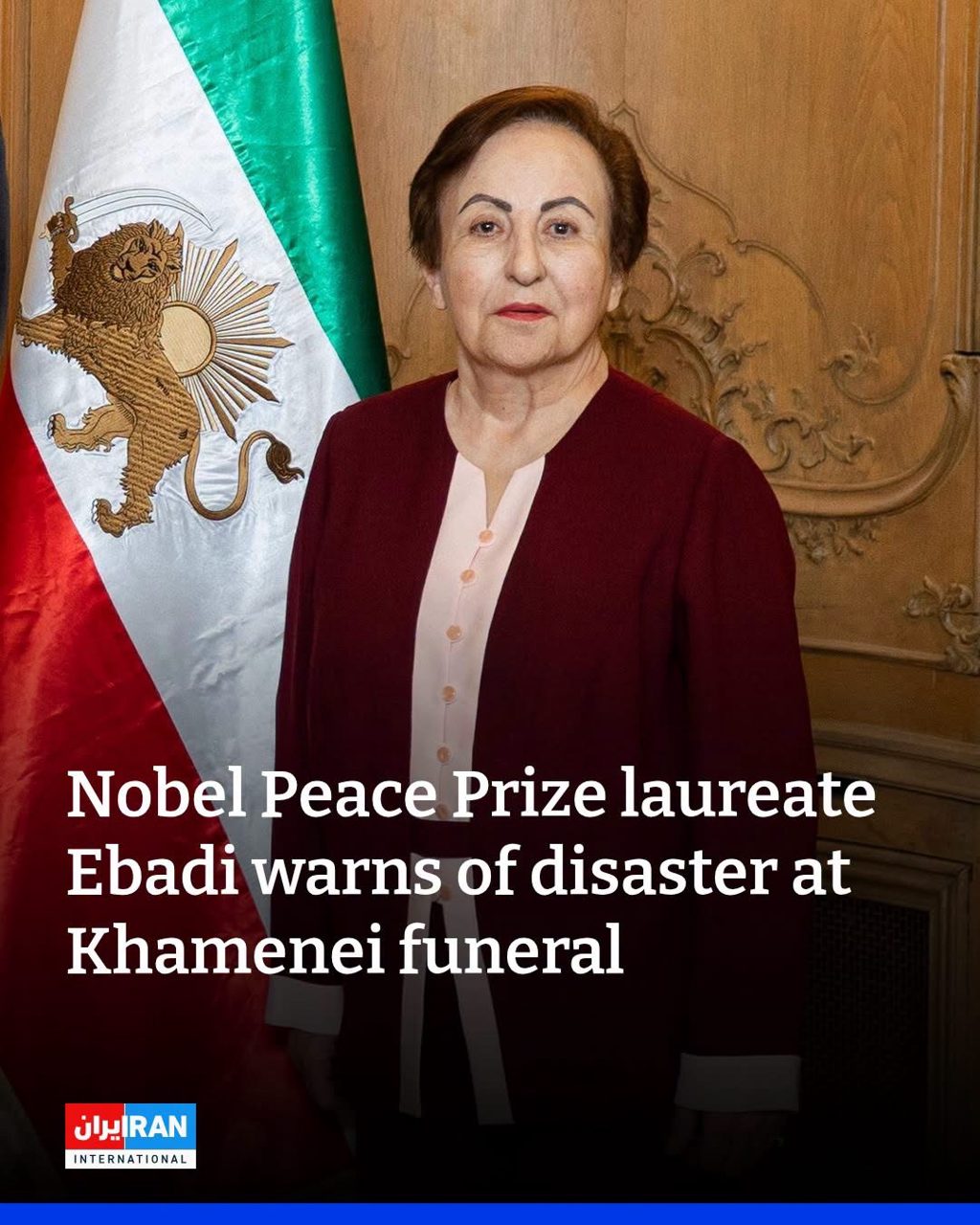
Iranian Nobel Peace Prize laureate Shirin Ebadi has issued a stark warning that the planned state funeral for Supreme Leader Ali Khamenei risks turning into a “deadly spectacle,” accusing the Iranian government of once again sacrificing public safety for the sake of a grandiose display of power.
In a post on Instagram on Friday, Ebadi dismissed speculation over Khamenei’s burial site as secondary to the far more urgent question of public welfare. “The main question is not where Khamenei will be buried,” she wrote. “The question is what will happen to the people who are once again supposed to pay the price for the government’s show of power in the most expensive funeral in history
Khamenei, who has led Iran since 1989, died earlier this week at the age of 86 after months of declining health, though official sources have yet to confirm the exact cause. His passing has triggered a carefully choreographed succession process, with the Assembly of Experts reportedly convening to name a new supreme leader. But it is the scale of the planned funeral that has drawn Ebadi’s sharpest criticism.
A history of deadly processions
Ebadi pointed to the chaotic funeral of Iran’s revolutionary founder, Ayatollah Ruhollah Khomeini, in June 1989, when a stampede in Tehran killed at least eight people and injured hundreds more as millions of mourners flooded the streets. The event was so poorly managed that Khomeini’s body was nearly dropped from the coffin, and the funeral had to be abruptly halted before being resumed under heavy military control.
More recently, the January 2020 funeral procession for Qassem Soleimani, the Revolutionary Guard commander killed in a U.S. drone strike, turned into a similar catastrophe. At least 56 people were crushed to death and more than 200 injured in his hometown of Kerman, where crowds swelled beyond all official projections. Despite those lessons, Ebadi argued, the authorities have learned nothing.
“Khamenei, weeks before his death, spoke of tyrants from Pharaoh to Nimrod being overthrown at the height of their arrogance,” Ebadi wrote. “Now he is set to be buried in a costly, multi-day state ceremony reminiscent of the very rulers he once invoked. This is no longer mourning; it is planning for disaster.”
Cost and control
State media have already announced a four-day mourning period, with processions planned in multiple cities and a final burial expected at the Imam Reza shrine in Mashhad, one of Shia Islam’s holiest sites. Security forces have been placed on high alert, and authorities have deployed thousands of troops to manage crowd control. Yet Ebadi and other critics fear that the regime’s insistence on maximum public participation—intended to project unity and popular legitimacy—will once again override basic crowd-safety measures.
The financial cost of the funeral has also drawn scrutiny. With Iran’s economy still reeling from sanctions, inflation and widespread poverty, Ebadi characterised the expenditure as a cynical diversion. “While ordinary Iranians struggle to afford bread and medicine, the state is pouring millions into a spectacle that serves only to glorify a single man,” she wrote.
A nation on edge
Khamenei’s death comes at a particularly volatile moment for the Islamic Republic. The country has been rocked by waves of protest in recent years, including the 2022 “Woman, Life, Freedom” uprising, and the regime faces mounting pressure both domestically and internationally. The succession process is already fraught with factional infighting, and a mishandled funeral could spark further unrest.
Ebadi, who was awarded the Nobel Peace Prize in 2003 for her work on human rights and democracy, has lived in exile in the United Kingdom since 2009. She has repeatedly condemned the Islamic Republic’s treatment of its citizens, and her warning on Friday was widely shared across social media, with many Iranians echoing her concerns.
The government has not directly responded to Ebadi’s remarks, but state-run news agencies have urged citizens to participate in “dignified and orderly” ceremonies, while promising enhanced security measures. However, given the scale of the crowds expected—estimates range from several million to over ten million—many independent observers remain deeply sceptical.
As Iran prepares for what could be its largest public gathering since the 1979 revolution, Ebadi’s words hang heavy: “The people are once again being made to pay the price—not with taxes, but with their lives.”
订阅 AfroAsia Media 新闻简报
每日非洲与亚洲要闻,直接发送到您的邮箱。




评论
0 条评论
加载中…