
本文暂无中文版本,现显示英文原文。
Depot liberalization: A strategic shift that could lower fuel prices and strengthen Ghana’s energy security
A leading energy analyst has thrown his weight behind the government’s decision to liberalise the zonalisation policy in Ghana’s petroleum downstream sector, arguing that the move could intensify competition, drive down fuel prices, and significantly bolster the nation’s energy security. Ben Nsiah, Executive Director of the Centre for Environmental Management and Sustainable Energy (CEMSE), described…
发布于 阅读约 5 分钟
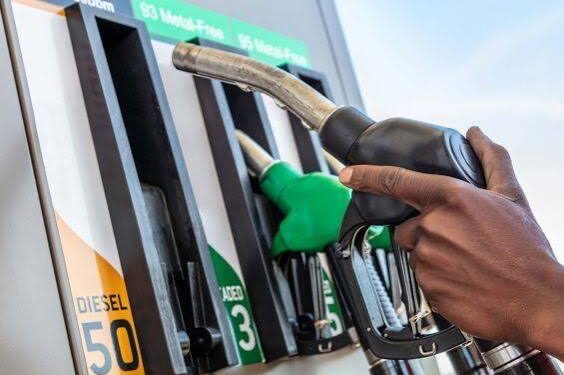
A leading energy analyst has thrown his weight behind the government’s decision to liberalise the zonalisation policy in Ghana’s petroleum downstream sector, arguing that the move could intensify competition, drive down fuel prices, and significantly bolster the nation’s energy security.
Ben Nsiah, Executive Director of the Centre for Environmental Management and Sustainable Energy (CEMSE), described the policy shift as “timely and very justified,” asserting that the long-standing monopoly held by the Bulk Oil Storage and Transportation Company (BOST) over depot operations has failed to deliver the expected gains in price stability and competitiveness .
“The government decision to liberalise the zonalisation policy of the petroleum downstream is timely and very justified,” Mr. Nsiah stated in an interview with Citi Business News. “Over the years we’ve seen BOST run a monopoly of this particular policy and this monopoly policy has not yielded any positive impact in terms of price stability and also pricing competitiveness in the petroleum downstream” .
Breaking the Monopoly to Cut Costs
At the heart of the reform is the decision to allow Bulk Distribution Companies (BDCs) to own and operate petroleum depots across the country. Under the current system, fuel distribution is zone-restricted, meaning an oil marketing company cannot lift fuel from a depot in Tema and distribute it to a station in Takoradi; it must instead source fuel from a depot within the Takoradi catchment area . This arrangement, introduced as a temporary measure, has been criticised as economically inefficient and a driver of higher pump prices.
Mr. Nsiah argued that opening depot operations to BDCs will eliminate these persistent inefficiencies and prevent unnecessary costs from being passed on to consumers .
“We think that government’s position to allow Bulk Distribution Companies (BDCs) to also man the depots across the country is something that is likely going to ensure that prices are comparatively cheaper because the inefficiencies of most of the years will not be passed on as a cost to petroleum consumers across the country,” he explained .
His position aligns with that of the Chamber of Oil Marketing Companies (COMAC), which has long called for the scrapping of the zonalisation policy. COMAC CEO Dr. Riverson Oppong previously argued that the policy “outlived its usefulness” and made fuel more expensive in the country . He highlighted the illogical practice of fuel being transported from Tema to Kumasi while another vehicle transported fuel from Kumasi to Konongo, bypassing each other’s destinations .
A Second Layer of Energy Security
Beyond pricing, Mr. Nsiah emphasised the strategic importance of allowing private BDCs to hold petroleum stocks. This represents a significant departure from the current arrangement where BOST is responsible for maintaining strategic reserves .
“There are certain times that BOST doesn’t have the liquidity or the finances to be able to procure strategic stocks. So in times of need they are not able to come to the aid of Ghanaians,” Mr. Nsiah noted .
Expanding strategic stockholding beyond BOST would improve product availability and affordability, giving Ghana an additional layer of protection against supply disruptions . This is particularly significant given the country’s reliance on imported refined products—domestic refining accounts for only about 13% of national demand, compelling a 37% spike in imports in 2025 .
Rethinking the Infrastructure Margin
Mr. Nsiah also welcomed the replacement of the BOST margin with an infrastructure margin, a change he believes could provide broader funding for petroleum storage, logistics, and distribution infrastructure .
He questioned the value of maintaining a monopoly over the existing margin when BOST’s infrastructure remains in need of significant investment and modernisation. “Sole ownership or monopoly of this particular margin is something that has not benefited this particular industry for some time,” he said .
His concerns echo those he raised earlier in the year, when he called for the removal of BOST margins from the petroleum price build-up entirely. He argued that BOST now operates as a fully commercial entity generating adequate revenue from its core services, and that continued inclusion of BOST margins places an unnecessary burden on consumers .
“BOST margin should be one of the margins considered by the government to be cut or scrapped from the build-up of petroleum products because BOST now operates as a commercial entity,” he stated in April 2026 . He noted that several BOST depots remain underutilised, undermining the rationale for maintaining margins intended for infrastructure development .
A Broader Reform Agenda
The liberalisation is part of a wider reform agenda championed by the National Petroleum Authority (NPA) to de-risk Ghana’s downstream petroleum sector and position the country as West Africa’s preeminent logistics and distribution hub . NPA Chief Executive Godwin Kudzo Tameklo has emphasised that consistent regulation strengthens domestic refining capacity, improves distribution, and protects supply security .
With the Sentuo Oil Refinery scaling operations and ongoing works at Tema Oil facilities, Ghana is projected to satisfy nearly 70% of its refined fuel demand locally in the medium term . This trajectory, combined with depot liberalisation, could reshape the competitive landscape of the downstream sector.
A Call for Stakeholder Support
Mr. Nsiah is urging stakeholders to support the reforms, arguing that the ultimate goal should be a petroleum downstream sector that combines competition with transparency, modern infrastructure, energy security, and affordable petroleum products .
The government’s decision to liberalise the zonalisation policy arrives at a critical time when Ghanaian consumers continue to face high fuel prices, and the nation seeks to enhance its energy independence. By opening up depot operations and strategic stockholding to private players, the reforms aim to create a more competitive market that ultimately benefits the consumer.
As the sector embarks on this transformative journey, the message from analysts is clear: the monopoly era has served its purpose, and the future lies in a competitive, liberalised petroleum downstream that prioritises transparency, efficiency, and affordability for all Ghanaians.
订阅 AfroAsia Media 新闻简报
每日非洲与亚洲要闻,直接发送到您的邮箱。




评论
0 条评论
加载中…