
我们正在将本文翻译成中文,译文稍后将显示在此处。目前先显示英文原文。
Collins defends Messi no-red call, draws hard line on Balogun incident: “Fans don’t understand difference”
Pierluigi Collina, the iconic former referee and current chairman of FIFA’s Referees Committee, has waded directly into one of football’s most contentious officiating debates, offering a firm and technically detailed defense of why Lionel Messi escaped a red card while insisting that Florian Balogun’s challenge was a clear sending-off—and he did so while taking a…
发布于 阅读约 5 分钟
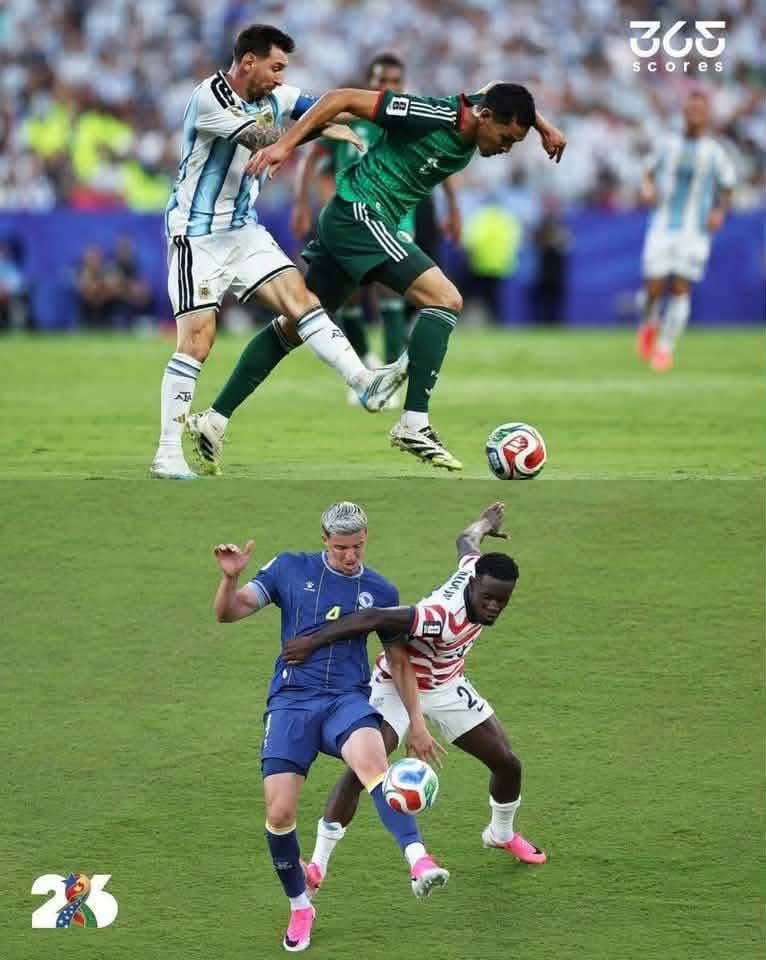
Pierluigi Collina, the iconic former referee and current chairman of FIFA’s Referees Committee, has waded directly into one of football’s most contentious officiating debates, offering a firm and technically detailed defense of why Lionel Messi escaped a red card while insisting that Florian Balogun’s challenge was a clear sending-off—and he did so while taking a pointed swipe at social media-driven outrage.
Speaking in an exclusive interview, the 65-year-old Italian, widely regarded as the greatest referee in football history, broke down the two incidents with the forensic precision that defined his on-pitch career. His comments come amid a firestorm of online criticism, with rival fans and pundits accusing officials of applying a “superstar rule” that protects elite players from harsh sanctions. Collina, however, rejected that narrative outright, framing the debate as a fundamental misunderstanding of the laws of the game.
The Messi Challenge: ‘Unintentional Contact’
Collina began by addressing the flashpoint involving the eight-time Ballon d’Or winner, which occurred during a recent high-profile fixture. Replays showed Messi going for a loose ball with his studs slightly raised, making contact with an opponent’s lower leg before immediately recoiling. Despite the visible collision, no red card was issued—a decision that sparked immediate outcry on social media.
“Messi’s challenge was never the type that deserves a red card,” Collina stated with characteristic authority. “To judge serious foul play, we must look at three core criteria: the intensity of the force, the point of contact, and crucially, the follow-through. In Messi’s case, the contact was unintentional. He was reaching for the ball, and his foot glanced off the opponent’s shin. Most importantly, he did not keep his foot on the opponent’s ankle after the contact occurred—he pulled away instantly. That shows a lack of excessive force and a clear absence of reckless intent.”
Collina emphasized that referees are trained to distinguish between a clumsy, late attempt at the ball and a dangerous assault on an opponent’s safety. He noted that Messi’s body posture—leaning forward, eyes on the ball, and a natural swinging motion—did not meet the threshold for “endangering the safety of an opponent,” which is the explicit wording used in Law 12 of the IFAB rulebook.
The Balogun Incident: ‘A Very Dangerous Twist’
In stark contrast, Collina turned his attention to the challenge involving United States men’s national team striker Florian Balogun, which occurred in a separate match and resulted in no red card at the time—a decision that Collina suggested was a clear officiating error.
“The Florian Balogun incident is completely different from the Messi one, and I must be emphatic about this,” he said, his tone sharpening. “The way the player’s ankle twisted upon impact was very, very dangerous. When an opponent comes in from a blind angle, with their full body weight descending onto the planted foot, and you see the ankle buckle laterally—that is the exact definition of serious foul play. That is a tackle that can end a career.”
Collina broke down the mechanics: Balogun’s opponent was stationary with his foot firmly planted on the turf, making him vulnerable to rotational forces. The contact point was not the shin but the lower ankle, with the studs catching the top of the boot while the defender’s momentum carried through. “There was no attempt to play the ball in a controlled manner,” Collina added. “If I were the referee—and I have officiated World Cup finals, so I know the pressure—I would have shown a red card without hesitation. No second thought. It is the kind of challenge that we in the refereeing community use as a teaching example of what not to do.”
The Social Media Factor: ‘Clicks and Engagement’
Perhaps the most striking portion of Collina’s intervention was his direct rebuttal to the flood of online comparisons between the two incidents. He accused segments of the fanbase—and the content creators who cater to them—of deliberately conflating the two tackles to manufacture controversy, purely because one involved the sport’s most famous name.
“Unfortunately, many fans do not understand these differences, and they will continue to bring up the Messi incident just to gain clicks and engagement, simply because it is Messi,” Collina said, visibly exasperated. “If the exact same challenge had been made by an unknown player in a mid-table league, nobody would have replayed it 500 times. But because it is Messi, every still image is dissected, every angle is slowed to 0.25x speed, and context is stripped away. That is not analysis—that is agenda-driven content.”
He urged supporters to trust the training and protocols that match officials undergo, pointing out that VAR reviews are guided by a “clear and obvious error” standard that applies equally to all players, regardless of reputation. “We do not have a separate rulebook for superstars. We have one law book, and it is applied based on facts—not names, not shirt sales, not Twitter trends.”
A Broader Call for Education
Collina concluded by reiterating his long-standing call for greater football literacy among fans, suggesting that broadcasters and governing bodies need to do more to explain the nuances of refereeing decisions in real-time. He acknowledged that subjective calls will always generate debate—that is part of the sport’s emotional fabric—but he insisted that the Messi-Balogun comparison was a textbook case of apples and oranges.
“We can disagree on interpretation—that is healthy. But we cannot disagree on physics and anatomy,” he said. “One tackle was a late, clumsy stretch with a retracted follow-through. The other was a full-weight stamp onto a locked ankle with a twisting motion. They are not the same. They never were the same. And no amount of viral clips will change that.”
The interview is likely to stoke further debate, particularly among USMNT supporters who felt Balogun was harshly treated, and Messi fans who see the Argentine as a perennial target of excessive scrutiny. Yet Collina’s intervention—backed by decades of institutional authority—offers the clearest window yet into how the game’s highest officiating body interprets the fine line between reckless and malicious. For now, his message is unambiguous: judge the tackle, not the player.
订阅 AfroAsia Media 新闻简报
每日非洲与亚洲要闻,直接发送到您的邮箱。




评论
0 条评论
加载中…