
我们正在将本文翻译成中文,译文稍后将显示在此处。目前先显示英文原文。
China unveils ambitious flying aircraft carrier concept
China has revealed plans for a massive, space-operating aircraft carrier, a futuristic warship designed to deploy squadrons of unmanned fighter jets from the edge of the Earth’s atmosphere. The concept, named “Luanniao,” was showcased in a state media video depicting the triangular craft maneuvering in near-space. Officials from the state-owned Aviation Industry Corporation of China…
发布于 阅读约 2 分钟
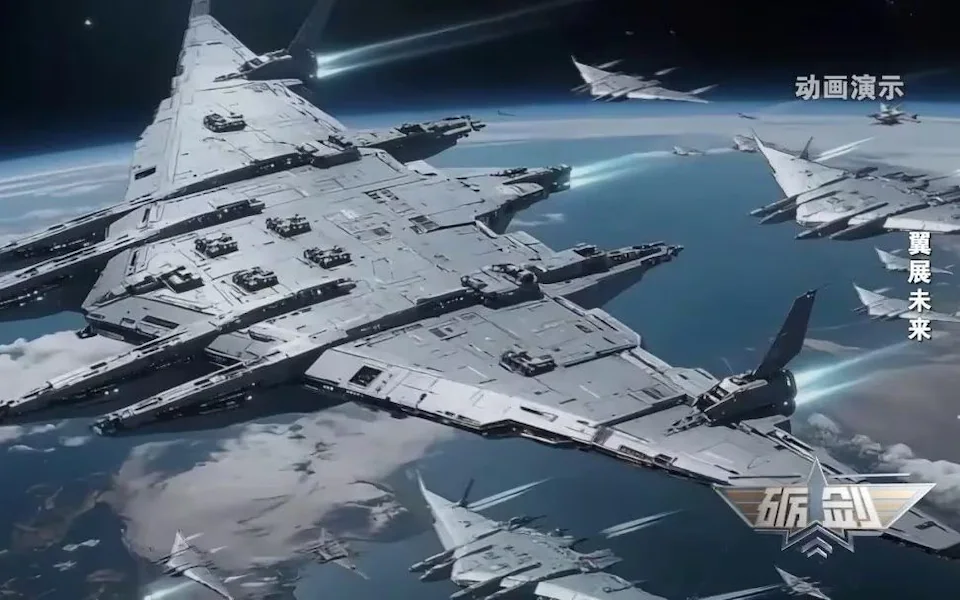
China has revealed plans for a massive, space-operating aircraft carrier, a futuristic warship designed to deploy squadrons of unmanned fighter jets from the edge of the Earth’s atmosphere.
The concept, named “Luanniao,” was showcased in a state media video depicting the triangular craft maneuvering in near-space. Officials from the state-owned Aviation Industry Corporation of China (AVIC) claim the carrier could be operational within two to three decades.
According to the released specifications, the Luanniao would measure 242 meters long with a 684-meter wingspan and a staggering take-off weight of 120,000 tons. Its primary armament would consist of up to 88 “Xuan Nu” unmanned fighter jets, described as stealthy, highly maneuverable aircraft capable of launching hypersonic missiles.
Defense analysts note that such a vessel, if realized, would operate above the effective range of most current surface-to-air missiles and fighter aircraft. “You’re out of range of most defensive systems,” said Peter Layton, a visiting fellow at Australia’s Griffith Asia Institute. He added it could allow China to position a potent strike platform directly over strategic areas.
The Luanniao is the centerpiece of China’s broader “Nantianmen Project,” a military aerospace initiative that also includes development of a sixth-generation “Baidi” fighter jet.
However, significant skepticism surrounds the announcement. Experts point to monumental technological hurdles, including the need for a revolutionary propulsion system, enormous fuel capacity, and reusable rocket technology to loft such a massive craft into a stable near-space position. Layton suggested China may be “10 to 15 years away” from developing the necessary reusable rockets alone.
Analysts interpret the reveal as part strategic messaging. Internally, it serves to inspire national pride and showcase technological ambition. Externally, it projects an image of overwhelming, generational military advancement to neighbors and rivals. “For the external audience, it does paint the picture that they are working on technology that the region just can’t aspire to,” Layton remarked.
The announcement comes amid heightened competition between the U.S. and China in space and military domains. China has recently achieved several lunar exploration milestones, though the U.S. maintains leading overall space capabilities.
The Luanniao concept, first discussed over a decade ago, remains in the realm of theoretical design. Its public unveiling underscores China’s long-term ambitions to dominate the emerging military frontier of near-space.
订阅 AfroAsia Media 新闻简报
每日非洲与亚洲要闻,直接发送到您的邮箱。




评论
0 条评论
加载中…