
我们正在将本文翻译成中文,译文稍后将显示在此处。目前先显示英文原文。
Central Tongu to benefit from $500m World Bank feeder roads project
The Central Tongu District has been selected as one of the beneficiary districts under Cluster Two of the Ghana Market Access and Connectivity Project (GMACP)—a US$500 million initiative supported by the World Bank and the International Development Association (IDA) aimed at transforming rural road infrastructure across the country. The announcement was made by the Member…
发布于 阅读约 4 分钟
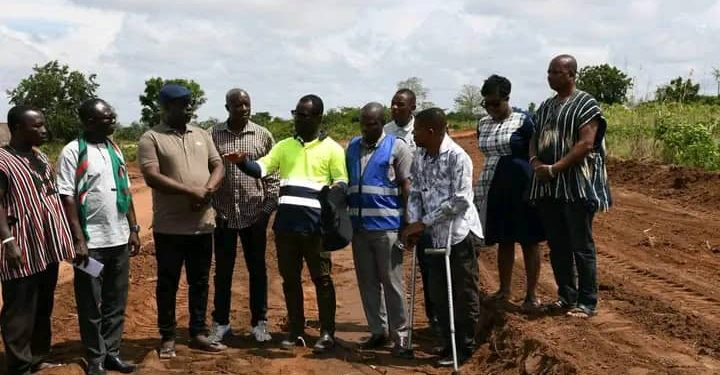
The Central Tongu District has been selected as one of the beneficiary districts under Cluster Two of the Ghana Market Access and Connectivity Project (GMACP)—a US$500 million initiative supported by the World Bank and the International Development Association (IDA) aimed at transforming rural road infrastructure across the country.
The announcement was made by the Member of Parliament for Central Tongu, Mr. Gabriel Roosevelt Hottordze, who described the development as a major milestone in the district’s long-standing efforts to improve road connectivity and stimulate economic growth.
A Hard-Won Selection
Mr. Hottordze revealed that the district’s inclusion followed sustained lobbying and engagements undertaken in collaboration with Mr. Dodzi Addison Mornyuie, the Central Tongu District Chief Executive (DCE). Their joint efforts, he said, were crucial in making the case for the district’s needs before the project’s implementing agencies.
“This is not an accident,” Mr. Hottordze stated. “It is the result of persistent advocacy and a clear demonstration of the district’s potential to benefit from this intervention.”
Project Scope and Impact
The GMACP is expected to facilitate the rehabilitation of approximately 1,050 kilometres of feeder roads across selected regions. In the Volta Region, 11 districts have been earmarked to benefit, with Central Tongu being a key priority under Cluster Two.
Mr. Hottordze outlined the expected benefits:
· Improved all-season access to markets, especially during the rainy season when many rural roads become impassable.
· Strengthened connectivity between farming communities and market centres, reducing travel time and transport costs.
· Reduction in post-harvest losses – Currently, a significant portion of perishable produce spoils before reaching urban markets due to poor roads.
· Enhanced movement of people, goods, and agricultural produce, facilitating trade and commerce.
· Improved livelihoods for farmers, traders, and transport operators, who will gain easier access to economic opportunities.
Why Feeder Roads Matter
Feeder roads are the lifelines of rural economies. In districts like Central Tongu—where agriculture is the dominant economic activity—poor road networks have long been a barrier to development. Farmers struggle to transport their produce to market, schoolchildren miss classes during heavy rains, and emergency health services are often delayed.
The GMACP aims to address these challenges by upgrading critical rural transport infrastructure, thereby:
· Facilitating agricultural production and productivity.
· Improving market access for rural producers.
· Strengthening resilience in beneficiary communities against climate shocks and supply chain disruptions.
A Broader National Context
The $500 million GMACP is part of Ghana’s broader strategy to modernise rural infrastructure and integrate agricultural regions into national and regional markets. The project complements other initiatives such as the Africa Road Improvement Programme and the Ministry of Roads and Highways’ feeder road rehabilitation plans.
Nationally, the project targets over 1,000 kilometres of roads, with a focus on the Volta, Eastern, Ashanti, and Northern regions—areas with high agricultural potential but poor road connectivity.
Local Economic Transformation
Mr. Hottordze emphasised that the rehabilitation of feeder roads would complement ongoing efforts to improve infrastructure and accelerate socio-economic development in the constituency. He noted that better roads would:
· Attract private investment in agro-processing and storage facilities.
· Increase farm gate prices, as middlemen will have to compete more fairly.
· Reduce vehicle maintenance costs for transport operators.
· Enhance access to social services, including health and education.
Government and Stakeholder Support
The MP expressed appreciation to all stakeholders whose efforts contributed to the district’s selection, including traditional leaders, farmers’ associations, and the District Assembly. He reaffirmed his commitment to working with the Government, development partners, and the District Assembly to ensure the successful implementation of the project.
“This is a partnership. We must all work together to ensure that the roads are built to standard, maintained properly, and that the benefits reach the people who need them most,” he said.
Implementation Timeline and Next Steps
While specific timelines are yet to be finalised, the GMACP is expected to roll out over a four-to-five-year period, with procurement of contractors and detailed engineering designs set to begin in the coming months.
The Central Tongu District Assembly will be responsible for oversight and community engagement, ensuring that local labour is employed where possible and that project outcomes are aligned with community needs.
A Promise of Progress
For the people of Central Tongu, the news offers a tangible promise of progress. Poor roads have long been a source of frustration and economic stagnation. With the GMACP, that era may finally be coming to an end.
As Mr. Hottordze put it: “This is not just about asphalt and gravel. It is about connecting people to opportunities—and giving our farmers, our traders, and our children a better chance at a brighter future.”
Looking Ahead
The selection of Central Tongu is a significant step, but the real work lies ahead. Successful implementation will require:
· Transparent procurement processes.
· Timely disbursement of funds.
· Effective supervision and quality assurance.
· Community involvement in maintenance and sustainability.
If these conditions are met, the $500 million GMACP could become a transformative force for rural development—not just in Central Tongu, but across Ghana.
订阅 AfroAsia Media 新闻简报
每日非洲与亚洲要闻,直接发送到您的邮箱。




评论
0 条评论
加载中…