
本文暂无中文版本,现显示英文原文。
BoG spent $12.9bn defending cedi in a year, IMF report reveals, as currency wavers again
The Bank of Ghana (BoG) sold a staggering $12.9 billion on the foreign exchange market in the 12 months through end-May 2026—an average of $1.1 billion monthly—according to a new International Monetary Fund (IMF) report that lays bare the immense scale of state intervention to prop up the cedi, even as the currency slides anew.…
发布于 阅读约 4 分钟
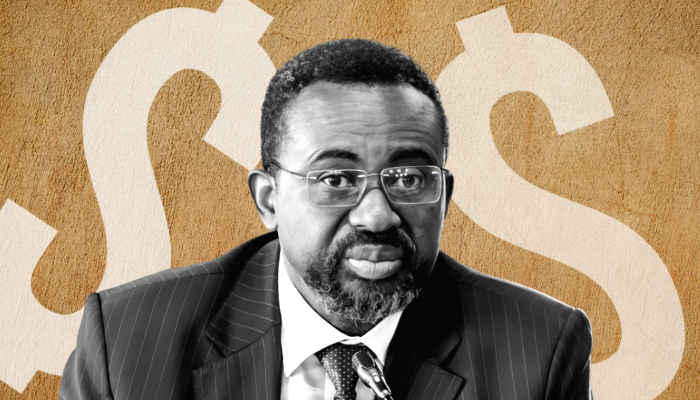
The Bank of Ghana (BoG) sold a staggering $12.9 billion on the foreign exchange market in the 12 months through end-May 2026—an average of $1.1 billion monthly—according to a new International Monetary Fund (IMF) report that lays bare the immense scale of state intervention to prop up the cedi, even as the currency slides anew.
The disclosure, contained in the IMF’s sixth and final review of Ghana’s $3 billion Extended Credit Facility (ECF) programme, paints a picture of a central bank caught between aggressive defence of the local unit and mounting fiscal costs. Over the same period, the BoG accumulated just $3.9 billion in reserves, meaning net sales outstripped purchases by nearly $9 billion.
A Tale of Two Currencies
The intervention yielded notable successes. By end-2025, Ghana’s international reserves covered nearly six months of imports, and the cedi posted a 40.7% nominal effective appreciation—one of the strongest currency performances in West Africa. But that momentum has evaporated. In the first seven months of 2026, the cedi depreciated about 10% against the dollar, sliding from roughly GH¢10.95 in January to around GH¢11.70 by end of July, according to BoG data.
The renewed weakness threatens to push up pump prices, as fuel imports are priced off the exchange rate, at a time when global oil markets are already jittery due to Middle East conflict. Brent crude climbed sharply through early 2026, adding to Ghana’s import bill. The IMF warned the BoG to proceed cautiously with rate cuts, citing “potential second-round effects from the impact of the war… on energy and fertilizer prices” and “persistent risks from the high exchange rate pass-through.”
Gold Strategy Backfires
The central bank’s dollar sales have been funded in part by a controversial domestic gold purchase programme run with the state-owned Ghana Gold Board (GoldBod). But the IMF report flags that the programme “generated losses of GHS 22 billion (1.5% of GDP) in 2025.” Those losses, coupled with higher open-market operation costs and exchange-rate valuation losses from the appreciating cedi, “worsened the BoG’s negative equity position to 6.7% of GDP at end-2025.”
The programme also led to programme breaches. A cost-sharing agreement in late 2025, involving the transfer of bonds with a face value of GH¢5 billion in March 2026, violated a ceiling on central bank claims on the government—a key performance criterion under the IMF loan—at end-December 2025 and again at end-March 2026. The authorities requested, and staff supported, a waiver for the missed target.
Corrective Measures Underway
As a corrective step, the BoG, GoldBod, and government signed a memorandum of understanding in July 2026 formalising the transfer of the gold programme from the central bank to GoldBod and eliminating related quasi-fiscal activities. Doré gold purchases have been conducted by GoldBod since April 1, and from July 1, the government assumed all programme costs, replacing the BoG.
The central bank has also begun reshaping its reserves, cutting monetary gold’s share in gross international reserves “from about one-third to under one-fifth” in the fourth quarter of 2025 and selling half its gold holdings to improve the portfolio’s risk profile.
IMF Cautions on Reserve Targets
In February 2026, Parliament adopted the Ghana Accelerated National Reserve Accumulation Policy, setting a target of 15 months of import cover by 2028, to be met through increased domestic gold purchases. The IMF pushed back, stating that reserves of that size “would not be advisable on precautionary grounds alone, given the non-negligible costs.” Sterilisation costs already reached 1% of GDP in 2025 and would rise with further accumulation.
Governance Concerns and Policy Recommendations
The Fund also flagged governance issues in the BoG’s FX operations. While a new framework introduced in November 2025 improved transparency, the IMF noted that “auctions have frequently deviated from published guidelines by rejecting the highest bids.”
The IMF urged the central bank to gradually reduce its footprint in the FX market, relax net open position limits, and remove remaining capital flow measures to deepen the interbank market and improve price discovery. It also noted that Ghana continues to maintain several multiple currency practices that distort the market, calling for a clear, time-bound plan to eliminate them.
Rate Cuts Amid Fragile Stability
Despite the pressures, the BoG has cut its policy rate by 1,400 basis points since July 2025—among the steepest in Africa—bringing it to 14% and a broadly neutral stance, as inflation remains within the target band of 8% plus or minus 2. Yet with the cedi under renewed strain, gold losses mounting, and external shocks looming, the central bank’s balancing act looks increasingly precarious.
The IMF’s final review effectively hands Ghana a passing grade on the ECF programme but leaves a clear warning: the cost of defending the cedi has been immense, and without a credible exit strategy, the gains may prove fleeting.
订阅 AfroAsia Media 新闻简报
每日非洲与亚洲要闻,直接发送到您的邮箱。




评论
0 条评论
加载中…