
我们正在将本文翻译成中文,译文稍后将显示在此处。目前先显示英文原文。
Big Push: Ghana undertaking Africa’s largest road infrastructure project – Agbodza
The Minister for Roads and Highways, Governs Kwame Agbodza, has declared that Ghana is currently undertaking what he describes as the largest road infrastructure programme in Africa at a particular time, as the government’s “Big Push” initiative accelerates across the country. Speaking at a citizens’ engagement at the University of Business and Integrated Development Studies…
发布于 阅读约 5 分钟
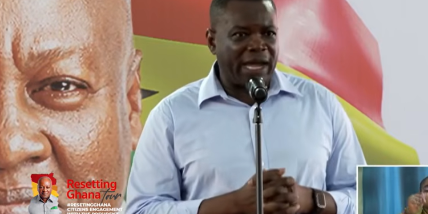
The Minister for Roads and Highways, Governs Kwame Agbodza, has declared that Ghana is currently undertaking what he describes as the largest road infrastructure programme in Africa at a particular time, as the government’s “Big Push” initiative accelerates across the country.
Speaking at a citizens’ engagement at the University of Business and Integrated Development Studies in the Upper West Region on Saturday, September 12, Mr Agbodza said the scale of investment under the programme is unprecedented in Ghana’s history, with projects underway in various parts of the country.
From Campaign Promise to National Priority
Mr Agbodza said the government’s decision to prioritise road development was driven largely by widespread concerns over the poor state of roads across the country during the 2024 general election campaign.
“When we took office, almost every road in every community was in a bad shape. One issue came up very strongly during the 2024 elections and that is, no one was happy about the road in their neighbourhood, and the president made it a point that when given the opportunity, he would make the kind of investment that we have never seen before,” he said.
“The kind of investment the president is putting into the road infrastructure of our country has never ever been seen in our lifetime. The largest ever road infrastructure project at a particular time in Africa is taking place in Ghana. All the Big Push projects are currently in motion and we have made great progress on all the projects across the country.”
Billions Committed to Road Construction
According to data from the Ghana Highways Authority, the first phase of the Big Push programme received an allocation of more than GH¢13 billion, with an additional GH¢30.8 billion released this year, bringing the total investment in the initiative to over GH¢40 billion.
President John Dramani Mahama confirmed during an inspection tour of the Volta Region that approximately 2,500 kilometres of roads are currently under construction nationwide.
The programme covers multiple strategic corridors. In the Upper West Region, the 37-kilometre Wa-Bulenga-Yaala road is under construction and is 27 per cent complete, ahead of schedule. The strategically important Wa-Han-Tumu-Navrongo corridor is expected to be completed next year, with the president committing to a full asphalt overlay to ensure “minimal maintenance for at least the next 20 years.”
In the south, the Suame Interchange Phase Two, the Kumasi and Soniagani outer ring roads, the Kasoa-Winneba and Takoradi-Agona junction dualisation projects are all on the priority list. Feasibility studies and detailed engineering designs for the Accra-Kumasi highway are nearing completion, with preliminary clearing works already underway under a memorandum of understanding between the military and the Ministry of Roads.
Phased Approach Amid Budget Constraints
Despite the ambitious rhetoric, President Mahama himself has acknowledged that budget constraints mean not all roads can be addressed simultaneously.
“We would all want all roads to be constructed at the same time, but we cannot do so,” he said during his Upper West Region tour. “The budget is limited, and that is why there is Big Push Phase One, and we are already planning Phase Two, and there will be Phase Three.”
Under the implementation strategy outlined by the president, the government is prioritising trunk roads first, then extending to feeder roads that connect to the main network, and finally moving into communities and towns. This “trunk-first, capillaries-later” approach reflects the reality of limited resources.
Innovative Financing and Maintenance
Speaking at a transport sector review meeting in early September, Mr Agbodza noted that Ghana “cannot rely on traditional public financing alone” to meet its transport infrastructure needs. The government is seeking to strengthen domestic resource mobilisation and attract private capital, and has passed the Road Maintenance Trust Fund Act, 2025 (Act 1147) to establish a more sustainable financing mechanism.
Parliament recently approved GH¢3.6 billion for the Road Maintenance Trust Fund, but as of June 2026, outstanding unpaid contractor arrears stood at GH¢10.5 billion. This figure lays bare the fiscal pressure behind the large-scale construction drive. The government is simultaneously advancing a multi-lane free-flow electronic tolling system, with a 20-year public-private partnership concession approved to replace manual toll collection and reduce revenue leakage.
Fibre Optic Disruptions Reveal Construction Strain
The large-scale roadworks have also produced unintended consequences. The Minister for Communication, Digital Technology and Innovations, Samuel Nartey George, disclosed on September 7 that Ghana has recorded 8,578 fibre optic cable cuts this year, with approximately 49 per cent directly linked to Big Push road construction, at a repair cost exceeding US$20 million.
“The biggest source of fibre cuts is the Big Push programme, because the Ministry of Roads is undertaking aggressive road construction across the country,” Mr George said. He warned that if the trend continues, fibre cuts could approach 9,000 for the full year 2026. The data underscores both the intensity of the roadworks and the urgency of cross-sector coordination in infrastructure delivery.
A Transport Backbone for Economic Transformation
Mr Agbodza stressed that the success of the Big Push should not be measured solely in kilometres of road built.
“Transport infrastructure is no longer just about constructing roads, bridges, ports or transport systems. It is about creating physical and economic connectivity that allows people, businesses, farmers and communities to participate fully in the national economy,” he said.
The government is simultaneously implementing the Ghana Market Access and Connectivity Project, aimed at improving selected roads and transport services linking productive communities to markets, involving the Ministry of Roads, the Department of Feeder Roads, the Ministry of Finance, and the Ministry of Food and Agriculture. Mr Agbodza acknowledged that poor roads inflate vehicle operating costs, reduce transport reliability, and exacerbate post-harvest losses in rural areas.
During his inspection tour, Mr Agbodza singled out Astee Construction Limited, an Upper West Region contractor, for praise, saying the firm “has consistently been ahead of schedule” and has voluntarily rehabilitated roads in surrounding communities beyond its contract scope. The gesture suggests the government is seeking to frame the Big Push not merely as physical construction but as a vehicle for community engagement and economic empowerment.
As Ghana enters the final quarter of 2026, Mr Agbodza’s claim of “Africa’s largest” will face the twin tests of time and fiscal reality — and is likely to become a central yardstick by which voters judge the government in the next electoral cycle.
订阅 AfroAsia Media 新闻简报
每日非洲与亚洲要闻,直接发送到您的邮箱。




评论
0 条评论
加载中…