
Cet article n'est pas encore disponible en français — voici la version originale en anglais.
Ukrainian drones strike Russian shadow fleet in Sea of Azov, escalating pressure on Moscow’s supply lines
KYIV — Ukrainian forces launched a coordinated night assault on Russian maritime assets in the Sea of Azov on July 11–12, striking 10 oil tankers and four ferries, according to the General Staff of the Armed Forces of Ukraine. Kyiv said the tankers were part of Russia’s so-called “shadow fleet” — aging, often uninsured vessels…
Publié le 3 min de lecture
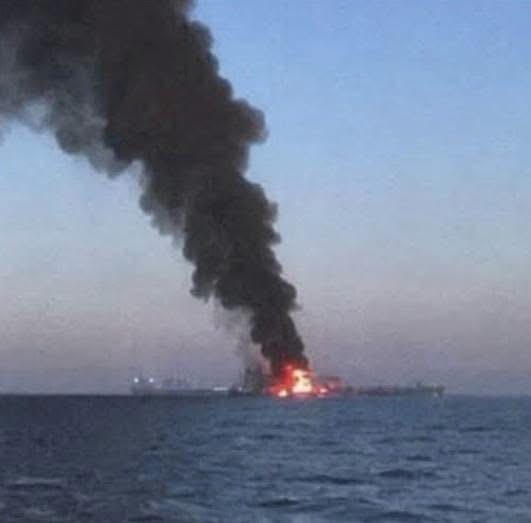
KYIV — Ukrainian forces launched a coordinated night assault on Russian maritime assets in the Sea of Azov on July 11–12, striking 10 oil tankers and four ferries, according to the General Staff of the Armed Forces of Ukraine.
Kyiv said the tankers were part of Russia’s so-called “shadow fleet” — aging, often uninsured vessels used to circumvent international oil sanctions — while the ferries were actively supporting Russian military logistics, transporting ammunition, equipment, and cargo to occupied areas in southern Ukraine.
In a separate incident, a Ukrainian maritime drone struck an oil tanker attempting to enter the Azov–Black Sea Canal, igniting a fire aboard the vessel. Rostov Oblast Governor Yuri Slyusar confirmed the attack, stating that the tanker was empty at the time, which prevented a major oil spill. He added that no crew members were injured and that the fire had been contained. Russian air defenses reportedly shot down more than 20 Ukrainian drones over the Rostov region that same night.
The strikes are part of a broader, intensified campaign against Russian naval and energy infrastructure. Commander Robert Brovdy of Ukraine’s Unmanned Systems Forces revealed that over a 96-hour span, Ukrainian drones successfully hit 35 tankers, and within the past six days, the total number of vessels struck had reached 90 — including both tankers and other cargo ships. On July 11 alone, 28 Russian vessels were hit, he said.
The assault was not confined to the sea. On the same night, Ukrainian drones also targeted the Syzran oil refinery in Russia’s Samara region — one of the largest refining facilities in the country, with an annual capacity of approximately 8.5 million tons of crude. The plant produces diesel, gasoline, and jet fuel, much of which supplies Russian military units. Local reports indicated explosions and a subsequent fire at the facility.
The Sea of Azov serves as a critical artery for Russian military resupply to Crimea and the occupied southern frontlines. It is also a key export route for Russian grain, handling roughly 25% of the country’s Black Sea grain shipments. In response to the escalating attacks, Russia has suspended navigation along the Don River–Sea of Azov corridor, while Crimea — already reeling from repeated strikes on fuel depots — has declared a state of emergency over acute fuel shortages.
The campaign reflects a strategic shift in Kyiv’s approach. President Volodymyr Zelensky has recently signed a decree formally establishing a Long-Range Strike Command within the Ukrainian armed forces, tasked with coordinating all available assets — naval drones, aerial UAVs, and missiles — to systematically degrade Russia’s war-fighting capabilities far behind the front lines.
“We are hitting where it hurts most — their ability to wage war and profit from it,” a Ukrainian military spokesperson said. “Every tanker struck is a link in the enemy’s logistics chain broken.”
Recevez la newsletter d'AfroAsia Media
Les principales actualités du jour en Afrique et en Asie, directement dans votre boîte mail.




Commentaires
0 commentaire
Chargement…