
Nous traduisons cet article en français — la traduction s'affichera ici dans un instant. En attendant, voici la version originale en anglais.
Superman’s Abdul-Samed, Ghana’s tallest man known as Awuche, dies at 33 after battle with gigantism related complications
Sulemana Abdul-Samed, popularly known across Ghana as Awuche and celebrated as the country’s tallest man, has passed away at the age of 33. He died in the early hours of Monday, July 27, 2026, at the Tamale Teaching Hospital (TTH), where he had been receiving treatment for complications associated with gigantism—a rare condition characterised by…
Publié le 5 min de lecture
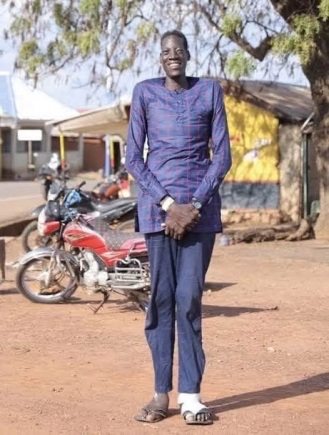
Sulemana Abdul-Samed, popularly known across Ghana as Awuche and celebrated as the country’s tallest man, has passed away at the age of 33. He died in the early hours of Monday, July 27, 2026, at the Tamale Teaching Hospital (TTH), where he had been receiving treatment for complications associated with gigantism—a rare condition characterised by excessive growth hormone secretion.
A family source confirmed the death to Graphic Online, stating that preparations were underway to bury him in Tamale in accordance with Islamic tradition. The source, who spoke on condition of anonymity, described Awuche as a gentle and resilient soul who bore his condition with remarkable dignity. “He fought hard, but his body could no longer sustain the strain. We take solace in the fact that he is now at peace,” the relative said.
A Life Defined by Extraordinary Height
Awuche stood at 7 feet 4 inches (2.24 metres), a stature that made him a subject of fascination and admiration wherever he went. A native of Gambaga in the East Mamprusi Municipality of the North East Region, he grew up in a modest household, and his height—which became increasingly pronounced during adolescence—set him apart from his peers from an early age. While his condition brought him national recognition, it also came with significant physical challenges, including chronic joint pain, mobility difficulties, and respiratory issues that worsened over time.
In recent months, his health had deteriorated sharply. He was initially admitted to the Baptist Medical Centre (BMC) in Nalerigu, where doctors diagnosed severe complications linked to gigantism, including pressure on his spine and internal organs. The medical team at BMC referred him to the Tamale Teaching Hospital for specialised care, recognising that his condition required advanced diagnostic and treatment capabilities not available at the district level.
A Nation’s Support and a Philanthropist’s Intervention
Awuche’s condition attracted widespread public attention after his family made an emotional appeal for financial assistance to cover his mounting medical bills. The story resonated deeply with Ghanaians, and contributions poured in from individuals, organisations, and corporate entities. However, it was businessman and philanthropist Ibrahim Mahama who stepped forward to take full responsibility for his medical care.
Mahama, a prominent figure in Ghanaian business and philanthropy, not only covered the cost of Awuche’s treatment at the Tamale Teaching Hospital but also expressed readiness to facilitate specialist treatment abroad if the need arose. His intervention brought renewed hope to the family and ensured that Awuche had access to the best available medical expertise within the country.
A Reprieve from Amputation
On July 11, 2026, an aide to Mahama, Rafik Mahama, announced a major development that brought relief to Awuche’s family and supporters. Following a comprehensive reassessment by doctors at the Tamale Teaching Hospital, it was determined that Awuche’s left leg would not require amputation—a procedure that had been indicated in the referral from the Baptist Medical Centre in Nalerigu. The doctors concluded that, with intensive physiotherapy and medication, the leg could be preserved, sparing Awuche from what would have been a life-altering surgery.
The news was met with celebration by his family and well-wishers, who had feared that the amputation would further diminish his quality of life. However, despite the best efforts of the medical team, the underlying complications from gigantism proved too severe. His condition continued to decline over the following two weeks, culminating in his death on Monday morning.
Medical Context: Understanding Gigantism
Gigantism is a rare hormonal disorder that occurs when the pituitary gland produces excessive growth hormone during childhood, leading to abnormal growth of bones and tissues. It is often caused by a benign tumour on the pituitary gland. While the condition itself is not fatal, it frequently leads to serious secondary complications, including cardiovascular disease, diabetes, arthritis, and respiratory insufficiency due to the disproportionate size of the chest cavity and the strain placed on internal organs.
Awuche’s case was particularly severe, and despite the medical attention he received, the cumulative effects of the condition overwhelmed his body. Medical experts have noted that individuals with gigantism often have reduced life expectancy, and Awuche’s death at 33, while tragic, is consistent with the known trajectory of the condition in its most extreme forms.
Community Reaction and Tributes
News of Awuche’s death has drawn an outpouring of grief from across the country. In Gambaga, his hometown, residents described him as a humble and kind-hearted man who never let his condition define his spirit. “He was not just tall; he was a man of great character. He always had a smile for everyone,” said one elder in the community.
On social media, tributes have poured in, with many Ghanaians recalling the dignity with which he carried himself despite his physical challenges. Some have called on the government to invest more in research and treatment for rare medical conditions, while others have praised Ibrahim Mahama for his generosity in supporting Awuche’s care. The phrase “Rest in peace, Awuche” has trended on multiple platforms, reflecting the impact his story had on the national consciousness.
Next Steps: Funeral Arrangements
The family has announced that Awuche will be buried in Tamale, where the funeral rites will be conducted in accordance with Islamic traditions. A source close to the family indicated that the burial is expected to take place within 24 hours, in keeping with Islamic practice, which mandates prompt interment. The family has requested privacy during this difficult period, but has expressed gratitude to all who offered prayers, support, and financial contributions.
Ibrahim Mahama, in a brief statement, expressed his condolences to the family, saying: “It is a sad day for all of us who followed Awuche’s journey. He was a fighter, and we are proud to have been able to support him in his final days. May his soul rest in perfect peace.”
A Legacy of Resilience
Though his life was cut short, Sulemana Abdul-Samed leaves behind a legacy of resilience that inspired many. His story—from a young boy in Gambaga to a national figure whose height became a symbol of both wonder and vulnerability—touched the hearts of Ghanaians across all walks of life. His death serves as a reminder of the fragility of life and the importance of compassion, community, and collective support in the face of adversity.
As the nation bids farewell to its tallest son, Awuche’s memory will live on in the communities that rallied around him, the philanthropist who stood by him, and the countless Ghanaians who followed his story with hope and empathy. Rest in peace, Awuche.
Recevez la newsletter d'AfroAsia Media
Les principales actualités du jour en Afrique et en Asie, directement dans votre boîte mail.




Commentaires
0 commentaire
Chargement…