
Nous traduisons cet article en français — la traduction s'affichera ici dans un instant. En attendant, voici la version originale en anglais.
‘Stop talking down Ghana’ — Mahama urges citizens to embrace patriotism and faith in nation’s future
President John Dramani Mahama has issued a passionate appeal to Ghanaians to halt the rising tide of pessimism about the country’s future, warning that a culture of hopelessness and self-deprecation undermines the very foundation of national development. Speaking during a solemn service at the Ringway Gospel Centre of the Assemblies of God Church on Sunday,…
Publié le 4 min de lecture
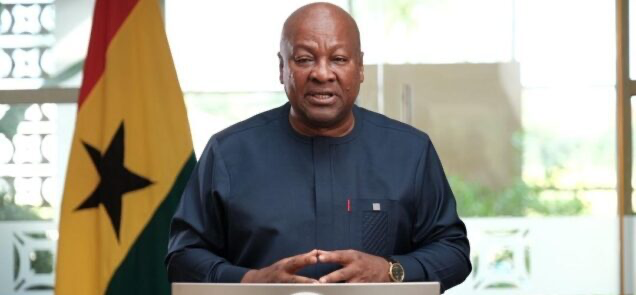
President John Dramani Mahama has issued a passionate appeal to Ghanaians to halt the rising tide of pessimism about the country’s future, warning that a culture of hopelessness and self-deprecation undermines the very foundation of national development.
Speaking during a solemn service at the Ringway Gospel Centre of the Assemblies of God Church on Sunday, August 2, the President emphasized that Ghana’s progress hinges not solely on government policies, but on the collective attitude, values, and commitment of its citizens.
“Our forebears rose because they believed their nation would become great,” President Mahama declared. “In many of our societies, people give up and say Ghana will never change. We can never become great if we continue that way.”
A Rebuke Against Colonial Nostalgia
The President reserved his harshest criticism for those who suggest Ghana would have fared better under continued colonial rule—a sentiment he described as both ungrateful and a rejection of the sacrifices made by the nation’s founding fathers.
“The worst one is those who say we should even have left the white people to continue to rule us,” he said, visibly moved. “It shows a lack of faith. It shows a lack of gratitude for the fight that our forebears fought to give us independence—the sacrifices Kwame Nkrumah and his colleagues made, and the vision they had for this nation.”
His remarks come at a time when public discourse has increasingly featured comparisons between Ghana’s post-independence trajectory and that of former colonial powers, with some critics arguing that development under colonial administration would have been more efficient—a view historians and political analysts have widely contested.
The Psychology of National Development
President Mahama framed his call within a broader philosophy: that a nation’s destiny is shaped by its citizens’ mental posture. He argued that persistent negativity breeds inaction, discourages investment, and erodes the social cohesion needed to tackle challenges such as economic instability, unemployment, and infrastructure deficits.
“If we constantly tell ourselves we are failures, we will behave like failures,” he warned. “But if we believe in our potential, we will act with the boldness and creativity needed to transform our circumstances.”
He urged Ghanaians to embrace a set of core values that he said are indispensable for national rebirth: honesty, hard work, integrity, rejection of corruption, care for the vulnerable, and unwavering commitment to the common good.
A Call for Civic Renewal
The President’s address was not just a moral exhortation—it was also a call for civic renewal. He reminded congregants that Ghana’s independence was won through collective sacrifice, and that the current generation owes it to the founders to protect and advance that legacy.
“We must work hard. We must tell the truth. We must be honest. We must reject corruption. We must look after the most vulnerable in our society. And we must have faith in serving the common good,” he emphasised.
Observers note that Mahama’s message resonates at a critical juncture, as Ghana grapples with high living costs, currency depreciation, and mounting public frustration over economic hardships. His appeal appears aimed at reorienting national discourse away from blame and despair toward action and shared responsibility.
Mixed Reactions from Public and Analysts
While some Ghanaians have welcomed the President’s call as timely and inspirational, others have questioned whether rhetorical appeals alone can address the structural challenges facing the country. Economic analysts point out that faith and patriotism must be matched with tangible policy measures—such as job creation, fiscal discipline, and transparent governance—to restore public confidence.
Political commentator Dr. Kwame Asare noted, “The President is right to challenge the defeatist narrative. However, citizens also need to see concrete progress. Hope without delivery breeds cynicism. The government must walk the talk.”
A Historic Parallel
Mahama’s speech echoes the famous exhortation of Dr. Kwame Nkrumah, who declared at independence that “the people of Ghana are ready to face the future with courage and determination.” By invoking the founding vision, the President is seeking to reconnect Ghanaians with that original spirit of audacity and self-belief.
Whether his appeal will spark a genuine shift in national sentiment remains to be seen. But for now, the President has thrown down a challenge: choose faith over fear, action over apathy, and unity over division.
The Road Ahead
As Ghana navigates a turbulent economic landscape, Mahama’s message serves as a reminder that development is as much a psychological endeavor as it is a technical one. The coming months will test whether his call for a positive national mindset can translate into collective action—and whether Ghanaians, in turn, are ready to believe again.
— Reporting by Ernest K. Arhinful, with additional context on public sentiment and economic indicators.
Recevez la newsletter d'AfroAsia Media
Les principales actualités du jour en Afrique et en Asie, directement dans votre boîte mail.




Commentaires
0 commentaire
Chargement…