
Nous traduisons cet article en français — la traduction s'affichera ici dans un instant. En attendant, voici la version originale en anglais.
SpaceX buys $17bn spectrum in bid to make cell towers obsolete: Starlink to connect phones directly from orbit
Elon Musk’s SpaceX has placed a US$17 billion bet that will render every cell tower on Earth a relic of a bygone era. The company has acquired wireless spectrum licenses from US operator EchoStar in a deal worth approximately $17 billion—comprising up to $8.5 billion in cash and up to $8.5 billion in SpaceX stock.…
Publié le 4 min de lecture
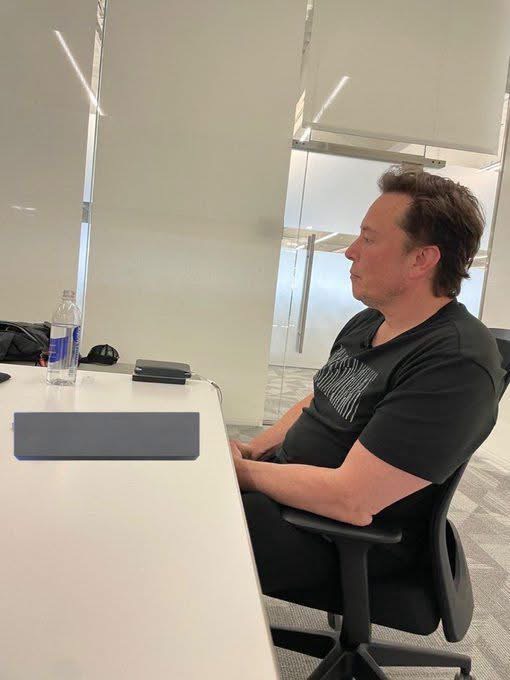
Elon Musk’s SpaceX has placed a US$17 billion bet that will render every cell tower on Earth a relic of a bygone era.
The company has acquired wireless spectrum licenses from US operator EchoStar in a deal worth approximately $17 billion—comprising up to $8.5 billion in cash and up to $8.5 billion in SpaceX stock. The transaction, approved by the Federal Communications Commission in May 2026, grants SpaceX about 65MHz of mid-band spectrum across the AWS-4, AWS-H, and AWS-3 bands.
The spectrum will power Starlink Mobile, SpaceX’s direct-to-cell service that allows unmodified 4G and 5G smartphones to connect directly to satellites in low-Earth orbit—without towers, without cables, without any ground infrastructure between the user and the signal.
“It will allow SpaceX to deliver high bandwidth connectivity directly from the satellites to the phones,” Musk has said of the technology.
For more than a century, connectivity followed the same blueprint: build a tower, run a cable, expand the network one piece of ground at a time. Coverage went where the money was—where population density justified the investment. Everywhere else got silence.
Today, more than 50 percent of the world’s land mass remains uncovered by terrestrial services. Four billion people still lack reliable internet—not because the technology doesn’t exist, but because no one could justify building a tower where they live.
Connectivity was never a technology problem. It was a geography problem disguised as one.
From orbit, every point on Earth is equidistant
Starlink’s direct-to-cell satellites orbit at approximately 550 kilometres above the Earth. SpaceX has already deployed over 10,000 satellites, with hundreds of second-generation satellites equipped for direct-to-device connectivity. The company plans to eventually expand the constellation to 40,000 units.
The technology works with ordinary smartphones—no hardware modifications, no specialised terminals required. SpaceX has successfully tested text messaging, voice calls, and data transmission using unmodified phones.
The next generation of Starlink Mobile satellites—V2—promises peak download speeds of up to 150Mbps, approaching terrestrial 5G performance. “The goal of Starlink Mobile is to connect to regular, unmodified cell phones everywhere in the world,” the company states.
The word “remote” only exists because connectivity was built from the ground up. From space, there is no remote. There is no coverage gap. There is no place on Earth harder to reach than any other.
“Phones that are able to use the spectrum … probably start shipping in around two years”
Musk has previously stated that within two years, Starlink services would enable mobile phone use similar to major carriers like AT&T. The service is already in final technical validation and trial phases in North America and New Zealand, with a target of global commercial operations by the end of 2026.
SpaceX has partnered with ten mobile network operators across North and South America, Australia, Japan, Switzerland, and Ukraine. In Africa, Airtel Africa is deploying the technology across 14 markets beginning in 2026. In Europe, Fastweb and Vodafone recently launched Italy’s first direct-to-cell pilot.
But SpaceX may not stop at partnerships. In June 2026, President and COO Gwynne Shotwell revealed to investors that the company is considering launching a retail Starlink mobile service directly to US consumers—bypassing carriers entirely. The move would make SpaceX a direct competitor to Verizon, AT&T, and T-Mobile.
Analysts have even speculated that SpaceX could acquire one of the major US mobile operators, with T-Mobile seen as the most obvious target.
A $17 billion bet on a $340 million business
The scale of the wager is staggering. Starlink Mobile generated approximately $340 million in annualised revenue during the first quarter of 2026. The spectrum alone cost $17 billion—a 50-year payback period before ground infrastructure is even built.
By comparison, SpaceX’s total revenue in 2025 was $18.7 billion. This single purchase represents nearly an entire year of company revenue.
Yet the potential market is enormous. In its IPO investment prospectus, SpaceX projected the Starlink Mobile market could reach $740 billion. Starlink’s global user base already exceeds 12 million people.
“Human potential was always distributed evenly. Access to information never was.”
The gap between those two facts is one of the greatest wastes in human history. For a century, we decided who deserved access to information based on where they happened to be born.
SpaceX has now made that question obsolete from 550 kilometres above the answer.
Recevez la newsletter d'AfroAsia Media
Les principales actualités du jour en Afrique et en Asie, directement dans votre boîte mail.




Commentaires
0 commentaire
Chargement…