
Nous traduisons cet article en français — la traduction s'affichera ici dans un instant. En attendant, voici la version originale en anglais.
South Carolina Senator Lindsey Graham dies at 71 following sudden illness
WASHINGTON, D.C. – Senator Lindsey O. Graham, the veteran South Carolina Republican and one of the most influential foreign policy voices in Congress, has died at the age of 71 after what his office described as a “brief and sudden” illness. The announcement, released early Sunday morning, has sent shockwaves through the nation’s capital and…
Publié le 4 min de lecture
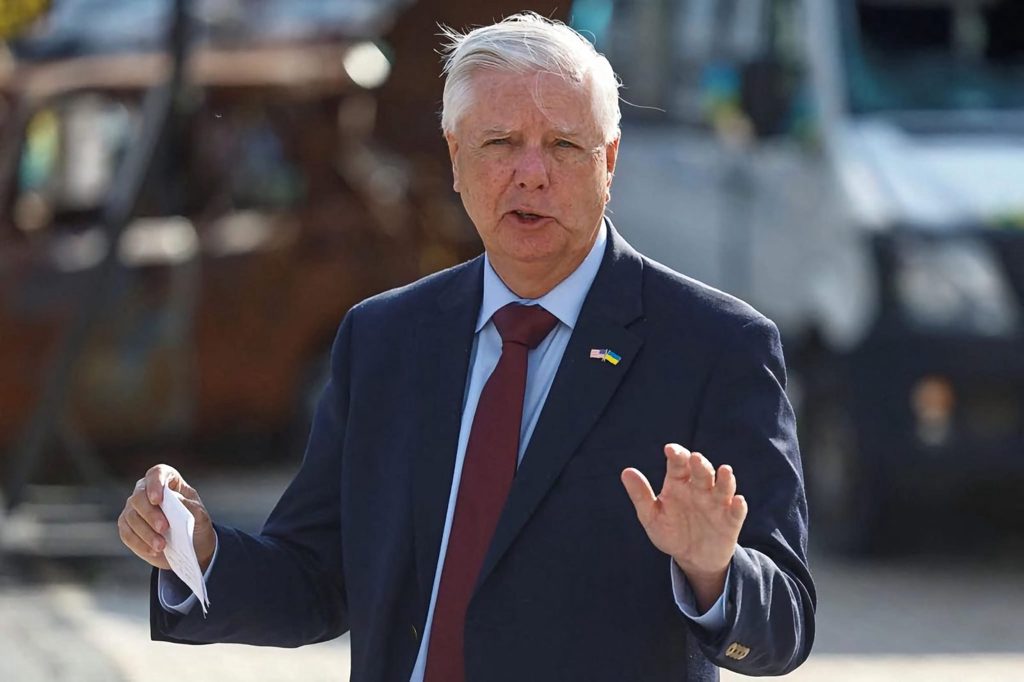
WASHINGTON, D.C. – Senator Lindsey O. Graham, the veteran South Carolina Republican and one of the most influential foreign policy voices in Congress, has died at the age of 71 after what his office described as a “brief and sudden” illness. The announcement, released early Sunday morning, has sent shockwaves through the nation’s capital and triggered an outpouring of tributes from across the political spectrum.
According to a terse statement from his chief of staff, Graham passed away peacefully at his residence in Arlington, Virginia, surrounded by family and close aides. The statement did not specify the nature of the illness, citing the family’s request for privacy, but noted that the senator had experienced “unexpected and rapidly declining health” over the past 48 hours. He had been active on Capitol Hill as recently as Thursday, participating in a closed-door briefing on NATO expansion and appearing in good spirits.
“The senator fought with the same tenacity he brought to every floor debate, but this was a battle he could not win,” the statement read. “He served his state and his nation with unwavering conviction until his very last day.”
Graham, who was first elected to the Senate in 2002 after serving eight terms in the House of Representatives, carved out a unique and often unpredictable political identity. A fierce fiscal conservative and defense hawk, he was equally known for his willingness to cross party lines—most notably in his close working relationship with the late John McCain, with whom he forged a bipartisan partnership on campaign finance reform, immigration, and military oversight. In recent years, Graham emerged as a key ally of former President Donald Trump on judicial appointments and trade policy, though their relationship fluctuated dramatically, reflecting Graham’s reputation as a pragmatic dealmaker who often defied easy categorization.
Tributes poured in within minutes of the news. Senate Majority Leader Chuck Schumer (D-NY) called Graham “a senator’s senator—tough, principled, and always ready to find common ground when the nation needed it most.” Minority Leader Mitch McConnell (R-KY) described him as “a lion of the Senate and a patriot who understood that American strength begins with American unity.”
President Joe Biden, who served alongside Graham for decades in the Senate, issued a formal statement from Camp David, where he was briefed on the situation. “Lindsey and I disagreed on much, but we never disagreed on the importance of this institution or the men and women who serve it,” the President said. “He was a man of conviction, a devoted public servant, and a friend. Jill and I send our deepest condolences to his family and to the people of South Carolina, who lost a tireless advocate today.”
Graham’s influence extended far beyond domestic politics. As ranking member of the Senate Judiciary Committee and a senior member of the Armed Services Committee, he played a pivotal role in shaping U.S. military strategy, intelligence oversight, and international alliances. He was a vocal proponent of robust support for Ukraine and Israel, and he frequently traveled to conflict zones to meet with U.S. troops and foreign leaders. His recent push for increased defense spending and his sharp criticism of isolationist tendencies within his own party had made him a central figure in the ongoing debate over America’s global role.
In South Carolina, flags were ordered to half-staff by Governor Henry McMaster, who praised Graham as “a son of the Palmetto State who never forgot where he came from.” Born in Central, South Carolina, Graham was raised by his parents after the death of his father and managed the family’s liquor store and restaurant before entering the military. He served as a judge advocate in the U.S. Air Force Reserve for over three decades, including a deployment to Iraq in 2007—a service record he often cited to ground his foreign policy views in lived experience.
The suddenness of his passing has left colleagues in mourning and raised immediate questions about the future of his Senate seat. Under South Carolina law, Governor McMaster will appoint a temporary successor until a special election can be held. Early speculation points to several potential contenders, including members of the state’s congressional delegation, though no official moves have been announced.
As the Capitol prepares for an emotional return to session, lawmakers from both sides of the aisle have already begun planning a bipartisan tribute on the Senate floor. For now, the chamber’s flags fly at half-mast, and the halls that Graham walked with such purpose stand quiet—a testament to a voice that, for more than two decades, refused to be silenced, until the very end.
Funeral arrangements are pending. The senator is survived by no immediate children but leaves behind a wide circle of staff, friends, and political allies who described him as a bachelor devoted entirely to his country. In his own words, often repeated during his many floor speeches: “I gave my life to this place, and I’d do it all over again.”
Recevez la newsletter d'AfroAsia Media
Les principales actualités du jour en Afrique et en Asie, directement dans votre boîte mail.




Commentaires
0 commentaire
Chargement…