
Cet article n'est pas encore disponible en français — voici la version originale en anglais.
’Some players regret it’: World Cup winner Nzonzi stirs controversy with blunt take on African national team choices
Former France midfielder and 2018 World Cup champion Steve Nzonzi has ignited a fiery debate across the African football landscape, claiming that a number of binational players privately rue their decision to represent an African nation over a European powerhouse. Speaking candidly in an interview with Kampo, the 37-year-old suggested that the global football establishment…
Publié le 4 min de lecture
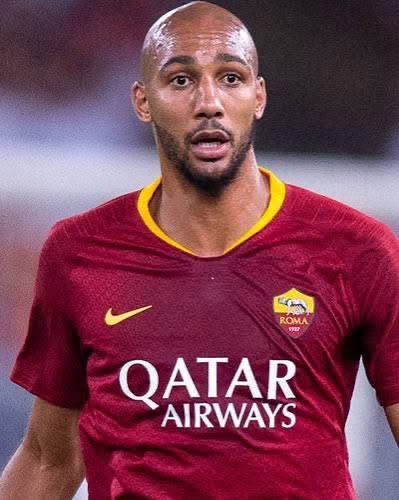
Former France midfielder and 2018 World Cup champion Steve Nzonzi has ignited a fiery debate across the African football landscape, claiming that a number of binational players privately rue their decision to represent an African nation over a European powerhouse. Speaking candidly in an interview with Kampo, the 37-year-old suggested that the global football establishment fails to fairly reward African talent—a disparity he believes has directly altered the legacy of some of the continent’s greatest stars.
Nzonzi, who was born in France to a French mother and a Congolese father, was himself eligible to represent the Democratic Republic of Congo but ultimately pledged his international future to Les Bleus. While acknowledging the deep emotional pull of heritage, he argued that the professional ramifications of that choice are often underestimated by young players seduced by national pride at the moment of their debut.
“It’s a decision that shapes your career,” Nzonzi stated. “I’m sure that if you talk to some players who chose to represent an African national team, they’ll tell you they regret it today, because their career took a turn they didn’t expect.” He elaborated that the lack of consistent visibility, commercial endorsement opportunities, and the grueling travel schedules associated with Africa Cup of Nations (AFCON) qualifiers—often played during the European club season—can physically and professionally derail a player’s momentum in ways they do not anticipate at age 20.
For his own part, Nzonzi justified his choice to don the French jersey purely on sporting merit. “I chose France for the sporting challenge and the level of competitiveness,” he explained, reinforcing that his decision was not a rejection of his Congolese roots but a pragmatic calculation aimed at competing at the absolute highest echelon of the sport—a bet that paid off with a World Cup winners’ medal in Moscow.
However, it was his subsequent remark that drew the sharpest response. “If Yaya Touré had been French, he would have won the Ballon d’Or,” Nzonzi declared emphatically.
The assertion cuts to the heart of a long-standing grievance within African football. Touré, the legendary Ivorian midfielder, dominated the Premier League with Manchester City, winning three league titles and an unprecedented FA Cup treble during his peak between 2011 and 2014. Despite finishing 5th in the 2014 Ballon d’Or voting—the highest rank for an African player in a decade—he was consistently overlooked for the podium in favor of European-based midfielders like Xavi, Iniesta, and later Luka Modrić. Nzonzi’s argument implies that the “Ivorian” tag inherently carried a weighting penalty in the eyes of international voters, whereas a French passport would have amplified Touré’s club exploits into individual global recognition, much like it did for Franck Ribéry or Karim Benzema.
Nzonzi’s comments also highlight a deeper structural bias he perceives within the sport. African players, he suggested, are frequently viewed through a lens of physicality rather than technical genius, and their achievements in AFCON are often devalued compared to the European Championship or Copa América. Moreover, players who choose African nations often face added political pressure, federation instability, and erratic bonus payments—a far cry from the streamlined, elite infrastructure of the French Football Federation.
Yet, his perspective is far from universally accepted. Critics will argue that Nzonzi’s pragmatism overlooks the profound cultural and emotional significance of representing one’s ancestral homeland—a weight that transcends trophies. Legends such as Samuel Eto’o, Didier Drogba, and Mohamed Salah have built colossal global brands without a World Cup or Ballon d’Or, forging legacies that resonate far deeper on the continent than any individual award. Furthermore, the recent successes of Morocco’s historic World Cup semifinal run in 2022 have begun to shift the global perception of African sides, suggesting that the valuation gap Nzonzi speaks of may finally be narrowing.
For now, Nzonzi’s words serve as a stark, unfiltered reminder of the brutal calculus that elite binational players must perform—weighing ancestral pride against the cold machinery of European football’s commercial and competitive ecosystem. While he insists his own choice was the correct one, his admission that others may quietly harbor regret opens a rare, raw window into the private doubts that linger long after the national anthem has faded.
Recevez la newsletter d'AfroAsia Media
Les principales actualités du jour en Afrique et en Asie, directement dans votre boîte mail.




Commentaires
0 commentaire
Chargement…