
Nous traduisons cet article en français — la traduction s'affichera ici dans un instant. En attendant, voici la version originale en anglais.
Patrick Mbomba hails Morocco’s football revolution: Mohammed VI Academy laid 15-year blueprint for global rise
Former Cameroon international Patrick Mbomba has credited Morocco’s stunning football ascent to a single, visionary institution—the Mohammed VI Football Academy—insisting that a 15-year masterplan, not luck, is behind the Atlas Lions’ historic run. In a recent interview, Mbomba broke down the roots of Morocco’s success, pointing to the royal-backed academy established in 2009 near Rabat.…
Publié le 3 min de lecture
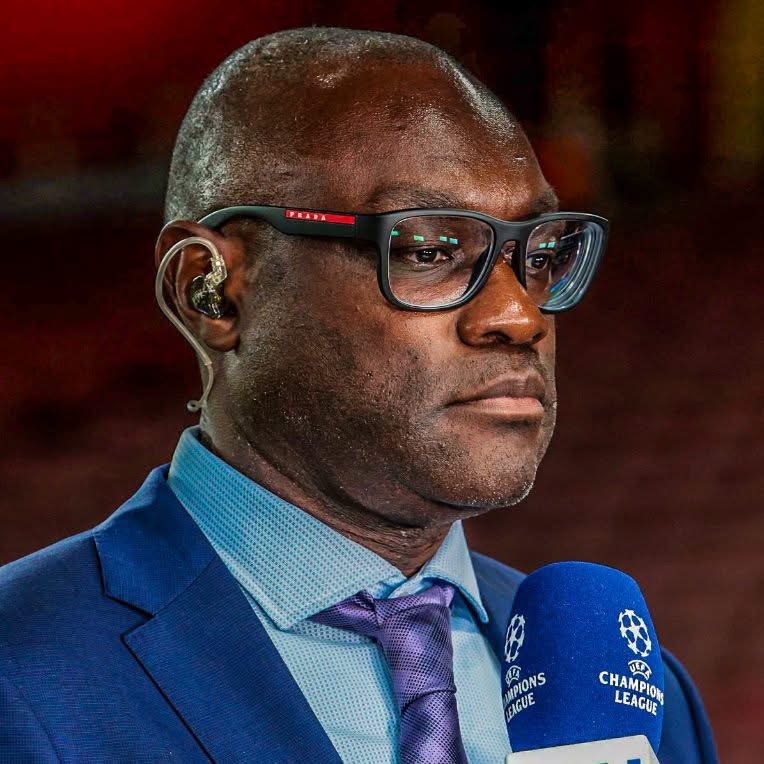
Former Cameroon international Patrick Mbomba has credited Morocco’s stunning football ascent to a single, visionary institution—the Mohammed VI Football Academy—insisting that a 15-year masterplan, not luck, is behind the Atlas Lions’ historic run.
In a recent interview, Mbomba broke down the roots of Morocco’s success, pointing to the royal-backed academy established in 2009 near Rabat. “What is Morocco’s success due to? The Mohammed VI Academy,” he said. “From there they started planning the future, 15 years ago. And the results were exceptional—the semifinal at the 2022 World Cup, the quarter-finals here [at the latest tournament], the victory at the Under-20 World Cup, the success in women’s football—they are strong across all fronts.”
A Royal Vision, a State-of-the-Art Factory
The academy was born out of King Mohammed VI’s 2008 National Sports Strategy, with construction beginning in 2009 on a 30-hectare site in Salé, just outside the capital. Today, it boasts 12 world-class pitches, a sports science laboratory, a rehabilitation centre, and on-site accommodation—a “football laboratory” designed to merge athletic excellence with academic education. The facility selects the most promising talents from across the country through a rigorous nationwide scouting network, offering full scholarships to ensure no child is left behind due to geography or means.
From Underdogs to World Beaters
The payoff has been spectacular. At the 2022 World Cup in Qatar, Morocco became the first African and Arab nation to reach the semi-finals, with academy graduates like Nayef Aguerd, Azzedine Ounahi, and Youssef En-Nesyri playing pivotal roles. In 2025, the U20 team made history by winning the FIFA U-20 World Cup in Chile on their very first appearance, defeating Argentina 2–0 in the final. Four academy products started that match, and forward Zakaria Zbiri bagged both goals, finishing as the tournament’s top scorer.
Morocco’s Olympic squad also claimed bronze at the 2024 Paris Games, while the women’s national team reached back-to-back Africa Cup of Nations finals and competed in the 2023 Women’s World Cup—a testament to the academy’s growing influence on the female game, with dedicated youth camps and coaching exchanges now in place.
Ranking Surge and a World Cup on the Horizon
The numbers speak volumes. Over the past sixteen years, Morocco’s men’s team has rocketed from 95th to 6th in the FIFA World Rankings—a leap few nations can match. Dutch public broadcaster NOS has described the academy as “an institution that has completely reshaped player development in the country.”
Looking ahead, Morocco is set to co-host the 2030 World Cup alongside Spain and Portugal, with the academy expected to serve as a hub for tournament preparations. As Mbomba concluded, “The U20 title, the women’s growth, and the senior team’s consistency all come from one system. That is not coincidence—that is planning.”
With its 15-year gamble now paying off in trophies, rankings, and global respect, the Mohammed VI Academy stands as one of football’s most successful national development models—and a blueprint that African football is watching closely.
Recevez la newsletter d'AfroAsia Media
Les principales actualités du jour en Afrique et en Asie, directement dans votre boîte mail.




Commentaires
0 commentaire
Chargement…