
Nous traduisons cet article en français — la traduction s'affichera ici dans un instant. En attendant, voici la version originale en anglais.
Judge rejects Wontumi’s coconut plantation defence, sentences him to 20 years hard labour
A High Court judge has thrown out Bernard Antwi Boasiako’s (Wontumi) claim that he only authorised coconut-tree planting on Akonta Mining’s concession, instead finding him guilty of knowingly facilitating illegal mining and sentencing the politician to 20 years imprisonment with hard labour. The court also convicted Akonta Mining Company, imposed heavy fines, and ordered the…
Publié le 3 min de lecture
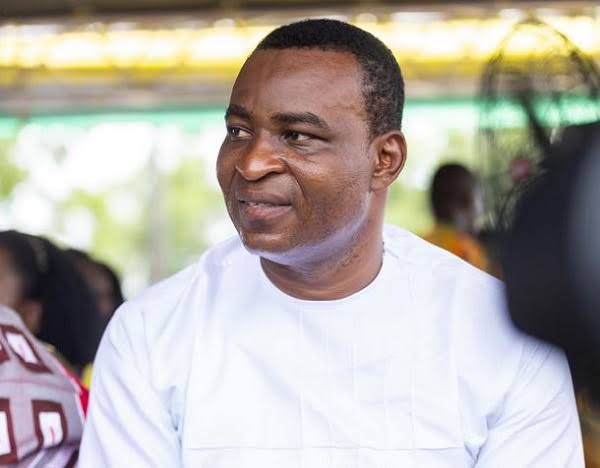
A High Court judge has thrown out Bernard Antwi Boasiako’s (Wontumi) claim that he only authorised coconut-tree planting on Akonta Mining’s concession, instead finding him guilty of knowingly facilitating illegal mining and sentencing the politician to 20 years imprisonment with hard labour. The court also convicted Akonta Mining Company, imposed heavy fines, and ordered the forfeiture of all equipment and gold seized from the site. A second accused, Kwame Antwi, remains at large and was not tried.
The Charges and Ruling
Justice presiding over the case found Wontumi guilty on two primary counts: allowing another person to use the company’s mining concession without the Minister of Lands and Natural Resources’ written approval, and deliberately facilitating unlawful mining.
The prosecution proved that Wontumi permitted Henry Okum, a licensed small-scale miner, to mine on Akonta Mining’s concession. Crucially, the Minerals Commission confirmed that no ministerial approval had ever been obtained—nor had Akonta Mining even applied for one.
The Defence: A Coconut Plantation Story Rejected
Wontumi’s legal team argued that he never authorized mining. Their defence claimed he had merely allowed Henry Okum to access the land to reclaim degraded areas by planting coconut trees. They insisted that if Okum engaged in mining, he did so entirely on his own.
The judge rejected this explanation outright. She noted several inconsistencies:
· Henry Okum, an experienced miner, was unlikely to volunteer for free land reclamation.
· Wontumi admitted he provided no funding for the reclamation project. When asked how Okum would finance the work, Okum’s testimony—that mining would pay for it—was deemed far more credible.
· The judge viewed the claim that Okum would recover costs from mature coconut trees years later as an afterthought.
Piercing the Corporate Veil
Normally, a company is legally distinct from its directors. However, the court found that Akonta Mining functioned as Wontumi’s personal enterprise. With the second director absent for years and no meaningful corporate governance in place, the judge lifted the corporate veil. This allowed the court to hold Wontumi personally liable, treating him and the company as one entity for the purpose of the offences.
Attempt to Challenge Constitutionality Fails
Before the trial concluded, the defence sought to refer constitutional questions to the Supreme Court, arguing that the relevant sections of the Minerals and Mining Act were too vague and violated Article 19(11) of the Constitution.
The judge dismissed the application, ruling that the law clearly defines both the prohibited conduct and the penalties. She held that the defence was merely objecting to Parliament’s drafting choices rather than raising a genuine constitutional issue.
The Sentence
Handing down the sentence, the judge emphasized the enormous environmental destruction caused by illegal mining and stressed the urgent need for deterrence, though she acknowledged the convicted parties were first offenders.
Wontumi received:
· 20 years imprisonment with hard labour on Count 1.
· 20 years imprisonment with hard labour on Count 4.
· Fines of 10,000 penalty units on each count, with an additional 3 years of hard labour in default of payment.
· Both prison terms run concurrently, meaning he serves a total of 20 years.
Akonta Mining was fined 15,000 penalty units on each of its two counts, also running concurrently.
Additionally, the court ordered the forfeiture to the State of all items seized from the concession, including excavators, vehicles, pumping machines, firearms, cash, and quantities of gold.
This story is based on the official court judgment and represents the final determination of the High Court in this matter.
Recevez la newsletter d'AfroAsia Media
Les principales actualités du jour en Afrique et en Asie, directement dans votre boîte mail.




Commentaires
0 commentaire
Chargement…