
Nous traduisons cet article en français — la traduction s'affichera ici dans un instant. En attendant, voici la version originale en anglais.
Intelligence warning: Israel says Iran determined to target Trump and U.S. – Renewed calls for maximum pressure
Fresh intelligence assessments shared by Israeli officials have reportedly concluded that the Iranian regime remains “determined” to assassinate former President Donald J. Trump and to inflict direct harm on the United States, reviving long-standing fears of Tehran’s covert operations and raising urgent questions about American security protocols ahead of the 2026 election cycle. According to…
Publié le 6 min de lecture
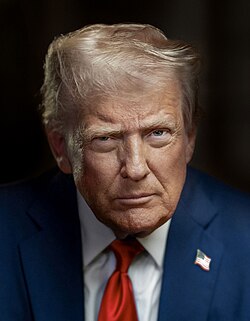
Fresh intelligence assessments shared by Israeli officials have reportedly concluded that the Iranian regime remains “determined” to assassinate former President Donald J. Trump and to inflict direct harm on the United States, reviving long-standing fears of Tehran’s covert operations and raising urgent questions about American security protocols ahead of the 2026 election cycle.
According to sources familiar with the intelligence exchange, Israeli spy agencies have detected what they describe as “continued and intensified plotting” by Iranian Revolutionary Guard Corps (IRGC) elements and allied proxy networks, targeting not only senior American political figures but also U.S. military personnel and diplomatic facilities in the Middle East. The assessment, delivered to senior U.S. officials in recent weeks, warns that Tehran views the elimination of Trump—whom Iran has blamed for the 2020 assassination of Quds Force commander Qasem Soleimani—as a strategic priority, and that the regime has allocated significant resources toward operational planning.
The intelligence has prompted an immediate review of protective measures around Trump, who remains a private citizen but continues to hold campaign-style events and maintain a public schedule. The U.S. Secret Service, which provides lifetime protection for former presidents, declined to comment on specific security protocols but confirmed that “all former protectees receive threat assessments commensurate with their risk profile.” A spokesperson added that the agency “constantly adjusts its posture based on evolving intelligence.”
Israeli Prime Minister Benjamin Netanyahu, in a closed-door cabinet meeting on Sunday, reportedly emphasized the seriousness of the intelligence, urging his security chiefs to deepen cooperation with American counterparts. “The Iranian regime has not abandoned its terrorist ambitions—it has only refined them,” Netanyahu was quoted as saying by an official briefed on the meeting. “We must work shoulder to shoulder with the United States to ensure that these plots never reach execution.”
A History of Threats and Retaliation
The new intelligence arrives against a backdrop of years of shadow warfare between Iran and the U.S.-Israeli axis. Since the Soleimani strike in January 2020, Tehran has vowed “harsh revenge” against American officials, and in 2022, the Department of Justice unsealed charges against an IRGC operative accused of plotting to assassinate John Bolton, Trump’s former national security advisor. More recently, U.S. intelligence has tracked Iranian cyber intrusions into critical infrastructure and attempted kidnappings of dissidents on American soil.
Trump himself, while not commenting directly on the latest intelligence, has repeatedly characterized Iran as the “number one state sponsor of terror” and has called for a return to maximum economic pressure. In a social media post last week, he wrote: “They talk peace but they plot murder. The world knows what Iran is. America must be strong—or we will be vulnerable.”
Iran Dismisses Allegations as “Baseless Propaganda”
Iranian officials have categorically denied any intent to assassinate Trump or to attack the U.S. homeland. Iran’s mission to the United Nations issued a statement late Sunday, calling the intelligence “fabricated provocations” designed to “sabotage ongoing diplomatic channels and justify more hostility.” The statement pointed to the recent prisoner exchange negotiations and the revival of indirect talks over the nuclear program as evidence that Tehran seeks de-escalation.
However, U.S. intelligence analysts have expressed skepticism, noting that Iran’s denials are standard practice even as the IRGC continues to operate covertly in Europe, Latin America, and Africa. “The regime has a long history of compartmentalised operations,” a former CIA counterterrorism official told this reporter. “Even if the supreme leader were to issue a formal prohibition—which he hasn’t—the IRGC’s Quds Force has its own agenda. The threat is real, and it’s ongoing.”
Calls for “Permanent Defanging” Intensify
The intelligence has reignited a fierce political debate in Washington, with hawkish lawmakers demanding swift and decisive action. Senator Tom Cotton (R-AR) called for “a comprehensive strategy to dismantle Iran’s terror infrastructure once and for all,” while Senator Lindsey Graham—who had previously advocated for strikes on Iranian nuclear facilities—argued that “the only language Tehran understands is strength.”
In a joint statement, a bipartisan group of senators urged the Biden administration to reassess its engagement policy, arguing that continued negotiations only embolden Iranian aggression. “For the sake of American security and global stability, we need to make sure this evil dictatorship is permanently defanged,” said Senator Marco Rubio (R-FL), echoing the sentiment of many in his party. “That means crippling sanctions, ending all nuclear waivers, and providing Israel with the military means to defend itself preemptively.”
The White House responded cautiously. National Security Advisor Jake Sullivan confirmed that the administration had received the intelligence and was “taking it with the utmost seriousness,” but he stressed that “responsible statecraft requires both vigilance and diplomacy.” Sullivan noted that U.S. forces in the region had been placed on heightened alert and that cyber defenses had been bolstered, but he stopped short of endorsing any new military posture.
Potential Scenarios and Global Repercussions
Analysts warn that any attempted attack on Trump—whether successful or foiled—would trigger a severe U.S. response, potentially including strikes against IRGC bases in Syria and Iraq, or even against nuclear-related facilities inside Iran. Such a escalatory spiral would draw in regional proxies, destabilise the Gulf, and jeopardise global oil supplies, all while complicating the already fragile negotiations over Iran’s uranium enrichment.
Equally concerning is the timing. With the U.S. election season approaching, an assassination plot—or even a credible near-miss—could radically shift the political landscape, inflame domestic tensions, and harden foreign policy positions beyond any possibility of compromise. “This is not just a counterterrorism issue,” said Dr. Sanam Vakil, director of the Middle East programme at Chatham House. “It’s a geopolitical powder keg. The intelligence may be accurate, but the response must be calibrated to avoid exactly the kind of war that Iran’s hardliners might actually welcome.”
Security Upgrades and Silent Preparations
In the meantime, protective details around Trump have quietly expanded. According to law enforcement sources, additional counter-surveillance teams have been deployed to his residences in Florida and New Jersey, while his travel routes are being varied and vetted with greater frequency. International partners have also been alerted to monitor Iranian operative movements in Europe and Southeast Asia, where Tehran has historically used front companies to procure equipment and launder funds.
The Israeli intelligence community, for its part, is reportedly sharing tactical-level data—including names of suspected handlers, communication intercepts, and financial transaction patterns—with the CIA and the National Security Agency. A senior Israeli defence official, speaking on condition of anonymity, said: “We are in a race against time. The Iranians are patient, but they are also reckless. We cannot assume that deterrence alone will stop them.”
The Unresolved Question
As the Biden administration weighs its options, a fundamental question remains unresolved: can any combination of sanctions, diplomacy, or covert action genuinely “defang” a regime whose revolutionary ideology glorifies martyrdom and whose proxy network spans four continents?
For now, the intelligence community has issued a rare public warning—not to cause panic, but to prepare the American public for a sustained threat. “This is not about fear-mongering,” a senior DHS official emphasised. “It is about awareness. The enemy is determined. We must be more determined.”
The coming months will test whether the United States and its allies can prevent a crisis, or whether Iran’s long-feared revenge operation finally moves from the realm of intelligence chatter to the front pages of history. For Donald Trump, whose presidency was defined by maximum pressure on Tehran, the irony is inescapable: the target has not changed, only the stakes.
Recevez la newsletter d'AfroAsia Media
Les principales actualités du jour en Afrique et en Asie, directement dans votre boîte mail.




Commentaires
0 commentaire
Chargement…