
Cet article n'est pas encore disponible en français — voici la version originale en anglais.
Government pays GHc10.8bn DDEP coupon in full, reinforcing fiscal credibility
The Ministry of Finance has successfully settled the full coupon payment of GH¢10.8 billion due to bondholders under the Domestic Debt Exchange Programme (DDEP), confirming that the government has met its interest obligations strictly on schedule. The payment, which was processed through the Central Securities Depository (CSD) and settled via the Bank of Ghana, covers…
Publié le 3 min de lecture
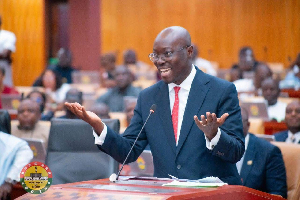
The Ministry of Finance has successfully settled the full coupon payment of GH¢10.8 billion due to bondholders under the Domestic Debt Exchange Programme (DDEP), confirming that the government has met its interest obligations strictly on schedule.
The payment, which was processed through the Central Securities Depository (CSD) and settled via the Bank of Ghana, covers the periodic interest due on the new bonds issued under the DDEP. This marks a critical milestone in Ghana’s post-restructuring fiscal roadmap, demonstrating the state’s commitment to honoring the revised terms of its domestic debt.
Background: The DDEP Framework
Launched in December 2022 and concluded in February 2023, the DDEP was a cornerstone of Ghana’s economic recovery strategy, designed to restructure approximately GH¢137 billion in domestic debt. Amid a severe fiscal crisis characterized by high inflation, currency depreciation, and dwindling reserves, the government sought to halve its domestic debt service burden by exchanging old bonds for new ones with longer tenors and lower coupon rates.
While the exercise imposed significant “haircuts” on principal and interest rates for investors, it was a prerequisite for securing a $3 billion Extended Credit Facility (ECF) from the International Monetary Fund (IMF). The programme effectively converted high-yielding short-term instruments into lower-yielding, long-term bonds, reducing annual debt servicing costs by billions of cedis.
Significance of the Full Settlement
The full and timely payment of this GH¢10.8 billion coupon is a strong signal to both local and international markets. Following the restructuring, market watchers have closely scrutinized the government’s ability to adhere to its new repayment schedule.
By clearing this obligation without resorting to monetary financing (printing money) or payment delays, the Ministry of Finance has validated the sustainability of the new debt architecture. Financial analysts note that this consistency lowers the risk premium on Ghanaian assets, potentially easing secondary market yields and restoring confidence among institutional investors, including pension funds and insurance companies.
IMF Programme and External Debt Talks
This domestic coupon payment comes as Ghana intensifies negotiations with its external creditors, including the Paris Club and private bondholders, to restructure approximately $13 billion in external debt. The successful track record of DDEP payments—now including this latest GH¢10.8 billion tranche—provides a critical negotiating leverage, demonstrating that Ghana is a credible debtor capable of managing its cashflows under the strict fiscal targets set by the IMF.
The government has maintained that strict revenue mobilization measures, combined with expenditure rationalization, have created the fiscal space needed to meet these obligations. While the coupon rates on the new bonds are lower than pre-DDEP levels, the aggregate payout still requires careful liquidity management, particularly given the upcoming maturities scheduled for the next fiscal year.
Market Reaction and Outlook
Initial reactions from the securities industry indicate that the payment has been well-received. Investment bankers suggest that this positive development could stimulate a secondary market rally in DDEP bonds, boosting liquidity for holders who may wish to exit their positions.
However, the Finance Ministry remains cautious, reiterating that while the domestic debt service burden has eased, the broader economy remains fragile. The government has pledged to continue its fiscal consolidation path, emphasizing that future coupon payments will be funded strictly from tax revenues and oil receipts, rather than through additional borrowing.
As Ghana navigates the delicate balance between debt repayment and development spending, this scheduled payment serves as a tangible proof-of-concept for the DDEP strategy—a crucial step toward restoring the nation’s long-term macroeconomic stability.
Recevez la newsletter d'AfroAsia Media
Les principales actualités du jour en Afrique et en Asie, directement dans votre boîte mail.




Commentaires
0 commentaire
Chargement…