
Nous traduisons cet article en français — la traduction s'affichera ici dans un instant. En attendant, voici la version originale en anglais.
Ghana’s white elephant projects: Billions spent, little to show
From ghost factories to flooded drains, a catalogue of abandoned and stalled infrastructure raises urgent questions about accountability For decades, Ghana has poured billions of cedis into ambitious infrastructure projects meant to transform the nation’s economy, improve public health, and position the country as a regional leader. Yet, a growing number of these initiatives have…
Publié le 6 min de lecture
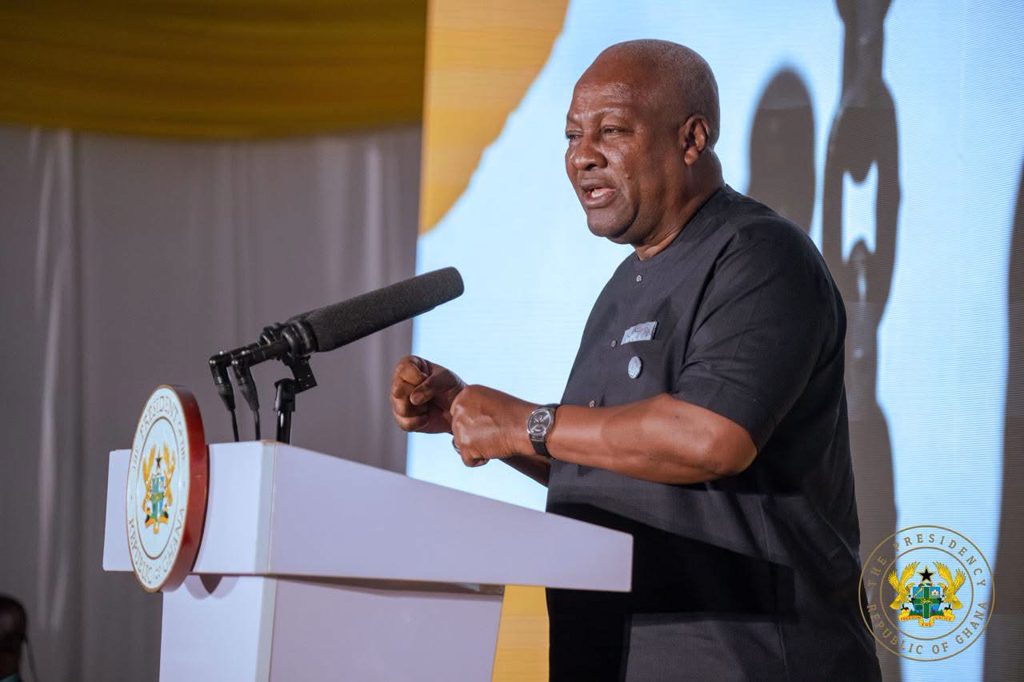
From ghost factories to flooded drains, a catalogue of abandoned and stalled infrastructure raises urgent questions about accountability
For decades, Ghana has poured billions of cedis into ambitious infrastructure projects meant to transform the nation’s economy, improve public health, and position the country as a regional leader. Yet, a growing number of these initiatives have become symbols of waste, mismanagement, and unfulfilled promises. From a sugar factory that has never produced sugar to a sports complex being reclaimed by weeds, here is the story of five major projects where vast sums have been spent—with little to show for it.
Komenda Sugar Factory: A $35 million monument to failure
In May 2016, former President John Mahama inaugurated the Komenda Sugar Factory in the Central Region, funded by a $35 million loan from the Indian Export-Import Bank, supplemented by an additional $24 million investment. The project was hailed as a game-changer that would save millions on sugar imports and create approximately 7,300 jobs along the value chain.
Nearly a decade later, the factory stands idle. Trade Minister KT Hammond has blamed substandard construction and the lack of a guaranteed supply of raw materials. Despite test runs, full operations have never materialised. The government now plans to lease the facility to an Indian company for 15 to 20 years.
The factory, originally established in 1966, once employed over 200 locals before its decline began in 1983. Its prolonged dormancy has left hundreds of farmers without a reliable market for sugarcane and dashed hopes of industrial revival in the region. As one analyst put it, the Komenda Sugar Factory is “more than an idle industrial plant. It is a mirror reflecting the governance culture of a nation”.
Borteyman Sports Complex: $145 million, now a haven for weeds
Built to host the 13th African Games in March 2023, the Borteyman Sports Complex was commissioned at a cost of $145 million. The facility features a 1,000-seater swimming pool with a 10-lane competition pool, a multi-purpose sports hall, tennis courts, and a football pitch.
For two weeks, Ghana dazzled the continent. But just three years later, the complex tells a different story. A recent report described a facility overgrown with weeds, with signage that now seems to read “welcome to Borteyman Sports Complex, we have world-class weeds and bushes”. Streetlights that once guided visitors are non-functional, and the very pitch where champions ran is now a field for guinea grass.
“The Borteyman Sports Complex was not built to be a museum,” one observer lamented. “It was built to be used”. Instead, the National Sports Authority has been entrusted with its management, but maintenance appears to have fallen by the wayside.
Alogboshie drainage: $14 million World Bank project that worsens flooding
In early 2024, work began on a $14 million drainage project in Alogboshie, a densely populated suburb in Accra’s Odaw Basin—one of the city’s most flood-prone areas. Funded by the World Bank through the Greater Accra Resilient and Integrated Development Project (GARID), the initiative was meant to protect residents from the kind of devastation seen in the June 3, 2015 flood and fire tragedy.
Today, the project sits at about 58% completion, abandoned. Deep open drains cut through roads and homes like scars, with some sections lined with concrete while others remain exposed, crumbling, and filled with stagnant water. Construction equipment has disappeared. Workers are gone.
GARID officials attribute the suspension to the contractor’s financial difficulties and failure to renew mandatory performance securities, which expired in November 2025. Of the $14 million allocated, approximately $10 million was reportedly released as mobilisation funding. Residents now fear the unfinished drains could worsen flooding when heavy rains arrive.
Keta Water Project: GHS 1 billion, 10 years, no water
In the Volta Region, access to clean running water remains a daily struggle despite a GHS 1 billion (€85 million) project that was supposed to solve the problem years ago. The Keta Water Supply Project was awarded on 21 March 2014 to Lesico Infrastructures S.R.L., financed through a credit facility from Deutsche Bank and backed by the Italian Export Credit Agency.
Actual construction did not begin until 28 April 2021—seven years after the contract was signed. The project was originally expected to be completed by December 2023. That deadline passed. A revised date of April 2024 was also missed, as was a second revision of January 2026. The latest target is now 31 October 2026, though project records show overall progress at just 74.4%.
For thousands of residents across 65 communities, the project’s delays are not abstract statistics. “I have to wake up at 12 midnight, and fill the tank,” one elderly woman told reporters. “Before 8am, it stops. We can’t continue living our lives like this”. Student nurses at a local training institution spend hours queuing for water instead of studying.
Meanwhile, exposed metal structures at the project site have reportedly had to be repainted simply to prevent deterioration while work remains unfinished.
National Cathedral: $97 million for a “hole in the ground”
Perhaps the most notorious of Ghana’s troubled projects is the National Cathedral. Originally envisioned as a religious and cultural edifice featuring a Bible Museum, Biblical Garden, banquet hall, and conference centre, the project has become a national embarrassment.
President John Mahama ordered the immediate dissolution of the Board of Trustees and the formal closure of the Secretariat in July 2025, following a “damning” audit by Deloitte and Touche. The audit uncovered financial irregularities, procurement breaches, and unsupported expenditures.
Government Communication Minister Felix Kwakye Ofosu revealed that the project has so far cost the state $97 million—with $58 million already paid and an additional $39 million still owed to the contractor. “This will bring the total cost incurred for the hole at the site of the project to $97 million,” he stated.
The audit found unexplained payment variances, violations of procurement laws, and payments made to consultants after contracts had expired. Donation records were riddled with inconsistencies, with over GHS 38 million in unreconciled mobile money transactions. President Mahama has directed the Auditor-General to conduct a forensic audit.
A pattern of waste
Together, these five projects represent over $291 million in public funds—excluding the GHS 1 billion Keta project—spent with little to show in return. They paint a troubling picture of a system where projects are conceived around political cycles rather than long-term national development strategies.
“Every cedi borrowed or invested in public infrastructure represents the sacrifices of taxpayers and future generations. Those resources deserve competent stewardship,” one analyst wrote. “Until accountability becomes an integral part of public administration, Ghana risks repeating the Komenda story across sectors.”
For the residents of Alogboshie, Keta, and communities surrounding the Komenda factory and Borteyman complex, the cost is measured not just in millions of dollars, but in lost livelihoods, daily hardship, and a growing disillusionment with the promise of development.
Recevez la newsletter d'AfroAsia Media
Les principales actualités du jour en Afrique et en Asie, directement dans votre boîte mail.




Commentaires
0 commentaire
Chargement…