
Cet article n'est pas encore disponible en français — voici la version originale en anglais.
Ghana Marks 30 Years of Sickle Cell Screening With Urgent Calls for Nationwide, Government-Funded Programme
Health experts are pressing for a fully government-funded national newborn screening programme for sickle cell disease, warning that only a fraction of Ghanaian babies are currently tested and that…
Journaliste
Publié le 4 min de lecture
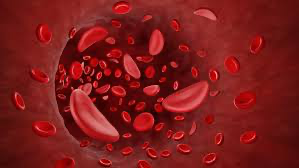
Health experts are pressing for a fully government-funded national newborn screening programme for sickle cell disease, warning that only a fraction of Ghanaian babies are currently tested and that more than half of affected children die before their fifth birthday without early diagnosis and simple interventions.
The calls came as Ghana marked three decades since newborn screening for sickle cell disease began in Kumasi in 1995, a milestone that has exposed the programme's fragile dependence on donor funding and its concentration in a few urban centres.
A Life-Saving Intervention Out of Reach for Most
Professor Isaac Odame, Head of Haematology at the Hospital for Sick Children in Toronto and a leading figure in global sickle cell research, said approximately one in every 50 babies born in Ghana has sickle cell disease—an estimated 16,000 affected newborns annually out of roughly one million births . Early detection and straightforward interventions, including penicillin prophylaxis and parental education, could enable nearly all of them to survive into adulthood.
"If you detect them early and you do simple interventions, almost all of them will survive to become adults," Odame said. "If you don't screen them or test them, more than half of them will die before the age of five years" .
Yet screening reaches only a small proportion of newborns. Odame noted that fewer than 15 percent of Ghanaian babies are currently screened, and only about one in 10 babies with the condition is identified . Most screening facilities are concentrated in Greater Accra and Kumasi, leaving babies born in underserved regions—particularly in northern Ghana—without access to diagnosis .
A Programme Built on Donor Funding
Ghana's screening initiative dates to 1991, when the late Professor Kwaku Ohene-Frempong, then at the Children's Hospital of Philadelphia, and Professor Nkrumah applied for a grant from the US National Heart, Lung, and Blood Institute. Screening began in Kumasi in 1995 and expanded to Tikrom in 1997. By the end of 2018, nearly half a million babies had been screened, with 1.71 percent diagnosed with the disease .
Although Ghana adopted newborn screening as national policy in 2010, implementation remained limited to Kumasi and Tikrom until 2017, when funding from Pfizer supported the introduction of screening at Korle Bu Teaching Hospital. Subsequent support from the Clinton Health Access Initiative, the Bill & Melinda Gates Foundation, Open Philanthropy, SickKids, Novartis, St. Jude Children's Research Hospital and the American Society of Hematology extended services across all 16 regions .
Odame cautioned that continued dependence on foreign funding risks undoing decades of progress if international partners withdraw. He called for screening to be integrated into existing primary healthcare services, including immunisation and child welfare clinics, and incorporated into the Free Primary Health Care Initiative. Modern point-of-care testing can deliver results within eight to 10 minutes, he noted, making integration into routine care practical .
The Cost of Late Diagnosis
Diana Baidoo, a haematology nurse specialist at Korle Bu Teaching Hospital, said approximately 1.8 percent of babies tested through the hospital's programme had been found to have the disease—consistent with previous findings and equivalent to roughly two out of every 100 babies screened .
She warned that delayed diagnosis exposes children to serious complications. "Complications, if the child is delayed in being identified as having the disease, they can have complications such as stroke, they can have infections, and ultimately they can die," she said .
Dinah Dwuma-Badu, a paediatric haematology nurse at Korle Bu, described the situation as a health equity issue. "Most of the screening facilities are in Greater Accra. If a baby is born in parts of northern Ghana, access to diagnosis remains a challenge," she said. "The patients we see in hospitals are only the tip of the iceberg. Many children are never diagnosed, and some die before anyone even knows they had sickle cell disease" .
What Success Would Require
The experts' call aligns with a growing consensus that newborn screening must be universal, government-funded, and embedded in primary care rather than dependent on donor cycles. Professor Catherine Segbefia, Head of the Department of Child Health at Korle Bu, noted that relying on midwives and public health nurses to conduct screening alongside routine duties was insufficient to achieve comprehensive coverage—the hospital began employing dedicated screening nurses in 2018 to close gaps .
For Odame, the evidence is settled. "We have the evidence. We know that newborn screening saves lives. The next step is ensuring that every child born in Ghana can benefit from it" .
Recevez la newsletter d'AfroAsia Media
Les principales actualités du jour en Afrique et en Asie, directement dans votre boîte mail.
Commentaires
0 commentaire
Chargement…