
Nous traduisons cet article en français — la traduction s'affichera ici dans un instant. En attendant, voici la version originale en anglais.
Former TOR boss Asante Kwaku Berle convicted in U.S. court for $1m bribery scheme to secure Ghana power deal for Turkish client
A federal jury in Brooklyn, New York, has convicted Asante Kwaku Berko, a former Managing Director of the Tema Oil Refinery (TOR) and a dual citizen of Ghana and the United States, on all counts relating to a sprawling corruption scheme that involved over $1 million in bribes to Ghanaian government officials, including a former…
Publié le 8 min de lecture
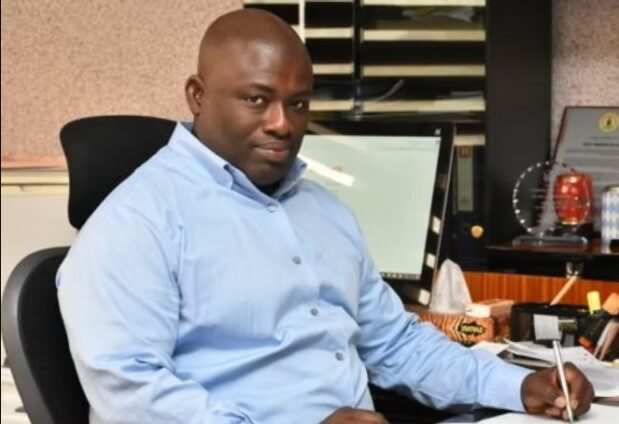
A federal jury in Brooklyn, New York, has convicted Asante Kwaku Berko, a former Managing Director of the Tema Oil Refinery (TOR) and a dual citizen of Ghana and the United States, on all counts relating to a sprawling corruption scheme that involved over $1 million in bribes to Ghanaian government officials, including a former Minister of Power and Members of Parliament, to secure a lucrative power plant contract for a Turkish energy client.
The nine-day trial before United States District Judge Diane Gujarati heard evidence that Berko, who previously served as an Executive Director in the Investment Banking Division of Goldman Sachs, orchestrated a sophisticated bribery network aimed at influencing high-level government decisions in Ghana during the country’s acute energy crisis in 20142015. Berko now faces a maximum sentence of 30 years in prison and has been remanded in custody pending sentencing.
The Deal at the Heart of the Scheme
According to court documents and testimony, Berko’s involvement began in December 2014, at a time when Ghana was suffering from crippling power outages—locally known as dumsor—that were severely hampering economic activity and daily life. The government of President John Dramani Mahama was seeking urgent private-sector solutions to expand generation capacity.
Berko, leveraging his dual identity as a former Goldman Sachs banker and a Ghanaian national, acted as an intermediary for Aksa Enerji Uretim A.S., a Turkish energy company that was also a Goldman Sachs client. The proposal involved the development, construction, and operation of a large-scale thermal power plant in Ghana, a project projected to generate hundreds of millions of dollars in profits for the consortium.
However, prosecutors alleged that Berko and his co-conspirators were not content to compete on merit alone. Instead, they devised a plan to “grease the wheels” of Ghana’s bureaucratic and political machinery to ensure Aksa won the contract over competing bidders.
The Bribery Trail: From Ministers to MPs
The trial exposed a meticulously structured bribery operation that targeted multiple layers of Ghana’s governance:
US$1 Million for the Minister of Power
In April 2015, as the government was finalising the terms of the power agreement, Berko and his associates discussed the payment of US250,000 was allegedly earmarked for the Minister’s senior adviser, according to evidence presented by US prosecutors.
The payments were not merely proposed but were actively pursued, with the conspirators using coded language to obscure their intentions. In one intercepted communication, a recipient was described as waiting for “the holy rain”—a clear reference to the expected bribe—and expressing urgency, saying they “would appreciate it sooner rather than later.”
US$250,000 to Parliamentarians
After the Ghanaian Parliament ratified the Aksa-Ghana power agreement in July 2015, the bribery scheme expanded to include legislators who had participated in the ratification process. Emails exchanged between Berko and his co-conspirators in August 2015 detailed additional payments totaling US46,000 specifically designated for Members of Parliament.
Prosecutors told the court that Berko personally made the US$46,000 payment. The payments were intended to reward or incentivise the MPs who had voted to approve the deal, ensuring that the parliamentary approval remained secure and that any potential opposition was neutralised.
All-Expenses-Paid Trip to Turkey
As part of the influence campaign, the conspirators organised an all-expenses-paid trip to Turkey for five Ghanaian officials, ostensibly to inspect equipment and facilities related to the proposed power plant. The trip, which included luxury accommodations and hospitality, was designed to cultivate personal relationships and goodwill among officials who could sway the project’s approval and implementation. US authorities described this as a classic “corrupt hospitality” tactic, aimed at building a network of favours that would pay dividends when official decisions were required.
Concealment: Shell Companies, Sham Invoices, and Coded Emails
Berko and his co-conspirators went to great lengths to hide the illicit payments from Goldman Sachs’s compliance team, which was responsible for reviewing the transaction for anti-corruption risks. According to the Department of Justice, Berko:
· Used personal email accounts instead of his Goldman Sachs business email to discuss bribes, explicitly instructing co-conspirators to do the same.
· Lied to compliance personnel about the nature of the deal and the roles of various intermediaries.
· Disguised payments through shell companies, sham invoices, and nominee account holders, with transactions routed through both US and foreign bank accounts.
· Made cash withdrawals to avoid leaving a paper trail.
The elaborate concealment ultimately backfired: Goldman Sachs, upon discovering irregularities and corruption concerns, withdrew from the transaction entirely, depriving Berko and Aksa of the bank’s financial backing and leaving the deal in limbo.
Arrest, Extradition, and Trial
Berko’s downfall began when US authorities, acting on information from international partners, launched an investigation under the Foreign Corrupt Practices Act (FCPA), which prohibits American companies and individuals from bribing foreign government officials. The investigation involved the US Department of Justice’s Criminal Division, the FBI, and international cooperation with the United Kingdom.
The UK’s National Centre Bureau for INTERPOL, the US Embassy in London, the Department of Justice’s Office of International Affairs, and the US Marshals Service all provided substantial assistance in locating, arresting, and extraditing Berko to the United States to face charges.
After a nine-day trial, the federal jury in Brooklyn returned a guilty verdict on all counts, finding Berko responsible for conspiracy to violate the FCPA, substantive FCPA violations, and money laundering. Judge Gujarati remanded him into custody, citing the seriousness of the offences and the risk of flight.
US Officials Condemn the Scheme
The conviction drew strong condemnation from American law enforcement, who framed the case as a clear warning against corrupting global business competition.
Joseph Nocella Jr., United States Attorney for the Eastern District of New York, said: “Today’s verdict marks another significant victory in this Office’s longstanding commitment to rooting out corruption. The defendant abused his access to high-level foreign government officials and his platform as an investment banker at a prestigious American firm to line his own pockets with millions of dollars.”
A. Tysen Duva, Assistant Attorney General of the DOJ’s Criminal Division, emphasised the broader implications: “We live in a global economy that American companies must be able to compete in fairly. This defendant corrupted that fair competition. He abused his position at a world-renowned American investment bank by helping bribe Ghanaian officials, so he and his co-conspirators, including senior executives at a Turkish company, could make money. Today’s conviction makes clear that criminals who undermine our country’s interests by corrupting foreign governments and cutting off fair competition will face the full force of the Department of Justice.”
James C. Barnacle Jr., FBI Assistant Director in Charge, highlighted the importance of international partnerships: “Today’s verdict highlights the importance of domestic and international partnerships, and the magnitude of success that working together creates. The FBI is thankful for the assistance from the Department of Justice and the United Kingdom—specifically to the Office of International Affairs, U.S. Marshals Service, and INTERPOL—in pursuing justice to protect our country’s financial integrity.”
Broader Implications for Ghana and Global Anti-Corruption Efforts
The case has sent shockwaves through Ghana’s political and business circles. Although the trial took place in the United States, the allegations directly implicate senior Ghanaian officials who were in power during the Mahama administration. The specific mention of the Minister of Power and Members of Parliament raises uncomfortable questions about the integrity of the 2015 power procurement process, which was meant to address a national emergency.
The Ghanaian government has not yet issued an official response to the verdict, but the case is likely to reignite debates about transparency in public procurement and the vulnerability of Ghana’s institutions to external influence. The fact that Berko—a Ghanaian-American with elite Wall Street credentials—was able to orchestrate such a scheme underscores the need for stronger due diligence and anti-corruption safeguards in state contracting.
For the United States, the conviction reinforces the aggressive enforcement of the FCPA, which has been used to prosecute dozens of foreign officials and intermediaries over the past decade. The case also demonstrates the value of international judicial cooperation, as Berko was extradited from the UK only after a coordinated effort involving multiple agencies.
What’s Next for Berko
With a guilty verdict on all counts, Berko now awaits sentencing, which Judge Gujarati will schedule at a later date. He faces a statutory maximum of 30 years in prison, though actual sentences under federal guidelines are often lower. He may also face substantial fines and forfeiture of any proceeds from the bribery scheme.
Berko’s legal team has not indicated whether they plan to appeal the conviction, but given the strength of the evidence—including emails, financial records, and witness testimony—an appeal may face an uphill battle.
Conclusion
The conviction of Asante Kwaku Berko serves as a stark reminder that corruption in international business is not a victimless crime. It distorts markets, undermines public trust, and ultimately hurts the citizens of the countries where deals are made. For Ghana, the case is a cautionary tale about the perils of mixing politics, business, and foreign capital without robust oversight.
As the United States continues to pursue global anti-corruption enforcement, Ghanaian officials and businesses will need to be acutely aware that their actions—even those taken on Ghanaian soil—can have consequences in American courtrooms. The Berko case is far from over, but the verdict has already delivered a powerful message: bribery, no matter how carefully concealed, will eventually be exposed.
The trial was prosecuted by the US Attorney’s Office for the Eastern District of New York and the DOJ’s Criminal Division’s Fraud Section. Berko’s co-conspirators, including senior executives at Aksa Enerji, remain under investigation, according to court filings.
Recevez la newsletter d'AfroAsia Media
Les principales actualités du jour en Afrique et en Asie, directement dans votre boîte mail.




Commentaires
0 commentaire
Chargement…