
Nous traduisons cet article en français — la traduction s'affichera ici dans un instant. En attendant, voici la version originale en anglais.
Feed Ghana Programme stumbles at takeoff as farmers await promised inputs three months into planting season
Three months into the 2026 planting season, farmers across Ghana are yet to receive agricultural inputs promised under the government’s flagship Feed Ghana Programme (FGP), raising fears that delays in the distribution of certified seeds, fertilisers, and agrochemicals could undermine production targets and threaten national food security. The Feed Ghana Programme is a four-year initiative…
Publié le 6 min de lecture
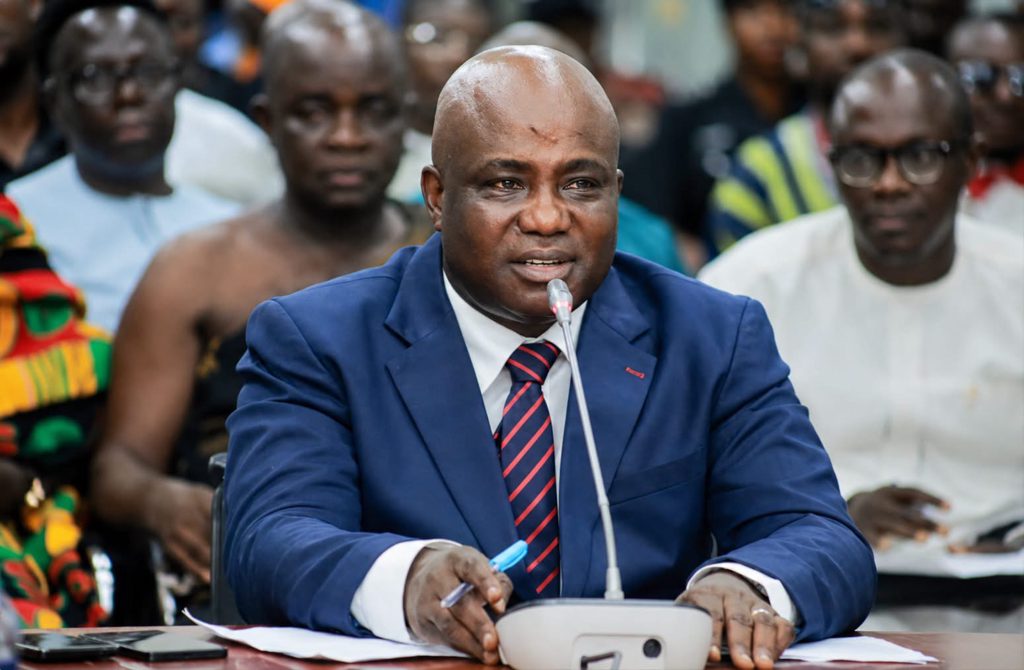
Three months into the 2026 planting season, farmers across Ghana are yet to receive agricultural inputs promised under the government’s flagship Feed Ghana Programme (FGP), raising fears that delays in the distribution of certified seeds, fertilisers, and agrochemicals could undermine production targets and threaten national food security.
The Feed Ghana Programme is a four-year initiative budgeted at GHS302.21 billion, designed to modernise agriculture, create jobs, reduce food inflation, and strengthen national food security. It also seeks to reduce Ghana’s dependence on food imports, which exceed $2 billion annually. Between 2025 and 2028, the programme targets the distribution of 214,692 metric tonnes of certified seeds, over two million metric tonnes of fertilisers, and 3.6 million litres of pesticides to support maize, rice, soybean and sorghum production.
A commitment authorisation letter obtained by The Fourth Estate showed that in February 2026, Finance Minister Cassiel Ato Forson released GHS775 million for programme activities, including GHS500 million specifically for procuring fertilisers, seeds, and agrochemicals during the first and second quarters of 2026.
Yet interviews conducted by The Fourth Estate in June 2026 with farmers across the Greater Accra, Volta, Ashanti, Upper East and Upper West regions indicate that many have received no assistance despite the planting season already being well underway.
Farmers speak out
Lawrence Nunekpeku, a farmer and Presiding Member of the Ada West District Assembly, said inputs normally arrive around late July or August, although they should ideally be distributed in March or early April, before planting begins. He said the absence of subsidised inputs is forcing many farmers to reduce the size of their farms because they cannot afford improved seeds and fertilisers on the open market.
“These days, we are all using hybrid seeds. Once people are not able to buy them, it means they cannot produce enough,” he said.
Similar concerns were reported in the Upper West Region. An agricultural extension officer in the Sissala West District said farmers had already started planting soybeans and groundnuts without receiving government inputs. “As of now, we have not received any inputs,” he said, warning that farmers intending to cultivate three acres may be forced to plant only one because they cannot afford the required inputs.
In the Volta Region, Secretary of the No Farmer No Nation Movement, Godfred Apetorgbor, said farmers had received no support and questioned the transparency of the distribution process. He called for farmer associations to participate in the allocation of inputs to ensure they reach intended beneficiaries rather than political loyalists.
Fertiliser supply falls short
Concerns have also been raised about fertiliser availability. The Ministry of Food and Agriculture only began distributing fertiliser under Feed Ghana on June 16, releasing 40,000 bags nationwide. The ministry is expected to complete the distribution of approximately one million bags of fertiliser to farmers in all 276 agricultural constituencies nationwide.
Upper East maize farmer Biyirah Abdallah said the quantity was inadequate. He said he uses at least 70 bags of fertiliser for his 100-hectare farm, noting that many farmers cultivate even larger areas.
The Peasant Farmers Association of Ghana (PFAG) has warned that free fertiliser distributions alone will not meet the needs of the country’s millions of farmers. PFAG’s President, Douglas Annor, said many smallholder farmers are struggling to survive due to high fertiliser prices and low returns from their produce. He noted that the delay in implementing the 2025/2026 subsidy programme is already affecting farming activities in several communities.
“We know that the government’s policy this year, when it comes to fertilisers, is free distribution. However, there’s a challenge because not all farmers will be able to access it,” Nortey of PFAG said. He explained that although district agricultural offices and constituencies are receiving fertiliser allocations, the volumes remain insufficient relative to Ghana’s estimated farming population of about three million people.
Civil society raises alarm
Policy research and advocacy organisation SEND Ghana has called on the government to speed up the distribution of seeds, fertilisers and other farm inputs, warning that delays could affect food production and threaten food security. In a statement issued in Accra, the organisation said information gathered from farmers in the Northern, Oti, Volta and Bono East regions showed that many were yet to receive inputs under the programme. It said further checks with the Departments of Agriculture also revealed that most Metropolitan, Municipal and District Assemblies had not received the inputs needed for onward distribution to farmers.
According to SEND Ghana, the delay risks disrupting planting activities and could undermine the government’s broader agricultural transformation agenda. The organisation warned that some farmers were already reluctant to expand cultivation this year following losses suffered during the previous farming season, when many struggled to sell their maize and rice because of a glut on the market. It said failure to supply inputs on time could worsen the situation and discourage more farmers from fully participating in this year’s farming season.
“The Feed Ghana Programme has the potential to enhance food security, reduce food inflation, create employment, especially for youth and women, and promote agro-industrial development and exports,” the statement noted. However, it stressed that the success of the programme would depend heavily on strong agricultural governance at the local level and the timely delivery of interventions.
Funding dispute clouds implementation
The delays come amid a public disagreement between the Ministry of Finance and the Ministry of Food and Agriculture over how much money has actually been released for agricultural programmes this year. The Ministry of Finance says it has released more than GH¢1.6 billion to MoFA, which it says is about 85 percent of the ministry’s 2026 budget for projects, goods, and services.
However, MoFA has challenged the Finance Ministry’s claims, saying the figures do not match official budget documents issued by the Finance Ministry itself. According to MoFA, although it received a Commitment Authorisation on February 15, 2026, the First and Second Quarter Budget Allotment Letter issued on February 19, 2026, capped its total expenditure for the first half of the year at GH¢910 million. The ministry further explained that the detailed spending schedule allowed it to use only about GH¢453 million between January and June 2026, covering salaries, operational expenses, and existing contracts.
MoFA said the approved funds for major programmes include just GH¢4.5 million for the Feed Ghana Programme. The ministry insists it has not received any additional approval from the Finance Ministry that would support the claim that more than GH¢1.6 billion has been released.
Farmers across Ghana are appealing to the government to urgently resolve what they describe as a growing “budget dispute” between the two ministries, warning that Ghana’s food security could be endangered if the issue is not resolved quickly.
“The farms are suffering. Without fertiliser, crops cannot grow well, and without good harvests, we cannot support our families,” said Kwaku Ntiamoah, a veteran farmer from Goaso in the Ahafo Region. “We are suffering and we do not know how long we can continue like this”.
Recevez la newsletter d'AfroAsia Media
Les principales actualités du jour en Afrique et en Asie, directement dans votre boîte mail.




Commentaires
0 commentaire
Chargement…