
Nous traduisons cet article en français — la traduction s'affichera ici dans un instant. En attendant, voici la version originale en anglais.
FDA issues stern warning to prophet Adom Kyei-Duah over unapproved medicinal Sobolo
The Food and Drugs Authority (FDA) has issued a strong warning to Prophet Stephen Adom Kyei-Duah, founder of the Believers Worship Centre, regarding his popular sobolo drink, which is being promoted with unsubstantiated medicinal claims. According to the FDA, selling or advertising any beverage as having healing properties without regulatory approval constitutes a criminal offense.…
Publié le 3 min de lecture
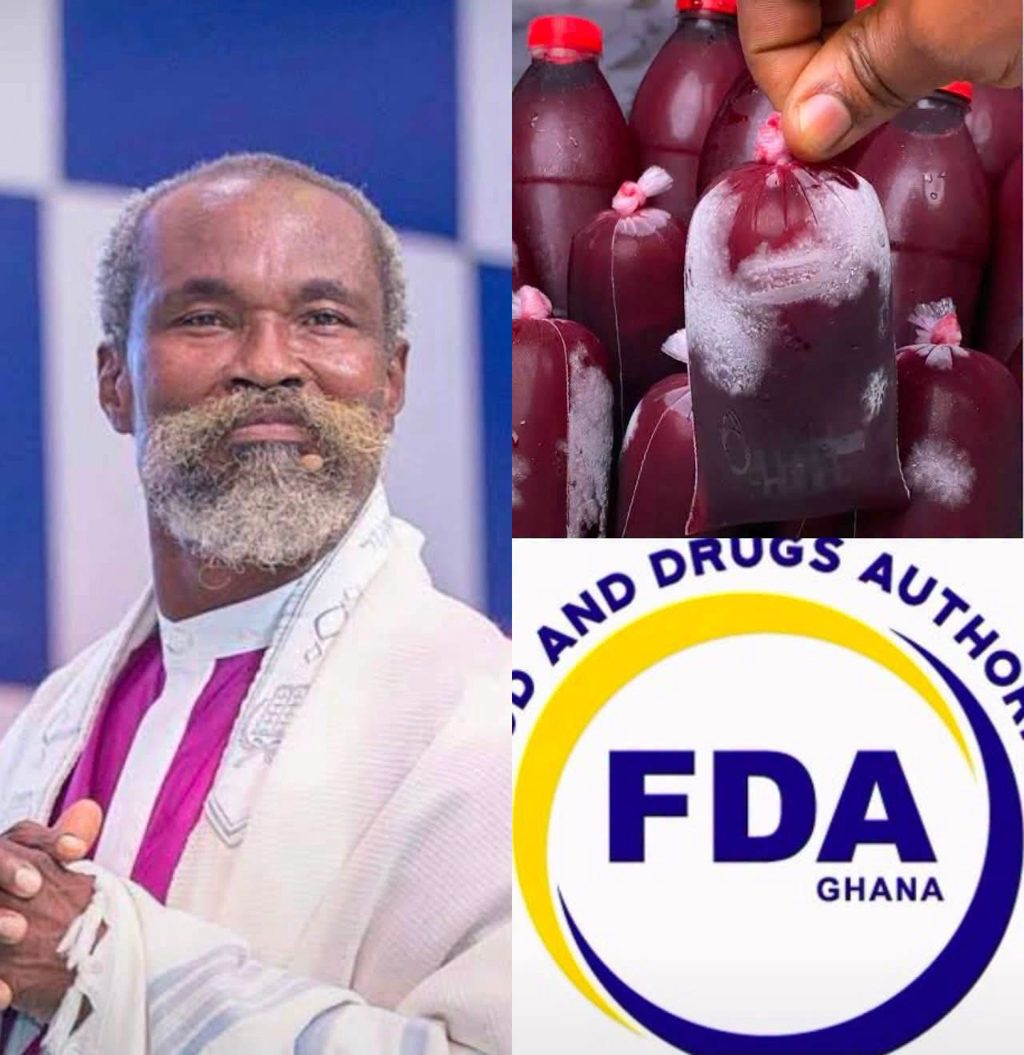
The Food and Drugs Authority (FDA) has issued a strong warning to Prophet Stephen Adom Kyei-Duah, founder of the Believers Worship Centre, regarding his popular sobolo drink, which is being promoted with unsubstantiated medicinal claims. According to the FDA, selling or advertising any beverage as having healing properties without regulatory approval constitutes a criminal offense.
Dr. Martin Kusi, a senior official of the FDA, in an interview on Okay FM, stated that the sobolo drink linked to the prophet has not been registered with the authority as a medicinal product and cannot be approved for such purposes due to a lack of scientific evidence.
“There is no basis for such a sobolo to be approved as a medicinal product. The FDA won’t approve such a product,” Dr. Kusi said. He emphasized the critical distinction between an ordinary beverage consumed for refreshment and one promoted for treating illnesses. “If anyone produces a food or drink and presents it as a drug or as having medicinal properties, he or she has to come to us at the FDA for approval. Otherwise, that is an illegality, and we would have to take action,” he explained .
The FDA official clarified that while the authority does not regulate spiritual claims, any product marketed for health or curative purposes must undergo rigorous scientific evaluation and receive formal market authorization before being sold to the public. The Public Health Act 2012, Act 851, and the Traditional Medicine Practice Act mandate that herbal medicinal products and food supplements with health claims must be registered with the FDA . This legal framework exists to protect public health by ensuring the safety, quality, and efficacy of products presented as medicines.
Public Concerns and Context
The FDA’s warning has been met with widespread approval from members of the public who have long expressed concern over the exploitation of sick individuals with so-called “miracle products.” Many have echoed the sentiment that it is irresponsible to substitute medical science with unproven spiritual remedies.
“Finally! I’ve been saying this for a long time. Anyone who falsely promotes ordinary products as medicine should face the full force of the law,” one concerned citizen told GhanaWeb. Others have questioned the logic of products like “money perfume” being sold with promises of wealth, yet still finding buyers willing to spend their hard-earned money on them.
This concern aligns with a broader societal issue in Ghana where faith healing is sometimes prioritized over biomedical treatment. A study on mental health treatment pathways found that faith and traditional healing are often used as a first point of care before seeking biomedical treatment, influenced by belief systems and cultural attitudes . Furthermore, a 2022 Afrobarometer survey revealed that 60% of Ghanaians believe mental health conditions are caused by witchcraft or curses .
The debate extends to faith-based prayer camps, where some families choose to take sick relatives for spiritual intervention instead of hospitals. “What the doctors cannot cure, God can,” one prophet in Accra’s Achimota Forest was quoted as saying . However, mental health professionals warn that such practices, especially when involving chaining and forced fasting, “can traumatize patients further and delay effective treatment, and in some cases lead to death” .
Public health expert Dr. Benjamin Arhin has also urged pastors, mallams, and traditional healers to stop discouraging sick people from seeking professional medical care, advocating that prayer and medicine should go hand in hand . The FDA’s latest action serves as a stark reminder that while the authority does not interfere in matters of faith, it draws a firm line at products making fraudulent health claims that jeopardize public health and safety.
Recevez la newsletter d'AfroAsia Media
Les principales actualités du jour en Afrique et en Asie, directement dans votre boîte mail.




Commentaires
0 commentaire
Chargement…