
Nous traduisons cet article en français — la traduction s'affichera ici dans un instant. En attendant, voici la version originale en anglais.
Energy sector still needed GHC12.9bn in treasury support despite higher ESLA Levy in 2025 — Finance Ministry Report
A new Finance Ministry report on the management of the Energy Sector Support Account has revealed that proceeds from the Energy Sector Shortfall and Debt Repayment Levy (ESLA) fell far short of covering Ghana’s energy sector obligations in 2025, even after Parliament approved a significant increase in the levy. The report shows that total ESLA…
Publié le 4 min de lecture
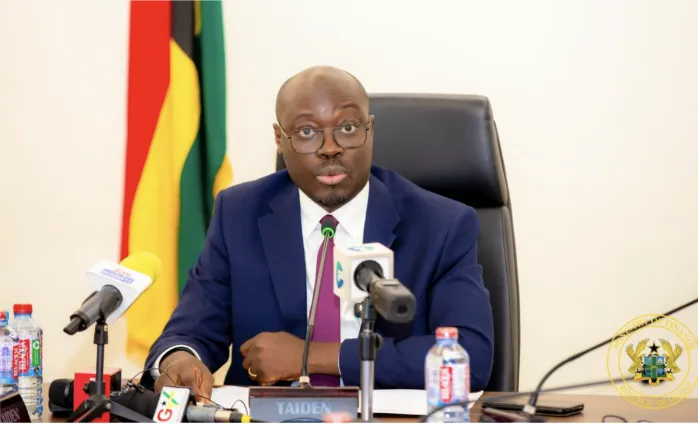
A new Finance Ministry report on the management of the Energy Sector Support Account has revealed that proceeds from the Energy Sector Shortfall and Debt Repayment Levy (ESLA) fell far short of covering Ghana’s energy sector obligations in 2025, even after Parliament approved a significant increase in the levy.
The report shows that total ESLA revenue for 2025 amounted to GH¢8.66 billion, yet total energy sector payments reached GH¢22.67 billion—equivalent to roughly US$1.9 billion—leaving a financing gap that required an additional GH¢12.85 billion in direct transfers from the Treasury Main Account through the Controller and Accountant General’s Department.
The ESLA Reform and Levy Increase
In April 2025, Parliament amended the ESLA framework, consolidating several existing levies—including the Energy Debt Recovery Levy, Energy Sector Recovery Levy, Sanitation and Pollution Levy, and Price Stabilization and Recovery Levy—into a single unified levy. The consolidation was intended to improve transparency, streamline administration, and enhance revenue mobilization.
Just two months later, the government increased the levy from 95 pesewas to GH¢1.95 per litre. Finance Minister Dr. Cassiel Ato Forson at the time explained that the additional GH¢1 per litre would help reduce energy sector shortfalls, clear legacy debts, and support a more stable electricity supply.
Where the Money Went
The report breaks down the sector’s largest expenditure items in 2025:
· GH¢5.46 billion to settle outstanding gas invoices owed to Eni and Vitol for power generation.
· GH¢4.54 billion to repay legacy debts owed to Independent Power Producers (IPPs).
· GH¢6.94 billion to restore the World Bank Partial Risk Guarantee, which had been drawn down.
· GH¢5.73 billion for the procurement of liquid fuel and gas to support electricity generation.
Of the GH¢12.85 billion in Treasury support, GH¢5.16 billion was used to finance ongoing energy sector shortfalls, while GH¢7.69 billion went toward repaying legacy debts. This suggests that the bulk of government intervention was aimed at clearing historical obligations rather than covering new deficits.
A Surprising Context: Stability and Compliance
The findings are particularly notable because they come at a time when several traditional drivers of energy sector shortfalls have improved. The Electricity Company of Ghana (ECG) is now fully complying with the Cash Waterfall Mechanism and no longer under-declaring revenue—a major step forward in financial discipline. Additionally, the cedi has remained relatively stable compared with previous years, reducing exchange rate-induced cost pressures that have historically widened the sector’s financing gap.
Despite these improvements, the sector still required massive Treasury support, indicating that the underlying structural challenges run deeper than currency volatility or revenue under-reporting.
Legacy vs. Recurring Costs
Some of the 2025 expenditures may not recur in future years. The restoration of the World Bank Partial Risk Guarantee, for instance, was a one-off measure to reinstate a facility that had been triggered. Similarly, as compliance with the Cash Waterfall Mechanism improves and legacy debts are progressively cleared, the sector’s annual obligations could gradually decline.
The government is also pursuing long-term reforms, including private sector participation in ECG’s distribution business and operational improvements aimed at reducing technical and commercial losses within the power value chain.
2026 Outlook Remains Challenging
Despite these reform efforts, the 2026 Budget projects energy sector shortfall financing requirements of GH¢15.2 billion—up from about GH¢12 billion in 2025. One interpretation is that the government is attempting to aggressively clear legacy debt while simultaneously meeting current sector obligations, a dual burden that has kept financing needs elevated.
Structural Problems Persist
As Finance Minister Dr. Cassiel Ato Forson acknowledged during the 2025 Budget presentation, the deeper challenges are structural. They include:
· Poor revenue collection across the electricity value chain.
· High system losses—both technical and commercial.
· Weaknesses in the implementation of the Cash Waterfall Mechanism.
· Expensive power purchase agreements signed under previous administrations.
· Inefficiencies across the sector’s generation, transmission, and distribution segments.
The Bottom Line
The additional GH¢1 ESLA levy has provided some relief, but the Finance Ministry’s own figures make it clear that higher taxes alone cannot solve the sector’s fiscal woes. Lasting stability and reduced reliance on Treasury bailouts will require aggressive structural reforms, improved operational efficiency, and a fundamental renegotiation of costly power contracts.
Until those reforms take root, the energy sector will remain a persistent drain on the national budget—and a recurring source of fiscal pressure for successive governments.
Recevez la newsletter d'AfroAsia Media
Les principales actualités du jour en Afrique et en Asie, directement dans votre boîte mail.




Commentaires
0 commentaire
Chargement…