
‘I Could Lose My Life’: Ghanaian Gay Man Held in Swedish Detention as Asylum Case Stalls
A 33-year-old Ghanaian man seeking asylum in Sweden on the basis of his sexuality has been held in a Swedish detention facility for six months, even though his asylum application remains unresolved…
Journalist
Published 6 min read
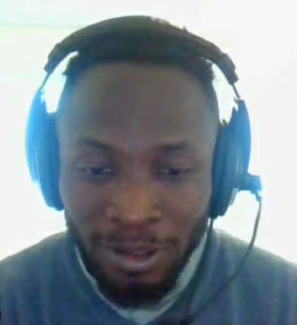
A 33-year-old Ghanaian man seeking asylum in Sweden on the basis of his sexuality has been held in a Swedish detention facility for six months, even though his asylum application remains unresolved and he holds valid asylum papers. Samuel Asiamah says he fears imprisonment and brutal attacks if he is returned to Ghana, where same-sex intimacy is criminalised and a sweeping anti-LGBTQ+ law has heightened persecution.
“There is a difference between co-operation and placing your life in jeopardy,” Asiamah told The Irish Times in a report published on September 12, 2026. “If people in prison know you are homosexual, you will be brutalised and assaulted, and you could lose your life”.
Asiamah is being held at a detention facility in Åstorp, about an hour north of Malmö. He was detained after leaving an asylum camp, and his lawyer has reportedly been unable to obtain an explanation from Swedish authorities as to why he remains in custody. Swedish authorities have asked him to contact Ghana’s embassy to facilitate his return. He has refused.
From Family Rejection to Physical Violence
Asiamah’s difficulties began within his own family. Raised by his grandmother in the countryside, he moved to Accra at 18 to live with his mother, who became deeply troubled by the possibility that he was gay. She took him to regular church blessing services, hoping to address what she considered a source of shame.
“She was upset, then furious and gradually started to neglect me, making comments about me being a shame to her and the family,” he recounted.
He left home at 19 and found support through a local LGBTQ+ group called Solace. But his relationship with his first boyfriend exposed him to further hostility: verbal insults escalated into repeated physical attacks, and he still carries a scar from one assault.
He later met a man identified as “Brother Kofi,” who promised to help him travel to Europe. Asiamah reportedly took GH¢60,000 from his mother’s savings to fund the journey. He was flown through Mauritius to France and then travelled to Sweden, arriving in November 2024. The facilitator allegedly abandoned him. After a week homeless, a woman offered him accommodation, but later asked him to leave when she discovered his sexuality. Swedish police eventually found him on the street on a snowy day.
A Case Officer’s Dismissal
Asiamah applied for asylum in Malmö in February 2026. In May, he told his case officer that Ghana’s Parliament had passed a bill criminalising the promotion of LGBTQ+ activities, with proposed prison sentences of up to 10 years. He also cited a provision that would require friends and family members to report one another.
The case officer reportedly dismissed the development as irrelevant because Asiamah had not personally experienced the proposed legal regime.
That assessment sits uneasily with the reality of Ghana’s legal landscape. Ghana’s criminal code already criminalises same-sex intimacy under the “unnatural carnal knowledge” clause, carrying a penalty of up to three years in prison. The Human Sexual Rights and Family Values Bill, first passed in February 2024 but lapsed without presidential assent, was reintroduced and passed again on 29 May 2026, imposing a minimum three-year sentence for consensual same-sex acts and up to five years for the “promotion, sponsorship or support of LGBTIQ+ activities,” alongside a duty to report. The bill has since been mired in procedural confusion: Parliament rescinded its third reading on 10 November 2026 over drafting inconsistencies, and President Mahama has withheld assent, saying the legislation needs further scrutiny.
Human Rights Watch has described the bill as draconian, noting that LGBTQI+ people in Ghana already face widespread discrimination, abuse and arbitrary arrests. The International Center for Transitional Justice reported that LGBTQ+ Ghanaians are “living in fear,” with community organisations saying people worry they could lose their homes, jobs or access to healthcare. Documented detentions of LGBTI individuals in Ghana exceeded 50 between 2021 and 2023, and victims of violent anti-LGBT attacks have themselves been detained by authorities rather than the perpetrators.
Sweden’s Hardened Migration Regime
Asiamah’s detention comes amid Sweden’s most dramatic postwar pivot on migration. For decades the Nordic country was a beacon for those fleeing oppression, viewed by many Swedes as a “human rights superpower”. That consensus has collapsed.
Asylum applications fell from 163,000 in 2015 to 6,737 in 2025—a decline of 96 per cent—and the approval rate stands at about 23 per cent, less than half the EU average. Sweden has expanded detention capacity from 593 places to 678, with a target of 1,000 by 2029. New rules in force from 21 July 2026 introduced enhanced supervision and electronic monitoring, and the New Reception Act, effective 1 October 2026, requires asylum seekers to remain within designated geographical areas and submit to attendance checks. The government has raised “resettlement grants” to 350,000 Swedish kronor (about €31,371) for adults willing to return voluntarily—though the grant is not available to those under expulsion orders.
“It used to be seen as a victory in Sweden to protect people here from unsafe situations, but these people have been so dehumanised now that getting rid of them quickly is the new victory,” an organiser of a Malmö-based asylum support group assisting Asiamah told The Irish Times.
Return Hubs and a Deepening Fear
Asiamah’s fears have been sharpened by EU discussions about establishing “return hubs” outside the bloc for rejected asylum seekers. Uzbekistan, Rwanda and Uganda have been mentioned as possible host countries. Uganda and Nigeria both retain the death penalty for criminalised same-sex activity—a fact that alarms Asiamah, who argues that people genuinely seeking protection could be placed at risk.
“They are mixing up people who really need help from the authorities and safety, from bad people, religious extremists and Islamist gangs,” he said.
A Life on Hold
The toll of detention has been severe. Asiamah shares a room with two other detainees, has fixed meal times and limited opportunities to spend time outdoors. He said some inmates were violent criminals. The hardest part, he told the newspaper, is not knowing what will happen to him.
“Sometimes I feel very empty. I used to cry a lot,” he said, adding that he had previously experienced suicidal thoughts.
He sometimes thinks of his former boyfriend, who also left Ghana and is now in Canada. “They let him stay,” he said.
His own future remains uncertain. For now, he waits in Åstorp—a man whose asylum claim hinges on whether Swedish authorities accept that the danger he fled is real, and that the law now taking shape in Ghana makes it more real still.
Get the AfroAsia Media newsletter
The day's top stories from Africa and Asia, straight to your inbox.
Comments
0 comments
Loading…