
GRA Aligns Customs Operations with 24-Hour Economy to Support Industrial Growth
Commissioner-General Anthony Kwasi Sarpong says AI-powered customs valuation is generating over $100 million monthly, as the authority moves to keep ports running round the clock for businesses…
Journalist
Published 3 min read
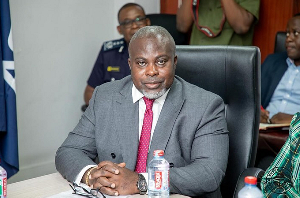
Commissioner-General Anthony Kwasi Sarpong says AI-powered customs valuation is generating over $100 million monthly, as the authority moves to keep ports running round the clock for businesses operating outside traditional hours.
ACCRA, Nov. 11 — The Ghana Revenue Authority is restructuring its customs operations to support businesses operating under the government's 24-hour economy policy, deploying artificial intelligence for valuation and classification while pushing for round-the-clock clearance at the country's ports.
Commissioner-General Anthony Kwasi Sarpong said efficient revenue administration was essential to ensuring that businesses operating around the clock could access reliable customs services, predictable procedures and faster movement of goods. He was speaking at the 15th Ghana Economic Forum in Accra on Tuesday .
"Businesses operating around the clock need reliable digital platforms and predictable procedures," Sarpong said, explaining that manufacturers importing raw materials required confidence that their consignments would be processed without avoidable delays, while exporters needed efficient procedures to remain competitive .
AI System Yields $100m Monthly
A key intervention is Publican AI, which supports customs classification and valuation by identifying discrepancies in declared values and classifications of imported goods. Sarpong said the system now yields not less than US$100 million per month, highlighting its role in improving revenue collection and reducing losses .
The AI system, deployed at Tema Port in February 2026, compares declared values against global trade databases and flags anomalies for human verification. Early data showed customs revenue rising from GH¢2.4 billion to GH¢3.6 billion within weeks of deployment . By September, Sarpong reported that monthly customs revenue had climbed from approximately $350 million to $450 million without any new taxes or rate increases .
The Authority is also pursuing reforms to customs and excise legislation, alongside continued enforcement against smuggling and the diversion of goods meant for transit. Sarpong said every undervalued container represented not only revenue lost to the state but also an unfair competitive advantage against local producers .
24-Hour Port Operations
The customs reforms are part of a broader push to make Tema Port fully operational around the clock. In August 2025, Sarpong announced that the port had achieved 24-hour clearance capability, with the Standards Board, Food and Drugs Authority and Environmental Protection Agency integrated into the Customs ICON platform to allow all government agencies to operate continuously .
The GRA has also engaged shipping lines including Maersk, MSC, CMA CGM and Hapag-Lloyd, along with technology partner Ghana Link, to develop proposals for extended staffing and round-the-clock payment systems. Customs Commissioner Aaron Kanor said in May that the objective is to ensure goods move through the port within a single day .
Background
The 24-hour economy policy was a flagship campaign promise of President John Dramani Mahama in the 2024 election. Parliament passed the 24-Hour Economy Authority Bill in February 2026, and the government allocated GH¢110 million in the 2026 budget to kickstart the programme.
Anthony Kwasi Sarpong was appointed Commissioner-General of the GRA in 2025. A tax and public financial management professional with decades of experience in both the public and private sectors, he has overseen a modernisation agenda that includes the rollout of the Integrated Tax Administration System (ITAS) for large taxpayers and the AI-powered customs valuation platform.
Under his leadership, the GRA has set an ambitious target of doubling revenue from GH¢153 billion in 2024 to over GH¢310 billion by 2028, relying on administrative reforms and technology rather than new taxes .
Sarpong stressed that stronger enforcement must be balanced with trade facilitation. He noted that the GRA operates within a wider economic ecosystem involving energy, transport and finance, all of which must function effectively to support industrial expansion. "The Authority's responsibility is to ensure that customs and tax administration supports these priorities through efficiency, transparency and technology," he said .
---
The 2027 Budget, themed "New Economy, New Ghana: Jobs and Prosperity," is scheduled to be presented to Parliament on Thursday.
Get the AfroAsia Media newsletter
The day's top stories from Africa and Asia, straight to your inbox.
Comments
0 comments
Loading…