
GoldBod Opens Consultations on Landmark Small-Scale Mining Formalisation Programme Ahead of 2027 Rollout
The Ghana Gold Board (GoldBod) has begun stakeholder consultations on a flagship programme aimed at formalising and financing the artisanal and small-scale mining (ASM) sector, with implementation…
Journalist
Published 3 min read
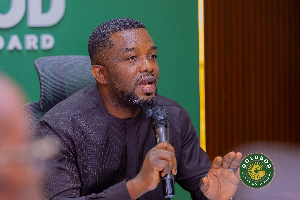
The Ghana Gold Board (GoldBod) has begun stakeholder consultations on a flagship programme aimed at formalising and financing the artisanal and small-scale mining (ASM) sector, with implementation targeted for 2027.
The engagement, led by GoldBod Deputy Chief Executive Officer Richard Nunekpeku, Esq., brought together key industry associations, including the Ghana National Association of Small-Scale Miners (GNASSM), Concerned Small-Scale Miners, Hard Rock and Underground Miners, the Ghana National Association of Gold Traders, and the Chamber of Gold Buyers.
The proposed Artisanal and Small-Scale Mining Formalisation and Financing Support Programme (FFSP) seeks to establish a structured framework to bring informal mining operations into the legal fold while providing access to finance. Speaking at the session, Mr. Nunekpeku emphasised that stakeholder input is critical before the programme is submitted for Cabinet and parliamentary consideration.
Statutory Mandate and Broader Reforms
The initiative aligns with GoldBod's statutory mandate under the Ghana Gold Board Act, 2025 (Act 1140), which requires the board to promote responsible gold sourcing, sustainable supply chains, and traceability. Professor Ishmael Quaicoe, GoldBod's Director of Responsible Mining, outlined the proposed policy framework and its key components during the engagement.
The consultations are expected to expand to other relevant state institutions, including the Minerals Commission, the Ministry of Lands and Natural Resources, the Minerals Income Investment Fund (MIIF), the Environmental Protection Authority (EPA), and the Water Resources Commission.
Economic Context and International Models
The push for formalisation comes amid a significant shift in Ghana's gold export dynamics. According to official figures released in October 2026, the small-scale sector exported 85.4 tonnes of gold valued at $11.6 billion between January and October 2026, surpassing large-scale mining exports of 76 tonnes worth $11.1 billion over the same period.
GoldBod CEO Sammy Gyamfi has cited the formalisation programmes of Colombia, Mongolia, Peru, and Tanzania as models for Ghana's approach. These countries have demonstrated how informal miners can be organised into legally recognised groups and supported to undertake responsible mining practices. The Ghanaian programme also incorporates the Responsible Cooperative Mining and Skills Development Programme (rCOMSDEP), which aims to register eligible informal miners into cooperatives and provide training in sustainable mining, mercury-free processing, and land reclamation.
Financing and Technical Support
The FFSP is being developed in collaboration with the Ministry of Lands and Natural Resources and the University of Mines and Technology (UMaT), with technical support from South Africa's Rand Refinery. The programme seeks to sustainably increase gold production, mineral revenue, and employment while reducing the operational costs and environmental degradation associated with artisanal mining.
As consultations proceed, GoldBod maintains that formalisation must go beyond enforcement to create commercially viable pathways for miners. "Reform will endure only when compliance becomes a pathway to opportunity rather than hardships," Mr. Gyamfi stated in earlier remarks.
Get the AfroAsia Media newsletter
The day's top stories from Africa and Asia, straight to your inbox.
Comments
0 comments
Loading…