
我们正在将本文翻译成中文,译文稍后将显示在此处。目前先显示英文原文。
ECOWAS is about opportunities, rights and privileges, Ambassador Kotia tells Elubo traders
The Coordinating Director for Multilateral and International Organisations at the Ministry of Foreign Affairs, Ambassador Francis Danti Kotia, says the Economic Community of West African States…
记者
发布于 阅读约 3 分钟
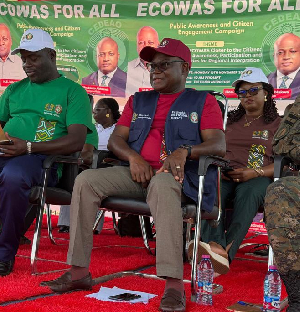
The Coordinating Director for Multilateral and International Organisations at the Ministry of Foreign Affairs, Ambassador Francis Danti Kotia, says the Economic Community of West African States (ECOWAS) is about opportunities, rights and privileges for every Community citizen, not just abstract treaties.
He was speaking to traders at the Elubo border in the Western Region at a national citizen engagement called "ECOWAS For All", held on November 17. The event was organised by the ECOWAS National Office of the Ministry of Foreign Affairs to sensitise people on regional integration opportunities, free movement protocols and regional trade mechanisms. It was held under the theme "Bringing ECOWAS closer to the citizens: Promoting Awareness, Participation and Opportunities for Regional Integration".
Ambassador Kotia said Elubo was chosen deliberately because it is not just a border post but a crucial trading hub and a gateway to commerce, livelihoods and brotherhood between Ghana and Côte d'Ivoire and the wider West African region. He said the programme is part of the National Office's wider strategy to bring ECOWAS to the doorsteps of the people.
He said two questions keep coming up: what ECOWAS is, and what benefits a citizen stands to gain from it. Ghana was a founding member of the bloc, which was established in 1975, and the ambassador has previously described it as a market of more than 400 million people offering opportunities for trade, investment and business expansion.
For traders, he said, the most tangible benefit is the ECOWAS Trade Liberalisation Scheme (ETLS), under which goods can enter the 12 member states duty-free. The number reflects the bloc's recent change. Burkina Faso, Mali and Niger withdrew in January 2024 to form the Alliance of Sahel States. Ambassador Kotia has said their exit poses challenges but that Ghana remains committed to peace, democracy and good governance within ECOWAS.
He said the free movement protocols mean citizens do not need a visa to travel to any of the 12 member states for 90 days, and the ECOWAS Brown Card insures their vehicles across borders. He has also pointed to the ECOWAS biometric identity card, the ECOWAS passport and the protocols on free movement, residence and establishment as practical benefits that widen opportunities for trade, education and regional mobility.
Many of the difficulties traders face, however, do not come from the rules themselves. Ambassador Kotia said the Ministry had listened to concerns from cross-border traders at the Makola and Madina markets and the Aflao border, and had noticed that most of the challenges persisted not for lack of rules but because the rules were not well understood. In an earlier session of the same campaign, he said many border difficulties arise because the rules are not sufficiently understood, and urged traders and transport operators to follow presentations by officials of the Ghana Revenue Authority's Customs Division, the Ghana Immigration Service, the Ghana Export Promotion Authority and the Ghana Shippers Authority.
Complaints at other crossings show why the Ministry is listening. At Aflao, residents and traders called for an ECOWAS office at the Ghana-Togo border so that citizens can report alleged extortion and other difficulties they face when crossing.
At Elubo, Ambassador Kotia told the gathering that the team had not come to lecture them but to listen. He promised to give market women, traders and transporters time to share their daily experiences at the border.
订阅 AfroAsia Media 新闻简报
每日非洲与亚洲要闻,直接发送到您的邮箱。
评论
0 条评论
加载中…